
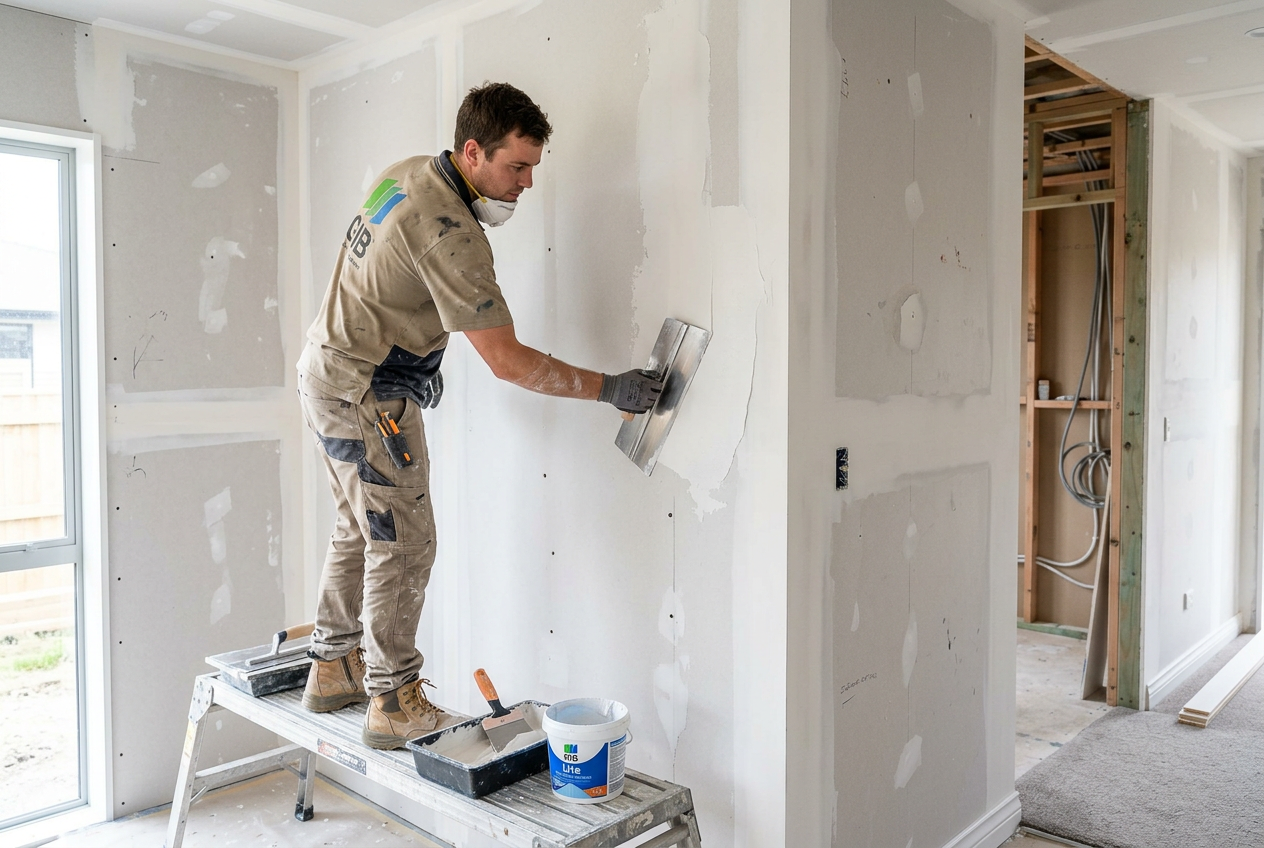
If you’re patching a wall, fixing a dent, or setting new plasterboard joints, you’ll quickly come across two common types of plaster compound: air drying compound and setting compound. They both help create a smooth, paint-ready finish, but they work in different ways and suit different jobs.
For Australian homeowners, choosing the right one matters because our homes face everything from humid coastal weather to hot, dry inland conditions. The wrong compound can slow your project, crack, shrink, or make sanding far harder than it needs to be.
What Is Air Drying Plaster Compound?
Air drying plaster compound sets as the moisture evaporates into the air. In other words, it does not chemically harden in the same way as a setting compound. It stays workable for longer, which makes it easier for DIY patching, small repairs, and smoothing over minor imperfections.
You’ll often find air drying compound used for:
- small wall and ceiling repairs
- final coat finishing on plasterboard joints
- filling dents, nail holes, and light surface damage
- touch-ups before painting
Because it dries more slowly, it can be more forgiving for less experienced DIYers. That extra working time lets you feather out edges and get a cleaner finish. The trade-off is that it may take longer to be ready for sanding or repainting, especially in cooler or more humid conditions.
What Is Setting Plaster Compound?
Setting compound hardens through a chemical reaction, not just by drying out. Once mixed, it has a limited working time before it starts to firm up. You’ll often hear it called “setting type” or “hard set” compound.
This type is commonly used for:
- taping and bedding plasterboard joints
- repairs that need a harder, more durable finish
- larger patching jobs where faster turnaround helps
- areas where shrinkage needs to be minimised
Setting compound is usually stronger and less prone to shrinkage than air drying compound. That makes it popular for first coats over joints and larger repairs. However, it can be less forgiving because once it starts to set, you need to work quickly and clean your tools promptly.
Air Drying Vs Setting Compound: Side-By-Side
| Feature | Air Drying Compound | Setting Compound |
|---|---|---|
| How it hardens | Dries as moisture evaporates | Hardens by chemical reaction |
| Working time | Longer and more forgiving | Shorter and time-sensitive |
| Best for | Small repairs and final finishes | Jointing, bedding, and stronger repairs |
| Shrinkage | Can shrink more | Usually less shrinkage |
| Sanding | Often easier to sand | Can be harder when fully set |
| Drying conditions | Slower in cool, damp weather | Less dependent on evaporation |
Which One Should You Use?
The right choice depends on the job, the finish you want, and how quickly you need to move on to the next stage.
Choose air drying compound if:
- you’re doing a small patch or cosmetic repair
- you want more time to smooth and shape the surface
- you’re finishing a wall before painting
- you’re new to plaster repairs and want something easier to control
Choose setting compound if:
- you’re taping plasterboard joints
- you need a harder, more durable repair
- you’re working on a larger area
- you want less shrinkage between coats
In many homes, the best approach is to use both. A setting compound is often used for the first coats and joint bedding, then an air drying compound is used for the final skim or top coat. That combination can give you strength where you need it and a smoother finish where it matters most.
What Affects Drying Time In Australian Homes?
Australian conditions can change plaster performance quite a bit. Hot, dry weather can speed up drying, while humid coastal or wet-season conditions can slow it down. Air conditioning and heating can also influence how quickly a compound becomes ready for sanding.
A few practical tips:
- Don’t rush repainting just because the surface feels dry.
- Follow the manufacturer’s instructions on the bag or tub from suppliers such as Gyprock/CSR or other available trade brands at Bunnings or Mitre 10.
- Ventilate the room well, but avoid dusty, windy conditions during application.
- Use thin coats for a smoother, more reliable finish.
If you’re patching around areas exposed to moisture, remember plaster compounds are not a substitute for proper waterproofing. In bathrooms, laundries, and other wet areas, substrate preparation and waterproofing need to comply with the National Construction Code and relevant Australian standards. For waterproofing and some structural or compliance-related work, use appropriately licensed trades and follow state-based licensing and Fair Trading requirements.
Common Mistakes To Avoid
A few simple errors can ruin an otherwise good plaster repair:
- mixing too much setting compound at once
- trying to sand before the compound has properly cured
- using air drying compound where a harder base coat is needed
- applying thick coats that take too long to dry and may crack
- painting before the surface is fully ready
Safe Work Australia guidance is also worth following for dust control, PPE, and site safety. Wear eye protection and a suitable mask when sanding, and keep the area tidy to reduce slip and trip hazards.
For homeowners, a simple rule of thumb is this: use setting compound when you need strength and speed, and air drying compound when you want longer working time and an easier finish.
If your project involves electrical, gas, or certain plumbing work hidden behind the wall, stop and call a licensed professional. Those tasks are legally restricted in Australia and must be done by the right tradesperson.
If you’re comparing products on the shelf, the staff at Bunnings, Mitre 10, or a local paint and plaster supply shop can usually help you choose between a setting and air drying option from brands like Gyprock, Dulux, Taubmans, or British Paints.
And if you’re doing a project across the Tasman, you can also check out Trade Directory NZ.
For a neat, durable finish without the guesswork, find experienced local plasterers on Aussie Trade Directory and get your walls ready for paint the right way.