
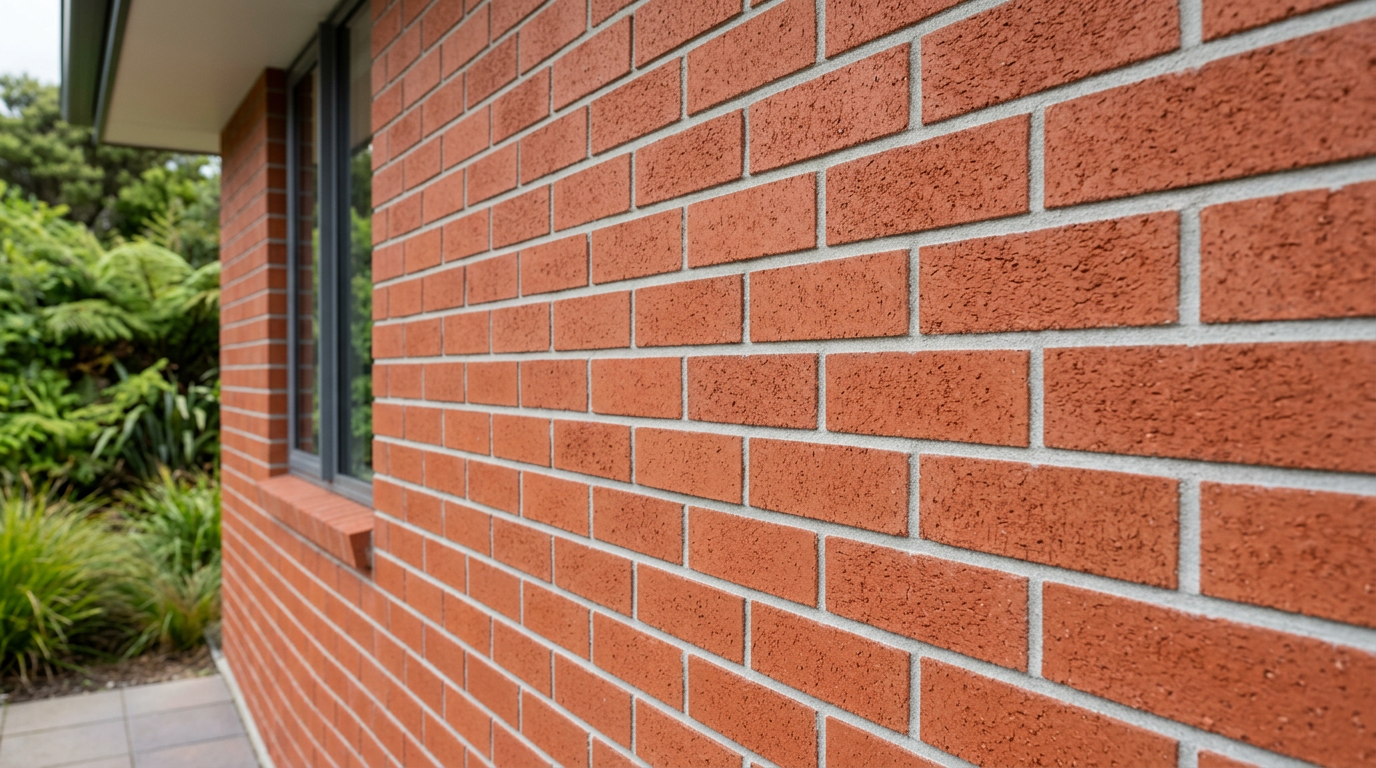
When you’re choosing or inspecting an Australian home, one of the first questions that comes up is whether it’s brick veneer or solid brick. The two look similar from the street, but they’re built very differently and that affects everything from wall thickness to repairs, insulation and renovation options.
Knowing the difference can help you understand how your home performs in Australia’s varied climate, what sort of maintenance it may need, and how a builder or bricklayer might approach future work.
What Is Brick Veneer?
Brick veneer is the most common type of brick construction in modern Australian housing. In simple terms, the bricks you see on the outside are a non-structural outer skin, while the home’s structural support comes from the timber or steel frame behind it.
The wall cavity between the outer brick layer and the internal frame is usually used for insulation, plumbing, wiring and moisture management. Internal linings are commonly plasterboard, such as Gyprock, rather than masonry.
This method suits many Australian builds because it can be lighter, quicker to construct and easier to insulate to meet the National Construction Code requirements for energy efficiency.
What Is Solid Brick?
Solid brick homes are built with masonry as the main structural element. In older Australian homes, this often means multiple layers of brick or masonry forming the wall, rather than a separate frame behind the exterior face.
These homes are generally heavier, thicker and more labour-intensive to build. They often have a more substantial feel, and in some cases offer good thermal mass, which can help smooth out temperature swings in hotter parts of Australia.
That said, solid brick is not the same as “double brick” in every case, and different eras of Australian construction used different methods. A qualified bricklayer or building inspector can help identify what type of wall you have.
Brick Veneer Vs Solid Brick: Key Differences
| Feature | Brick Veneer | Solid Brick |
|---|---|---|
| Structure | Brick outer skin over a frame | Brick or masonry forms the main wall structure |
| Wall thickness | Generally thinner | Generally thicker |
| Weight | Lighter | Heavier |
| Insulation | Often easier to fit in wall cavity | May rely more on wall mass and added insulation systems |
| Repairs | Brickwork repairs may be simpler, but frame issues can be more involved | Masonry repairs can be more labour-intensive |
| Renovations | Often easier to alter internally | Can be more complex to modify structural walls |
How Each Type Performs In Australian Conditions
Australia’s climate varies hugely, from humid coastal areas to dry inland regions and colder southern states. Brick veneer can perform very well when paired with the right insulation, sarking and ventilation. It’s a common choice for energy-conscious homes because the wall cavity can be used smartly to improve comfort.
Solid brick can offer excellent durability and thermal mass, which may help in some climates by slowing heat transfer. However, good performance still depends on the overall building design, roof insulation, window quality and shading. A brick wall on its own won’t make a home comfortable if the rest of the envelope is poorly planned.
If you’re renovating, materials from Australian suppliers such as Bunnings or Mitre 10 can help with basic maintenance products, but structural changes should always be assessed properly before you start.
Maintenance, Repairs And Renovations
Brick veneer homes may need attention to the brick ties, mortar joints, flashing and drainage behind the cladding. Because the structural frame sits behind the brick skin, water ingress or movement can sometimes affect more than just the outer wall.
Solid brick homes are often robust, but age can bring cracked mortar, movement, rising damp or spalling bricks. Older homes can also hide issues that aren’t obvious from the street, so a pre-purchase inspection is worth considering.
If you’re planning painting or façade updates, products from Dulux, Taubmans or British Paints may be suitable depending on the surface, but the wall type and condition should be checked first. For major structural work, a licensed builder or bricklayer is the right starting point.
Which Is Better?
There isn’t a universal winner. Brick veneer often suits modern Australian homes because it’s practical, flexible and easier to integrate with insulation and services. Solid brick may appeal for its mass, durability and traditional feel, especially in certain older homes.
The better choice depends on your budget, design goals, climate zone, maintenance expectations and the age of the property. If you already own a home, the question is usually less about choosing one over the other and more about understanding how your existing walls are built before you renovate.
When To Call A Professional
- If you’re unsure whether a wall is structural, get advice before removing it.
- If you see cracking, bulging, damp patches or loose bricks, have it inspected.
- If your project involves structural changes, engage a licensed builder and bricklayer.
- Electrical, gas and certain plumbing work must be done by a licensed professional in Australia.
For major repairs, extensions or wall modifications, always check the relevant state-based licensing and Fair Trading rules, and make sure the work aligns with the National Construction Code and Safe Work Australia guidance.
If you want more home improvement resources beyond Australia, you can also visit Trade Directory NZ.
Need help with your brickwork? Find a qualified local bricklayer on Aussie Trade Directory and connect with local bricklayers near you.