
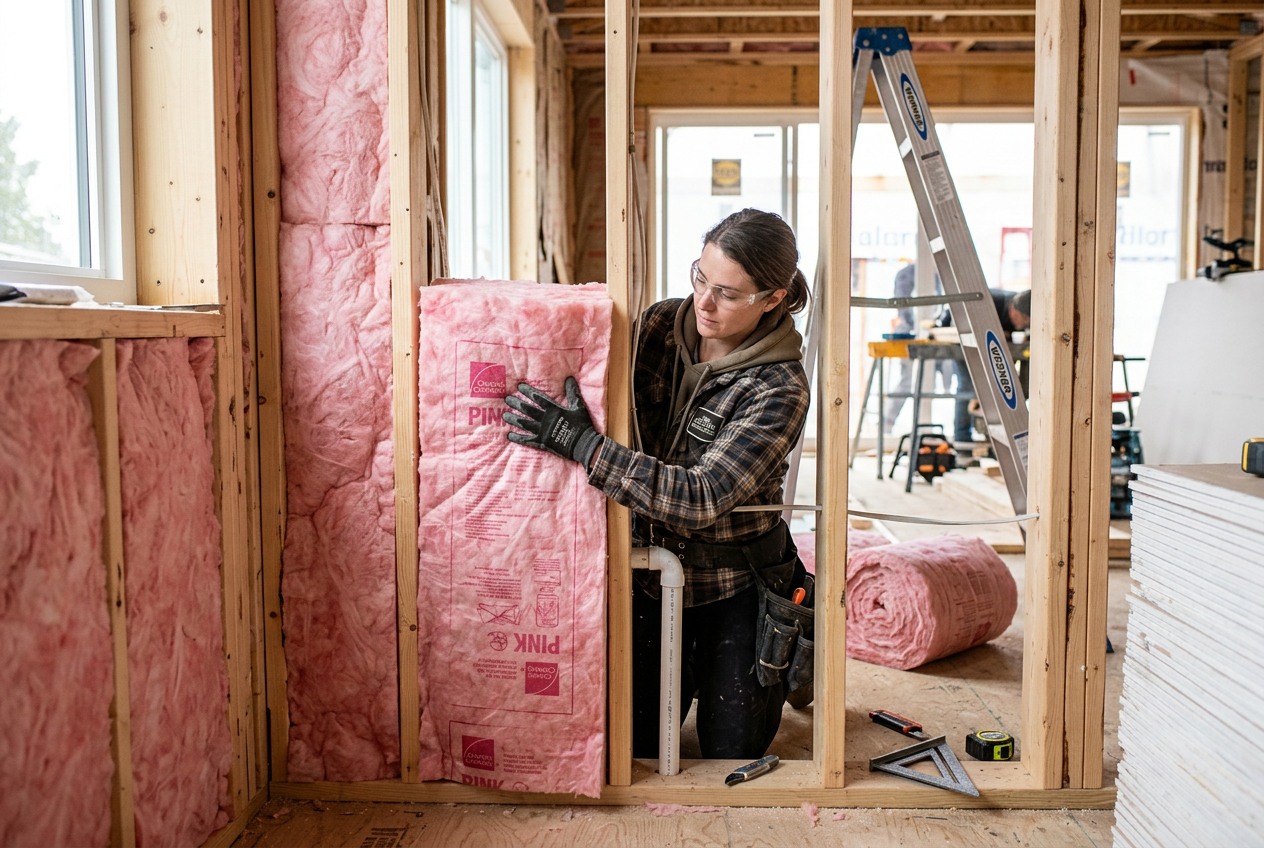
Yes, many Australian homeowners can install ceiling insulation themselves, but it depends on the type of roof space, your access, your safety comfort level, and whether any electrical or other regulated work is involved. For plenty of straightforward batts jobs in an accessible roof cavity, DIY can be a practical option. For awkward roofs, older homes, or anything involving wiring, heat sources, or damage in the ceiling space, it is usually smarter to bring in a licensed professional.
Before you start, remember that the National Construction Code and Australian safety requirements still matter, even on a DIY job. You are responsible for doing the work safely and making sure you do not create a fire, electrical, moisture, or ventilation problem.
When DIY Ceiling Insulation Makes Sense
DIY installation is often suitable when you are dealing with:
- an accessible roof cavity with enough headroom to move safely
- standard ceiling insulation batts that are easy to handle
- no signs of water leaks, mould, or damaged plasterboard
- no old, brittle, exposed, or poorly joined wiring in the work area
- a home where the roof space can be entered without disturbing hazardous materials
Many homeowners choose DIY for simple top-up jobs, particularly where the existing insulation is uneven or compressed and just needs replacement or reinforcement. If you buy ceiling batts from Bunnings or Mitre 10, check the product’s R-value, size, and suitability for your climate zone and roof structure.
When You Should Call A Professional
Some jobs are not suitable for DIY, or they become unsafe very quickly. You should get a qualified tradesperson if you have any of the following:
- electrical wiring that looks damaged, crowded, or not securely fixed
- downlights, transformers, fans, or other fittings that may overheat
- evaporative cooling ducts, ducted air-conditioning, or roof-mounted equipment
- roof access that is tight, steep, dusty, or difficult to move around in
- suspected asbestos-containing material
- water stains, mould, or signs of a roof leak
Any electrical work in Australia must be carried out by a licensed electrician. If there is anything you need to disconnect, move, extend, or alter around cabling, lighting, or fixed electrical fittings, stop and call a licensed professional. The same applies to gas or plumbing-related issues found in the roof space.
How To Install Ceiling Insulation Safely
If you decide to do the work yourself, plan carefully and work methodically. A good result depends on preparation as much as fitting the insulation itself.
Start With Safety
- Switch off power to the relevant circuit before entering the roof space, and do not touch any electrical components.
- Wear long sleeves, gloves, eye protection, a dust mask, and sturdy shoes.
- Use crawl boards or purpose-made walk boards so you do not step through plasterboard.
- Work in cooler parts of the day if possible, because roof spaces can become extremely hot.
Prepare The Ceiling Space
Clear loose debris where you can, but do not disturb wiring, ducts, or existing services. Check that vents, exhaust outlets, and roof ventilation paths will remain clear. Insulation should not block eaves ventilation or other designed airflow paths.
Lay The Batts Correctly
Measure spaces carefully and cut batts so they fit snugly between ceiling joists or trusses without being compressed. Compressed insulation performs poorly. Fit batts tightly to each other, but do not jam them into place. Keep insulation away from hot fittings and follow the manufacturer’s clearance instructions around lights and other heat sources.
If you are working around existing insulation, avoid leaving gaps, thin spots, or areas where the batts are bunched up. The aim is even coverage across the whole ceiling area.
DIY Vs Professional Installation
| Factor | DIY | Professional Installer |
|---|---|---|
| Best for | Simple batts in an accessible roof space | Complex roofs, repairs, or tricky access |
| Electrical safety | Must avoid all electrical work | Can coordinate licensed electrical work if needed |
| Risk of mistakes | Higher if you are inexperienced | Lower, especially for fit and coverage |
| Time and effort | You do the labour yourself | Faster and less physically demanding for you |
| Overall suitability | Good for confident DIYers | Better for older homes or problem roof spaces |
Common Mistakes To Avoid
- Covering or trapping electrical fittings or cables
- Blocking vents or airflow through the roof space
- Leaving gaps around edges, manholes, or awkward corners
- Compressing batts too tightly
- Ignoring signs of leaks, mould, or vermin damage
- Choosing insulation that is unsuitable for the roof type or climate
If your home has plasterboard repairs, damaged cornices, or roof-related access issues, it can be worth involving other trades as well. For example, a plasterer may be needed before insulation can be fitted properly in a damaged ceiling area.
The Bottom Line For Australian Homes
So, can you install ceiling insulation yourself? In many cases, yes, if the job is simple, the roof space is safe to access, and there is no electrical or structural complication. But if the ceiling space contains any unsafe wiring, heat-producing fittings, moisture damage, or hard-to-reach areas, a licensed tradesperson is the better choice. A careful installation can improve comfort in summer and winter, but only if it is done safely and to a good standard.
If you want more home improvement guidance, the team at Trade Directory NZ also shares trade advice for homeowners.
Ready to get it done properly? Find qualified local insulation installers on Aussie Trade Directory and connect with a professional near you.