
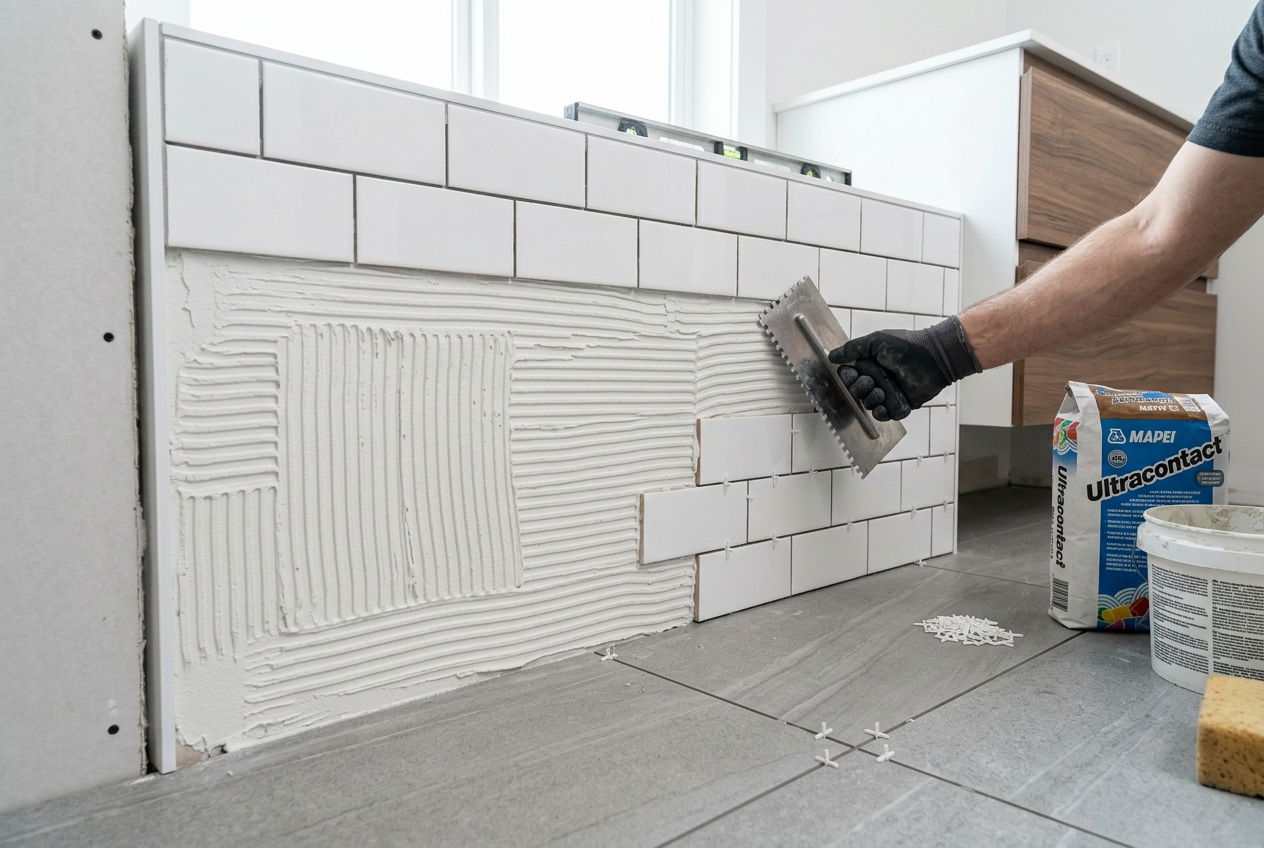
Yes, in many cases you can tile over existing tiles in an Australian home, but only if the original surface is solid, well bonded and suitable for a new finish. Done properly, it can save mess and time compared with ripping everything up. Done badly, it can lead to hollow spots, cracked grout and tiles lifting later on.
The key question is not just can you, but should you. A good tiler will inspect the existing tiles, the substrate underneath, and the room conditions before recommending the best approach. In wet areas, especially bathrooms and laundries, you also need to be careful not to compromise waterproofing or fall to drains.
When Tiling Over Tiles Is Usually OK
Tiling over existing tiles is often suitable when the original tiles are firmly stuck down, the floor or wall is stable, and there is no sign of movement, water damage or cracking through the substrate. It’s most commonly done on internal walls, kitchen splashbacks and some bathroom walls. Floors can also be tiled over, but they need even more careful checking because they cop more traffic and movement.
Before starting, the surface should be cleaned thoroughly to remove soap scum, grease, old silicone, mould and waxy residues. Any damaged grout or loose tiles need to be repaired or removed first. If there are high spots, they may need to be ground back so the new tile layer sits flat.
Good Signs You Can Tile Over Existing Tiles
- The tiles sound solid when tapped, not hollow.
- There are no loose, cracked or rocking tiles.
- The substrate underneath is stable and not water damaged.
- The surface can be properly roughened or primed for adhesion.
- Heights will still work around doors, skirting boards, cabinetry and fixtures.
When You Should Remove the Old Tiles
Sometimes the better option is to take the old tiles off first. If the existing tiles are loose, badly cracked, lifting at the edges, or installed over a failing substrate, tiling over them is just covering up a bigger problem. In older Australian homes, movement in timber floors can also make an existing tiled surface too unstable for another layer.
You should also avoid tiling over tiles where the extra thickness will cause issues with door clearances, appliance fit-out, shower screens, drains or transitions into other rooms. In wet areas, the National Construction Code requirements for waterproofing and fall can be more difficult to meet if layers build up too much.
Common Red Flags
- Water damage behind walls or under floors.
- Cracked tiles in a pattern that suggests movement.
- Existing tiles installed over old adhesive that is failing.
- Uneven surfaces that would require too much build-up in adhesive.
- Bathroom floors where waterproofing status is unknown.
How a Tiler Prepares Tiles for New Tiles
If the existing surface is suitable, preparation is the make-or-break step. A tiler will usually start by deep cleaning and then mechanically abrading the tile glaze so the new adhesive can bond properly. Depending on the product system, a suitable primer may be used before laying the new tiles with the right adhesive for the substrate and tile type.
Large-format tiles, porcelain tiles and some stone-look products often need a well-prepared, very flat base. Your tiler may also check expansion joints and movement joints, especially in larger rooms or areas exposed to direct sun, such as rooms with big western-facing windows in hotter parts of Australia.
| Option | Best For | Main Benefit | Main Risk |
|---|---|---|---|
| Tile over existing tiles | Sound, stable surfaces | Less demolition and faster turnaround | Extra thickness and hidden defects |
| Remove old tiles first | Damaged or uncertain bases | Fresh start and better inspection | More mess and labour |
DIY or Hire a Professional?
Some handy homeowners can manage basic prep work, but tile-over-tile jobs are often best left to a qualified tiler. The main reason is that surface preparation and substrate assessment matter more than they first appear. If you miss loose tiles, movement, or waterproofing issues, the problem can reappear through the new finish.
Also remember that any electrical work around heated floors, power points or lighting must be done by a licensed electrician. Plumbing alterations, including moving drains or tapware, must be handled by a licensed plumber. For wet areas, make sure waterproofing is completed in line with Australian standards and manufacturer instructions, and check with your state-based Fair Trading or building authority if you are unsure about licensing requirements.
What To Ask Before You Start
- Are the existing tiles and substrate suitable for overlay?
- Will the extra thickness affect doors, drains or fixtures?
- Do any damaged tiles need to be removed first?
- What adhesive and primer system will be used?
- Is additional waterproofing required in the room?
If you are choosing new tiles, Bunnings and Mitre 10 can help with ranges, while brands like Gyprock/CSR, James Hardie, Colorbond/BlueScope, Dulux, Taubmans and British Paints are useful references when you are coordinating finishes across a wider renovation. For the tiling itself, though, the right installer matters more than the brand on the box.
So, can you tile over existing tiles? Often yes — but only when the base is sound, the room is suitable, and the prep is done properly. In many Australian homes, that makes it a practical renovation shortcut. In others, pulling the old tiles up is the safer long-term choice.
If your project is a bit complex, it pays to get advice early. For Australian homeowners looking for help, you can also explore Trade Directory NZ.
Ready to update your bathroom, kitchen or laundry? Find qualified local tilers on Aussie Trade Directory and get the job done properly.