
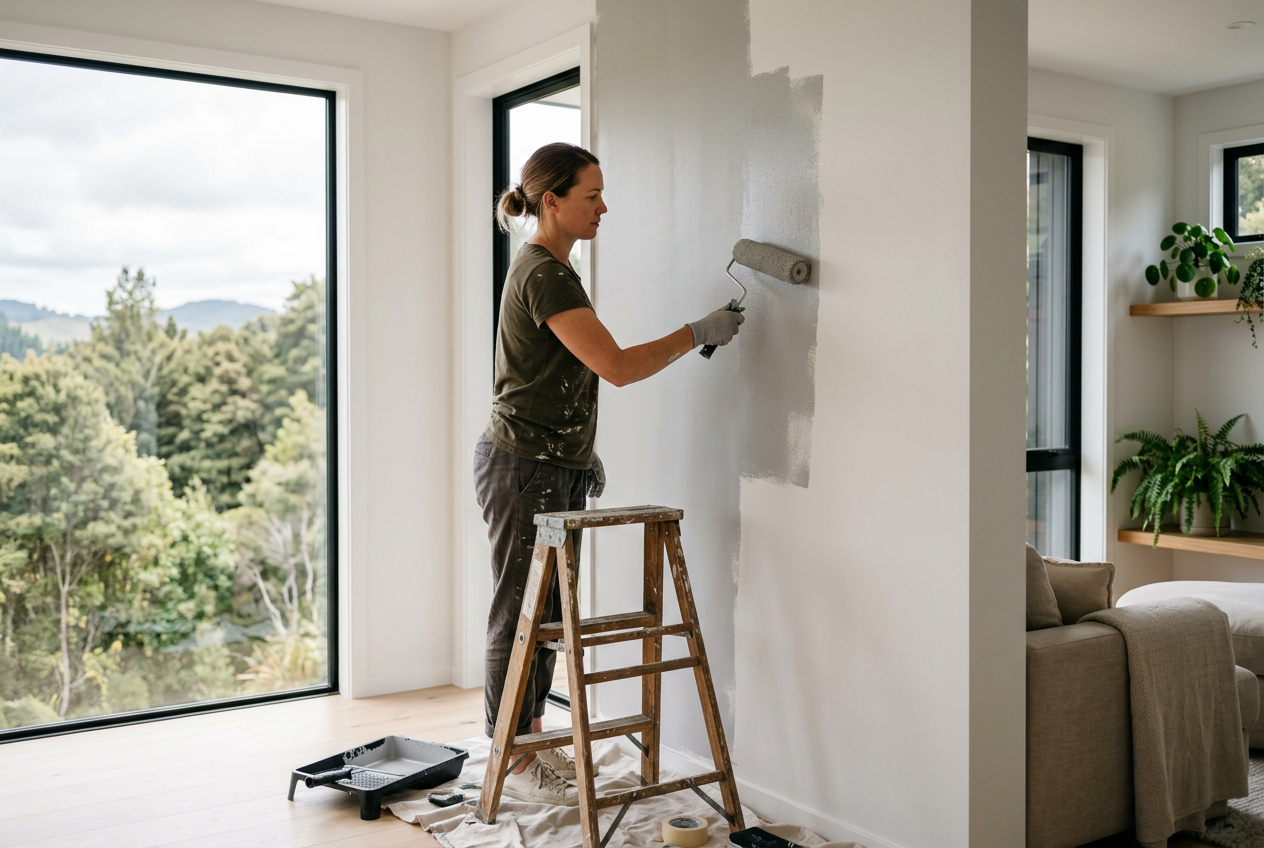
If you have a half-full tin of ceiling paint sitting in the garage, it is tempting to use it on the walls and get the job done. In some situations, you can. But ceiling paint is made for a different job, and the finish on your walls may not look or wear as well as a proper wall paint.
For Australian homes, the answer depends on the room, the condition of the walls, and the type of ceiling paint you have. Products from Dulux, Taubmans and British Paints sold through Bunnings or Mitre 10 are usually labelled for a specific surface, so always check the tin before you start.
What Is Ceiling Paint Designed To Do?
Ceiling paint is usually formulated to reduce spatter, give good coverage overhead and create a flat finish that hides imperfections. That makes sense for ceilings, where glare from windows and downlights can show up every bump or patch.
Because of that, ceiling paint often has these traits:
- very low sheen or flat finish
- good hiding power
- easy application with less dripping
- less focus on washability than wall paint
On a ceiling, those features are useful. On a wall, they can be a mixed blessing. A flat finish can look elegant, but it may mark more easily in hallways, bedrooms with kids, and busy living areas.
When Ceiling Paint Can Be Used On Walls
Yes, you can use ceiling paint on walls in some cases, especially if the area is low traffic and you want a very matte look. It can work well on feature walls, spare rooms, or surfaces where appearance matters more than cleanability.
It is also a practical option if you are matching an existing flat finish and you already have a compatible water-based paint. If the wall is in good condition and you are painting over a similar colour, the result may be perfectly acceptable.
However, it is not the best choice for every room. In Australian homes, walls often need to stand up to heat, humidity, dust, air conditioning and everyday marks. A dedicated wall paint is usually better suited to that job.
Ceiling Paint vs Wall Paint
| Feature | Ceiling Paint | Wall Paint |
|---|---|---|
| Finish | Usually very flat | Flat, low sheen, satin or washable finishes |
| Coverage | Good hiding power for overhead surfaces | Balanced coverage and durability |
| Washability | Often lower | Usually better for marks and cleaning |
| Best use | Ceilings and patch-hiding surfaces | Interior walls and lived-in areas |
If you are painting a rental, family home or high-use space, a wall-specific product will usually give you a tougher and more practical finish. If the wall is only for occasional use, ceiling paint may be fine.
Important Things To Check Before You Paint
Before using ceiling paint on walls, read the label carefully. Australian paint tins often give surface guidance, drying times, recoating instructions and primer recommendations. That is especially important if you are painting over new plasterboard, repaired patches or old glossy paint.
Also consider these points:
- Surface condition: flat paint shows scuffs and dents less than sheen, but it can also highlight poor patching if the surface is not properly sealed.
- Moisture: in bathrooms, laundries and kitchens, use a paint designed for moisture and regular cleaning.
- Primer: bare plasterboard, plaster repairs and certain glossy surfaces usually need prep and priming before topcoating.
- Colour matching: ceiling whites can differ from wall whites, so test a sample before painting the whole room.
For fresh plasterboard installed by a plasterer using products from Gyprock or CSR, priming is especially important. A good sealer helps stop patchiness and improves adhesion.
How To Get A Better Result If You Do Use It
If you decide to use ceiling paint on walls, prepare properly. Clean the wall, remove dust, fill holes, sand smooth and let any filler dry fully. In dusty or coastal parts of Australia, wipe down the surface so salt, grime and fine dust do not affect adhesion.
Then do a test patch. This will show you how the colour looks in natural light and under your lights at night. Australian homes can have strong sun exposure, so the same white can look different in a sun-filled room versus a shaded one.
Apply the paint evenly with a quality roller suited to the surface. If the finish looks too dull or chalky for the room, switch to a wall paint with a low sheen or washable finish from a major brand such as Dulux, Taubmans or British Paints.
When You Should Not Use Ceiling Paint On Walls
Avoid using ceiling paint on walls when you need durability, moisture resistance or easy cleaning. That includes:
- kitchens
- bathrooms and ensuites
- laundries
- hallways and entry areas
- children’s bedrooms and playrooms
If the wall is stained, mould-affected, water-damaged or cracking, fix the cause first. For structural issues, leaks or damage to building materials such as plasterboard or fibre cement, get the right trade involved. Electrical work, gas work and certain plumbing tasks must be carried out by a licensed professional in Australia.
For any major repainting or repairs in homes built or renovated under the National Construction Code, it is worth making sure the paint system suits the substrate and the room conditions. If you are unsure, ask a qualified painter or your local paint specialist at Bunnings or Mitre 10.
In short, ceiling paint can be used on walls, but it is not always the smartest choice. It is best for low-traffic areas where a very flat finish is wanted, while proper wall paint is the better all-round option for most Australian homes.
For more home improvement resources around Australia and abroad, you can also visit Trade Directory NZ.
If you want a clean, professional result, find experienced local painters on Aussie Trade Directory and choose a qualified local pro for your next paint job.