
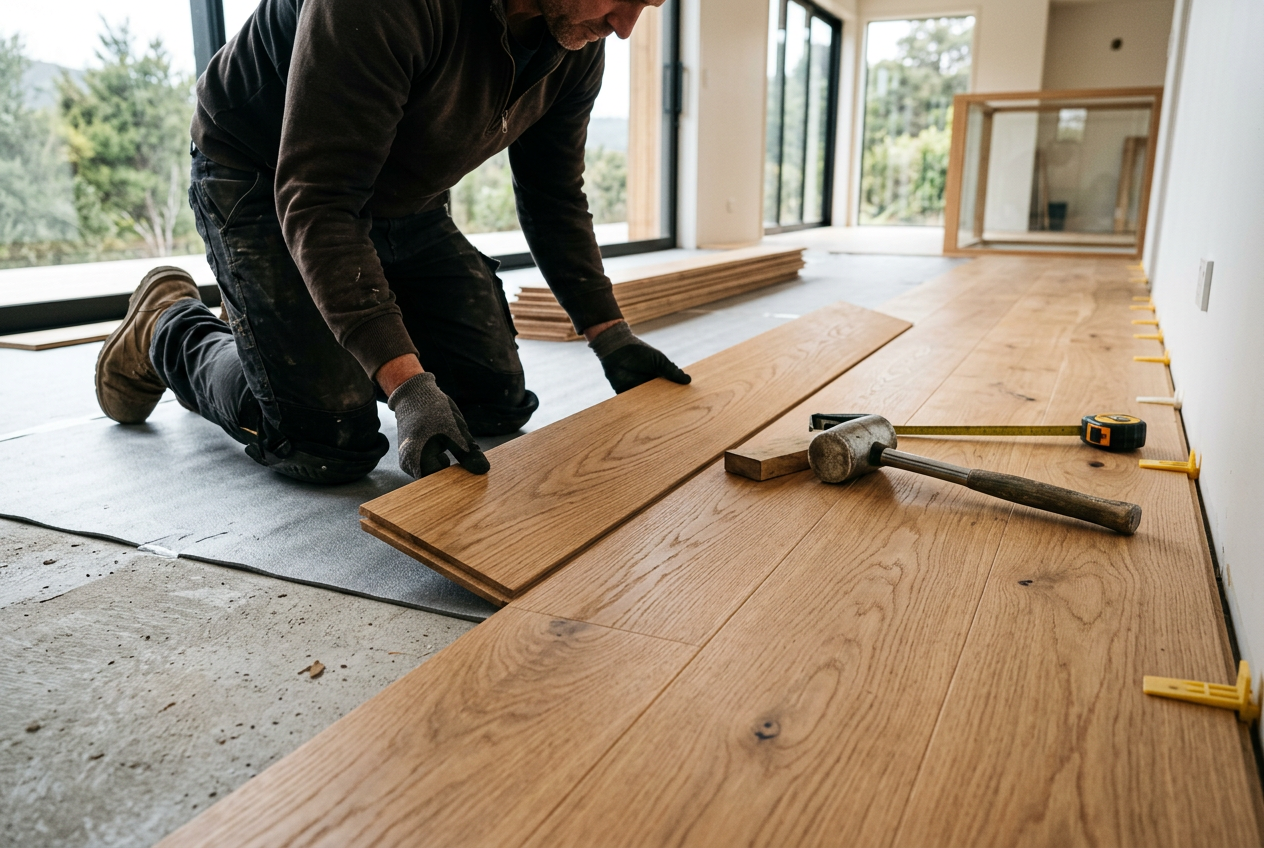
If you are installing new flooring in an Australian home, acclimatisation is one of the most important steps to get right. In simple terms, acclimatising flooring means letting the boards or planks adjust to the temperature and humidity of the room before installation. This helps reduce movement after laying, which can mean fewer gaps, less cupping and a better-looking finish.
The short answer is: often yes, you should acclimatise flooring before laying it, but the exact requirement depends on the product. Timber, hybrid, laminate and some engineered products may all need different handling. Always check the manufacturer’s instructions first, because those instructions usually override general advice. If you are unsure, a qualified flooring installer can tell you what is needed for your specific product and home.
Why Acclimatisation Matters
Australian homes can experience big swings in temperature and humidity, especially between coastal areas, inland regions, and seasonal changes. Flooring materials respond to those conditions. Timber can expand and contract with moisture changes, while some laminate and hybrid products can also move slightly if they are installed before they have settled.
If flooring is laid too soon, you may run into problems such as:
- gapping between boards
- crowning or cupping
- boards lifting at the edges
- click systems not locking properly
- uneven joins or squeaks
Acclimatising does not guarantee a perfect result, but it gives the material a better chance to stabilise before it is fixed down or clicked together.
Which Flooring Types Usually Need Acclimatisation?
Different flooring products behave differently. Here is a general guide.
| Flooring Type | Acclimatisation Usually Needed? | Notes |
|---|---|---|
| Solid timber | Often yes | Very sensitive to moisture changes and installation conditions. |
| Engineered timber | Often yes | Still moves, though usually less than solid timber. |
| Laminate | Often yes | Especially important in rooms with changing humidity. |
| Hybrid flooring | Sometimes | Check the manufacturer’s guide carefully, as requirements vary. |
| Vinyl planks/sheets | Sometimes | May need to sit in the room to equalise temperature before install. |
As a rule of thumb, natural materials are more likely to need careful acclimatisation than highly stable products. But even modern flooring products can be affected by a hot garage, a damp slab, or a chilly air-conditioned room.
How To Acclimatise Flooring Properly
There is no single method that suits every flooring product, so always follow the manufacturer’s instructions. That said, these steps are commonly recommended for Australian homes:
- Bring the flooring into the room where it will be installed.
- Keep the room at normal living conditions, not unusually hot or cold.
- Leave the packaging open if the instructions say to do so, or partially open it to allow air movement.
- Store the boxes flat on a clean, dry surface.
- Keep the room protected from moisture, including leaks, damp slabs and wet trades.
It is also smart to check the subfloor before starting. A flooring product may acclimatise nicely, but if the slab or subfloor is too damp, the installation can still fail. For homes on concrete slabs, moisture testing and surface preparation are often critical.
When Acclimatisation Might Not Be Enough
Some flooring problems are not caused by skipping acclimatisation alone. In Australian conditions, the bigger issues can include direct sunlight, poor ventilation, dampness, or large temperature differences between rooms. For example, a north-facing room with strong afternoon sun can place extra stress on flooring if expansion gaps are too tight.
You should also be cautious if the flooring is going over underfloor heating, existing tiles, or an older subfloor. These situations may require extra preparation and specific installation methods. If the job involves structural floor repairs, waterproofing, asbestos concerns in an older home, electrical work, or any trade that is legally restricted, it must be carried out by a licensed professional in line with state and territory requirements.
Practical Tips For Homeowners
- Read the installation guide before you buy, not after delivery.
- Make sure the room is enclosed and weather-tight before acclimatising flooring.
- Do not store flooring in the shed, on the patio, or in a hot car.
- Use the right underlay and expansion gaps as specified by the product.
- Check humidity and dampness issues before laying anything down.
- If you are unsure, ask a flooring supplier such as Bunnings or Mitre 10 for the product sheet and installation advice.
For painted or finished interiors, some homeowners also use trusted Australian brands like Dulux, Taubmans or British Paints to complete the room after the flooring is in. If the job includes wall linings or repairs around the floor edge, products such as Gyprock from CSR or James Hardie systems may also be involved, and they should be installed according to the manufacturer and the National Construction Code.
So, Do You Need To Acclimatise Flooring?
In many cases, yes. If you want the best chance of a stable, long-lasting result, acclimatisation is a sensible step before laying flooring. It is especially important for timber-based products and any flooring that can expand or contract with changes in temperature and humidity.
The safest approach is simple: check the product instructions, prepare the room properly, and do not rush the install. A good flooring job starts before the first board goes down.
If you are planning a flooring project and need expert advice on insulation or room preparation, you can also read more at Building or renovating across the Tasman? Our sister site Trade Directory NZ covers the same topics for New Zealand homeowners.