
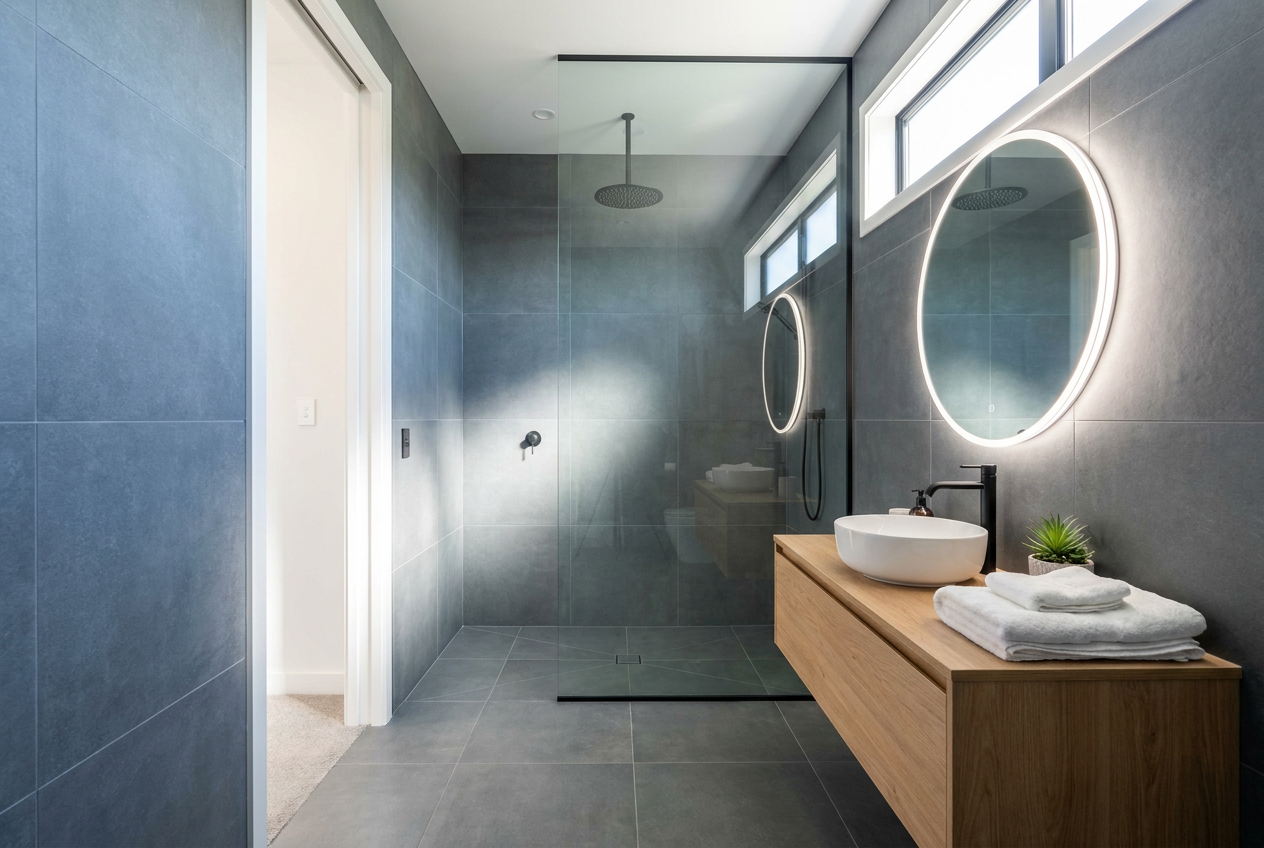
If you’re planning a bathroom reno, the short answer is usually yes: in Australia, a shower area generally needs proper waterproofing before tiling. Tiling alone is not waterproof. Grout and tile joints can still let moisture through, and in a shower that moisture can quickly damage wall linings, framing, floors and nearby rooms.
For most Australian homes, waterproofing must be done to meet the National Construction Code and relevant Australian Standards, especially in wet areas like showers. The exact requirements can vary depending on whether you’re building new, renovating, or doing a repair, so it’s worth checking with a licensed tradesperson or your state-based building regulator before you start.
Why Waterproofing Comes Before Tiling
A shower is exposed to constant water spray, steam and cleaning products. Even quality porcelain or ceramic tiles do not make the wall or floor waterproof by themselves. Water can move through grout, corner joints and penetrations around mixers, shower roses and niches.
Waterproofing is the hidden barrier behind the tiles. It protects the structure under the surface, including plasterboard, fibre cement sheeting, timber framing and subfloors. If that barrier is missing or poorly installed, you can end up with mould, loose tiles, rotten timbers, swelling linings and expensive repairs.
In Australia’s humid coastal areas and warm regions, moisture issues can become worse because things may stay damp for longer. That makes correct waterproofing even more important.
What The Usual Shower Build-Up Looks Like
In a typical shower renovation, the sequence is generally:
- prepare the wall and floor substrate
- install sheeting or set-out the shower base correctly
- apply waterproofing membrane to the wet area
- allow the membrane to cure as directed
- tile over the waterproofed surface
- grout and seal where required
That order matters. If you tile first, then try to waterproof over the top, you won’t protect the layers beneath properly. Waterproofing needs to be part of the shower build before the tiles go on.
Are There Any Cases Where Waterproofing Isn’t Needed?
In some very minor situations, you may not need a full waterproofing system, but a shower is usually not one of them. A bathroom splashback or a laundry wall may have different requirements, but a shower enclosure is considered a high-risk wet area.
Even in smaller bathrooms, an exposed shower must be treated as a waterproofing job. Requirements can also differ depending on the shower design, whether it has a hob, a step-free entry, or a fully tiled base. If you’re unsure, a licensed tiler or waterproofing specialist can tell you what’s required for your specific layout.
Who Can Do The Work?
Waterproofing in a bathroom is not just a cosmetic step. In many Australian states and territories, bathroom waterproofing and associated tiling work must be done by a licensed tradesperson if it forms part of regulated building work. Plumbers must also be licensed for plumbing connections, and any electrical work around bathrooms must be completed by a licensed electrician.
Always check with the relevant state-based licensing or Fair Trading body before starting. If you’re hiring someone, ask whether they are licensed and insured, and whether they follow the National Construction Code and Australian Standards for wet areas.
DIYers can often handle preparation tasks, but once the work moves into waterproofing, shower set-out or plumbing adjustments, it is wise to bring in a qualified professional.
How To Tell If Waterproofing Has Been Done Properly
Good waterproofing is not something you should guess at once the tiles are down. Signs of proper work include:
- a continuous membrane applied to the wet area
- neat sealing around corners, wall-to-floor junctions and penetrations
- the correct falls to the shower waste
- no pinholes, gaps or missed spots
- the membrane being allowed to cure before tiling
If your bathroom already has tiles and you’re worried about leaks, look for cracked grout, mould, swollen skirting or staining on nearby ceilings and walls. Those can be warning signs that water is getting through or that the original waterproofing has failed.
Waterproofing Vs Tiling: Quick Comparison
| Step | What It Does | Why It Matters |
|---|---|---|
| Waterproofing | Creates a moisture barrier under the tiles | Protects the structure from leaks and rot |
| Tiling | Provides the finished surface | Looks good and helps shed water, but is not waterproof on its own |
| Grouting and sealing | Finishes joints and some edges | Reduces water entry, but does not replace waterproofing |
Choosing Materials And Products In Australia
For Australian bathrooms, trades commonly use membrane systems, tile adhesives, cement sheeting and bathroom linings from trusted local suppliers such as Bunnings and Mitre 10, alongside major Australian manufacturers like Gyprock/CSR and James Hardie for wall systems. Paint and prep products from brands such as Dulux, Taubmans and British Paints are often used in adjoining areas, although they are not a substitute for proper shower waterproofing.
If you’re not sure what suits your bathroom, a professional tiler or waterproofer can recommend a system that suits your substrate, shower style and local conditions.
The Bottom Line
Yes, for a shower in Australia, waterproofing generally needs to happen before tiling. Tiles are the finish, not the barrier. Skipping waterproofing can lead to costly water damage, mould and repairs that are far more difficult than doing the job properly from the start.
For the best result, use a licensed tradesperson who understands the National Construction Code, your state requirements and the correct installation sequence. If you’d like to compare options beyond Australia, you can also visit Trade Directory NZ.
Ready to get your shower done properly? Find qualified local tilers on Aussie Trade Directory and compare experienced trades near you.