
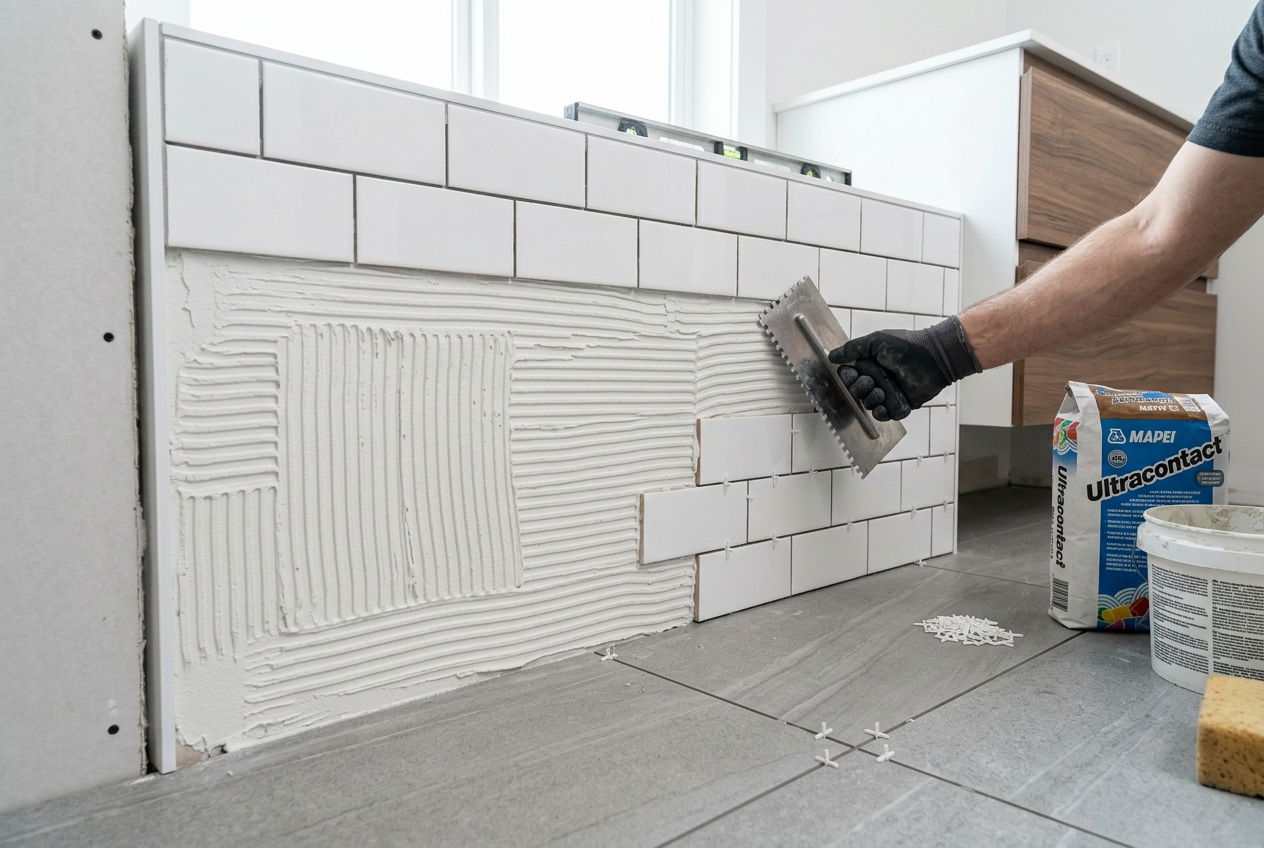
Choosing the right grout can make a big difference to how your tiles look, how easy they are to clean, and how well they hold up in Australian homes. The two most common options are epoxy grout and cement grout. They may look similar once installed, but they perform very differently.
If you’re planning a bathroom renovation, a kitchen splashback, a laundry refresh, or outdoor tiling, understanding the difference between epoxy grout and cement grout will help you choose the right finish for the job.
What Is Cement Grout?
Cement grout is the traditional grout used in many tiled areas. It is made from cement, water, and often sand, with additives to improve workability or stain resistance. It is widely available at Bunnings, Mitre 10, and other Australian hardware stores, and is the grout most DIYers are familiar with.
It is commonly used for wall tiles, floor tiles, and general indoor tiling. Once mixed and applied, it hardens as it dries and cures. Cement grout is usually easier to work with than epoxy grout, especially for smaller jobs or for first-time DIY tilers.
What Is Epoxy Grout?
Epoxy grout is a two-part product made from epoxy resins and a filler powder. Unlike cement grout, it does not rely on water to harden in the same way. Instead, the components react chemically to form a very tough, dense finish.
This type of grout is often chosen for areas that need excellent stain resistance, strong chemical resistance, and low water absorption. It is a popular option for showers, benchtop splashbacks, commercial kitchens, and other high-use areas where easy cleaning matters.
Key Differences Between Epoxy Grout And Cement Grout
| Feature | Cement Grout | Epoxy Grout |
|---|---|---|
| Ease of use | Generally easier for DIY application | Harder to apply and clean up |
| Stain resistance | Moderate, unless sealed or modified | Excellent |
| Water resistance | More porous | Very low porosity |
| Durability | Good for most homes | Very high |
| Maintenance | May need sealing and occasional upkeep | Lower maintenance |
| Cost | Usually the budget-friendly option | Usually more expensive |
The biggest practical difference is porosity. Cement grout can absorb water and stains if it is not sealed or if it wears over time. Epoxy grout is far more resistant to moisture, mould, food spills, cleaning chemicals, and general wear.
Where Each Grout Works Best In Australian Homes
Cement Grout Is Often Suitable For:
- Living area floor tiles
- Feature walls and splashbacks with light use
- Bedrooms, hallways, and low-moisture areas
- Projects where simpler installation matters
Epoxy Grout Is Often Better For:
- Bathrooms and showers
- Kitchen splashbacks and benchtop edges
- Laundries
- Areas exposed to frequent cleaning
- Outdoor entertaining areas in harsh weather zones
Australia’s climate can be tough on building materials. In humid coastal areas, grout may be exposed to more moisture. In hot, sunny regions, tiled areas can face thermal movement and heavy cleaning. In those situations, epoxy grout can be a smart choice for the right surface, especially where long-term performance is a priority.
What To Consider Before You Choose
Think about how the tiled area will be used, how much maintenance you are comfortable with, and whether the surface is exposed to water or frequent spills. If you want a grout that is easier to install and more forgiving for DIY work, cement grout is often the practical option. If you want the most durable, stain-resistant finish, epoxy grout may be worth the extra effort.
Also consider the tile type and joint width. Some tiles and some installation conditions suit one grout better than the other. For large jobs, difficult substrates, or wet areas, it is wise to get advice from an experienced tiler before you start.
For homeowners planning work that affects waterproofing, bathroom membranes, or tiled wet areas, the National Construction Code and relevant Australian Standards matter. Poor tiling or waterproofing can lead to leaks, mould, and costly repairs. In many cases, a qualified tradesperson should handle the work to ensure it is done properly.
DIY Or Call A Professional?
Cement grout is generally the more DIY-friendly option, but tidy application still takes care and patience. Epoxy grout is less forgiving because it can set quickly and is harder to clean off tiles if you miss your timing.
If you are tiling a bathroom, shower, or any area where waterproofing is critical, it is sensible to use a licensed and experienced tiler. Where plumbing, electrical work, or other regulated services are involved, those tasks must be carried out by appropriately licensed professionals in your state or territory. Safe Work Australia guidance also applies when using tile cutters, sealers, adhesives, and cleaning chemicals.
Well-known Australian product ranges from brands such as Dunlop, Davco, Sika, and Mapei are commonly stocked through Bunnings and Mitre 10, but always check the label to confirm the product suits your tile type and location.
For more homeowner guidance and trade advice, you can also explore resources through Trade Directory NZ.
If you want the job done properly, find a qualified local tiler on Aussie Trade Directory and compare local tilers for your next project.