
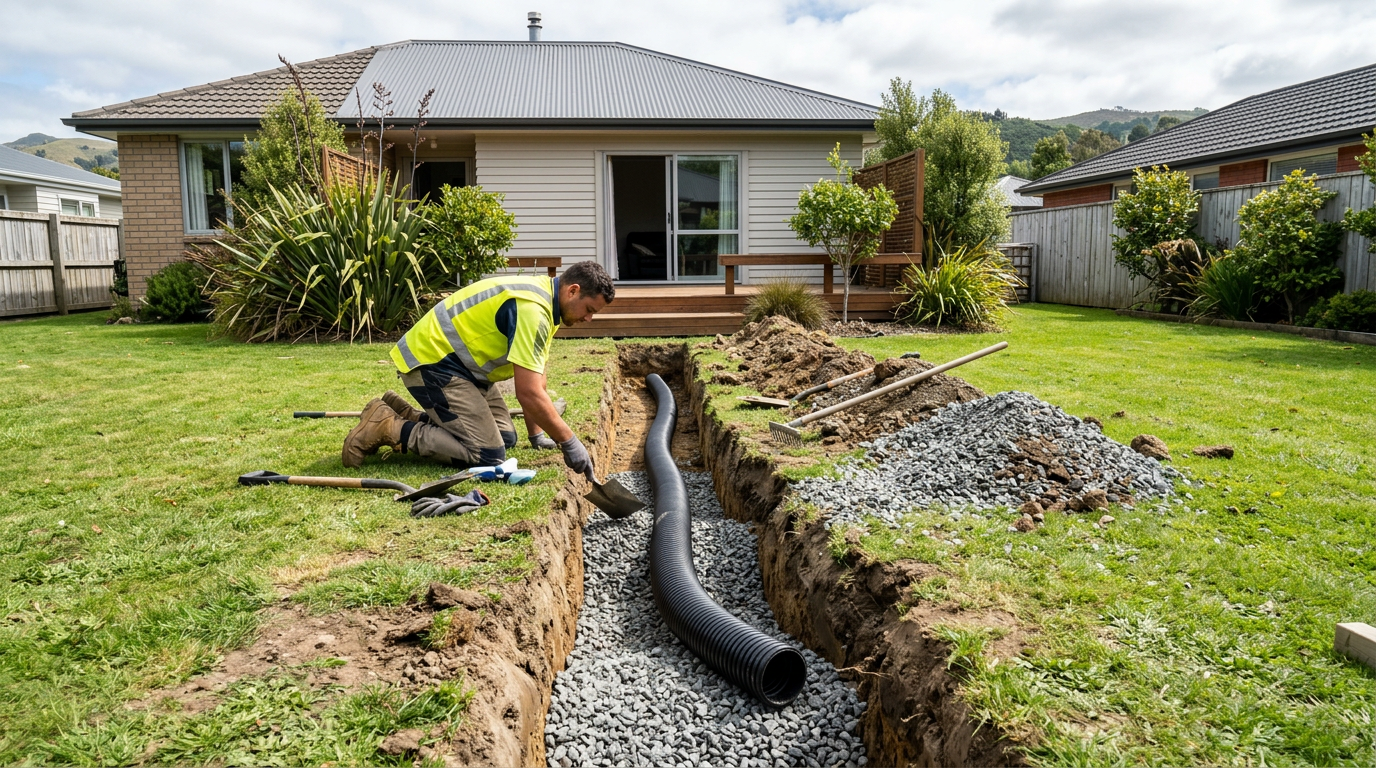
If you’ve got a blocked drain, backyard sinkhole, damp patch, or you’re planning renovations, knowing where your drains run can save a lot of guesswork. In Australia, drains may run under slabs, through the side setback, under paving, or toward the street connection, and older homes can have a few surprises hidden underground.
The good news is there are practical ways to work out the layout before you start digging. Some steps are DIY-friendly, while others should be left to a licensed plumber because they involve inspection of sewer or stormwater infrastructure.
Start With the Clues Above Ground
Begin by looking for visible signs of where wastewater and stormwater might travel. In many homes, the route of the drains can be inferred from the location of fixtures and outside grates.
- Check where toilets, basins, showers, laundry troughs and the kitchen sit in relation to each other.
- Look for inspection openings, grated pits, gully traps, overflow relief gullies, inspection shafts and stormwater pits.
- Follow the slope of the yard and paving, as drains usually run downhill to a connection point.
- Look for previous repairs, patches in concrete, or changes in paving that may mark a buried line.
If your home is a newer build, the drainage layout may be more predictable and follow common planning principles under the National Construction Code. In older Australian homes, however, extensions and renovations can create a more complicated setup.
Use Documents and Existing Records
Before you dig, check whether you already have paperwork that shows the plumbing layout. Building plans, renovation documents, and handover paperwork from the original build can be useful starting points. If you’ve had recent plumbing work, the plumber may have left notes, sketches, or compliance documents that indicate where the lines run.
You can also contact the appropriate water authority or utility service to ask whether they can confirm the location of the property connection or provide available mapping information. Coverage varies, and records may not show the whole internal layout, but they can help you narrow things down.
If you’re unsure, a licensed plumber can often interpret the clues much faster than a homeowner can, especially when the property has been altered over time.
DIY Methods to Trace Drain Lines
There are a few practical methods you can try at home to map a drain’s path without opening the ground. These are useful for getting a rough idea, but they won’t replace professional inspection for exact diagnosis.
| Method | What It Helps With | Limitations |
|---|---|---|
| Visual inspection | Finding pits, grates, gullies and likely routes | Only shows what you can see above ground |
| Water test | Watching which pit or outlet receives water when a fixture is used | Can be messy and may not reveal hidden bends |
| Inspection camera | Checking inside a drain line through an access point | Needs suitable access and experience to interpret |
| Pipe locator | Tracking buried pipe paths with specialised equipment | Usually requires a plumber or locator specialist |
A simple water test can help if you have access to an inspection opening. For example, running a basin or hose may show which gully or pit receives the flow. Keep water use sensible and avoid forcing anything into the system.
A drain camera is one of the best ways to see what is happening underground. Plumbers use it to inspect blockages, breaks, tree root intrusion and pipe direction. In the right hands, it can also help map where the line turns and where it exits the property.
When to Call a Licensed Plumber
In Australia, drain and sewer work is tightly regulated, and many tasks must be done by a licensed plumber. If you are opening sewer lines, altering drainage, dealing with blocked sanitary drains, or planning any excavation near plumbing, call a qualified professional. Licensing requirements are handled through state and territory plumbing regulators and Fair Trading or consumer affairs bodies.
You should also get professional help if:
- you smell sewage near the house or see recurring wet patches
- the drain is backing up into sinks, showers or toilets
- you suspect tree roots, a collapsed pipe or a broken connection
- you need to dig near likely drain lines before landscaping or concreting
- you are unsure whether the issue is sewer, stormwater or both
Licensed plumbers can use drain cameras, locating gear and other tools to identify the route accurately and safely. If excavation is required, they can help prevent damage to buried services and reduce the risk of an expensive mistake.
Drain Type Matters: Sewer vs Stormwater
Not all drains do the same job. Sewer drains carry wastewater from bathrooms, kitchens and laundries. Stormwater drains carry rainwater from roofs, driveways and yards. These systems may run in different directions and connect to different points, so it helps to know which one you are tracing.
- Sewer: Often linked to toilets, bathroom fixtures and the laundry.
- Stormwater: Commonly connected to roof gutters, downpipes, driveway pits and yard drainage.
Mixing up the two can lead to confusion, especially if your home has been extended or the original drainage plan is no longer obvious. A plumber can identify the system and explain the safest way to trace it.
Practical Tips Before You Dig
If you are planning to dig, work slowly and assume a drain may be closer than it looks. Australian yards often contain buried plumbing, electrical conduits and other services. Before any excavation, check with the relevant service location process and keep in mind that some work should be handled only by licensed professionals.
For small investigations, start with the easiest access point, note the direction of every gully or pit, and sketch a rough site plan. That simple map can be very helpful when you speak with a plumber or drainage specialist.
If you need parts, inspection gear or protective equipment, stores such as Bunnings and Mitre 10 can be useful for basic homeowner supplies, but do not rely on retail products alone to solve a hidden drainage problem.
If you want a second opinion, Building or renovating across the Tasman? Our sister site Trade Directory NZ covers the same topics for New Zealand homeowners.