
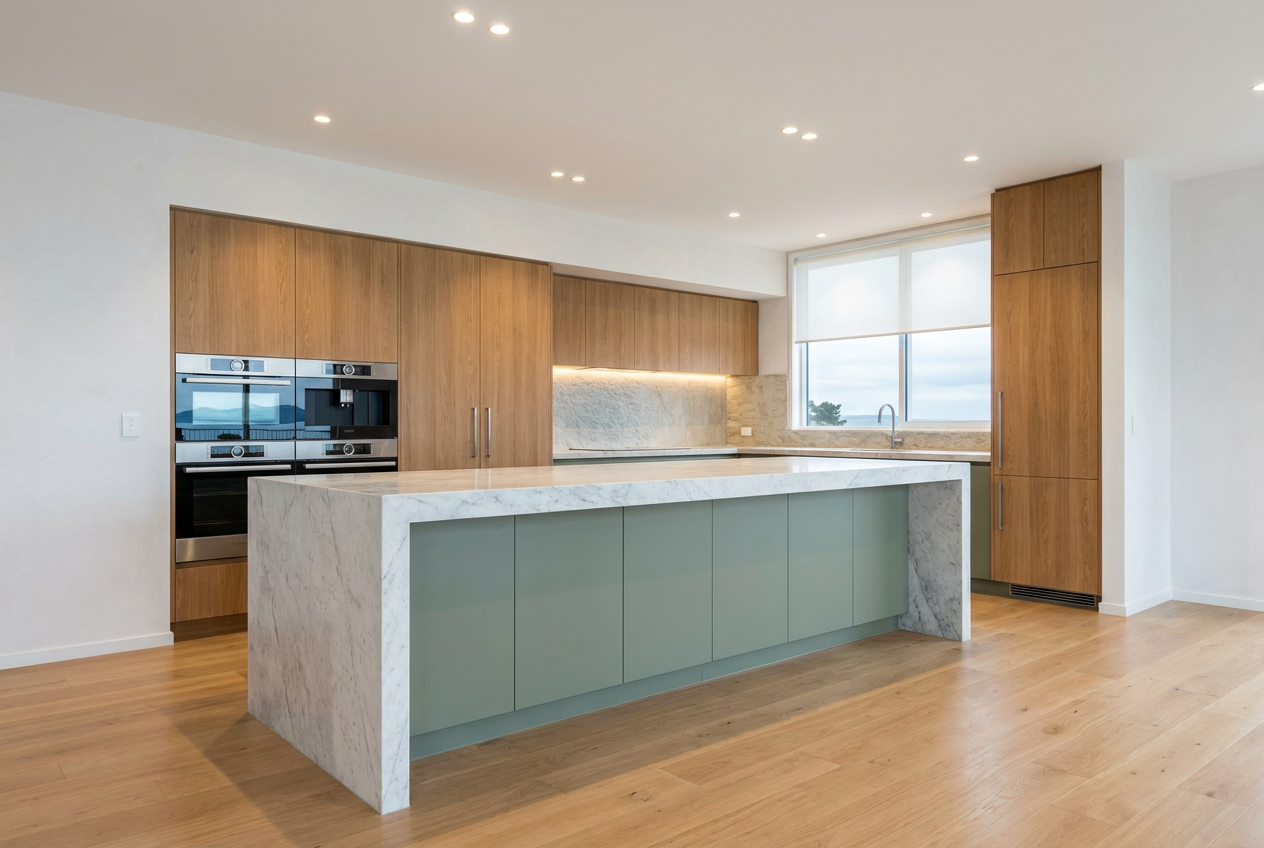
Choosing a kitchen splashback is about more than style. The right surface should handle heat, splashes and daily cleaning, while still suiting your cabinets, benchtop and the way you actually use the kitchen. In Australia, it also pays to think about the National Construction Code, moisture resistance, and whether any part of the job needs a licensed tradesperson.
If you’re renovating or updating a tired kitchen, a splashback can be one of the most visible design decisions you make. Here’s how to narrow down the options and choose something practical, durable and good-looking.
Start With How You Use The Kitchen
Before you look at colours or patterns, think about where the splashback will go and what it has to cope with. A busy family kitchen near the cooktop will need a different approach to a low-use butler’s pantry or light refresh.
- Cooking style: If you fry, simmer or cook with high heat often, choose a surface that is easy to wipe clean and suitable near cooking zones.
- Cleaning habits: If you want low maintenance, fewer grout lines and smooth finishes are usually easier to keep tidy.
- Light and space: Glossy or lighter finishes can help brighten smaller kitchens, while matte or textured surfaces can soften a modern fit-out.
- Layout: Full-height splashbacks behind the cooktop and sink generally offer better protection than a small feature panel.
If your kitchen has a gas cooktop, check the manufacturer’s instructions and the NCC requirements for clearances and heat resistance. Any changes involving gas, electrical points or moving power outlets must be done by a licensed professional.
Compare The Main Splashback Materials
There’s no single best splashback material for every home. The right choice depends on your budget range, cleaning preferences and the overall look you want. Common Australian options include ceramic or porcelain tile, glass, stainless steel, acrylic panels and stone or engineered stone-look finishes.
| Material | What It’s Good For | Things To Watch |
|---|---|---|
| Tiles | Flexible design choices, durable, widely available at Bunnings and Mitre 10 | Grout can stain if not sealed and maintained |
| Glass | Clean, modern look with very easy wiping | Needs accurate measuring and professional installation |
| Stainless steel | Great near heavy cooking and contemporary kitchens | Can show fingerprints and scratches |
| Acrylic panels | Budget-friendly, lightweight, fast to install | May scratch or mark more easily than harder surfaces |
| Stone-look surfaces | Luxurious finish with strong visual impact | Can be more expensive and may need specialist installation |
For many Australian homes, tiled splashbacks remain popular because they work with almost any kitchen style. If you like a classic finish, ceramic tiles from suppliers such as Bunnings, Mitre 10 or specialty tile retailers are easy to source. For a more seamless look, glass or large-format panels can reduce visual clutter.
Match The Splashback To Your Cabinets And Benchtop
The best splashback should tie the whole kitchen together. You can make it disappear into the background or use it as a feature.
If You Want A Calm, Timeless Look
Choose a splashback that is similar in tone to your benchtop or cabinetry. Soft whites, warm greys and muted neutrals work well with many Australian kitchen styles, from coastal to contemporary.
If You Want A Feature
A patterned tile, bold colour or textured finish can become the room’s focal point. If your cabinetry is already strong in colour or grain, keep the splashback simple so the space doesn’t feel busy.
Think About Finish, Not Just Colour
Gloss finishes reflect more light and can make a room feel brighter, but they may also show reflections and fingerprints. Matte finishes can look more understated and hide marks better, though some are a little harder to wipe perfectly clean.
Paint brands like Dulux, Taubmans and British Paints are useful references when choosing wall colours around the kitchen, especially if you want the splashback to coordinate with nearby painted surfaces.
Practical Installation And Maintenance Tips
A good-looking splashback still needs proper installation. The substrate must be suitable, sealed where required, and installed to handle moisture and regular cleaning. If you’re tiling over plasterboard, products such as Gyprock/CSR systems or moisture-resistant linings may be used in the right areas, while fibre-cement and other approved substrates can suit different applications. James Hardie products are commonly used in wet or semi-wet zones, depending on the system and finish chosen.
- Measure carefully: Include power point and rangehood positions before ordering panels or tiles.
- Plan for edges: Trim, silicone and finishing strips make a big difference to the final look.
- Use suitable adhesives and sealants: Follow manufacturer instructions for the specific material.
- Protect heat-sensitive materials: Check clearances near ovens, cooktops and hot appliances.
If you are having new power points fitted, existing ones moved, or a rangehood installed, those tasks must be completed by a licensed electrician. Likewise, any plumbing changes should be handled by a licensed plumber. Safe Work Australia guidance is also worth keeping in mind if you’re doing any demolition or prep work yourself, especially around dust and silica from cutting tiles or stone.
Choosing The Right Style For Your Home
Think about the overall style of your kitchen and home. A sleek apartment kitchen may suit large glass panels or slimline tiles, while a family home with a busy prep area may be better served by hard-wearing porcelain tiles or another low-maintenance surface. If your home is in a hotter Australian climate, a durable, easy-clean splashback can be a real advantage when the kitchen gets a workout through summer.
In the end, the best splashback is the one that fits your cooking habits, suits the room and is installed correctly. If you want to compare options, visit a local showroom and look at samples in natural light before making your final choice. You can also explore Trade Directory NZ if you’re comparing ideas across the ditch.
Ready to bring your kitchen update together? Find a qualified local tiler on Aussie Trade Directory and connect with local tilers who can help you choose and install the right splashback.