
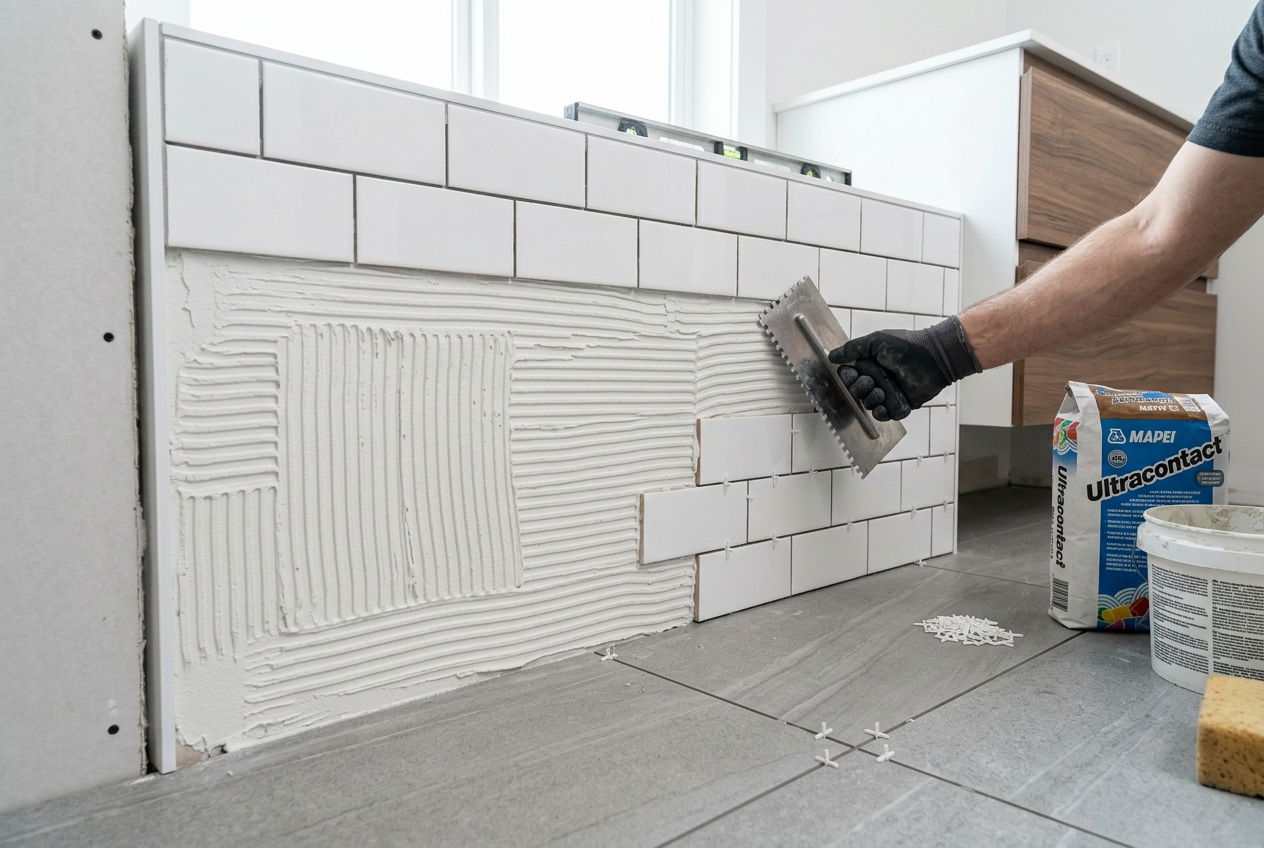
Need to trim a few tiles but don’t have a wet saw? You can still get a neat result with the right hand tools, patience and a bit of practice. For many small DIY jobs around Australian homes, especially splashbacks, laundry walls and simple bathroom repairs, a wet saw is handy but not essential.
The best method depends on the tile type, the cut you need, and how visible the edge will be. Ceramic tiles are usually easier to work with than porcelain, while natural stone often needs more specialised tools. If you’re dealing with structural waterproofing, shower trays, or any work affecting plumbing or electrical fittings, check the rules with your state Fair Trading or building regulator and use licensed trades where required.
Tools You Can Use Instead Of A Wet Saw
Before you start, make sure you have the right personal protective equipment. Safe Work Australia guidance is clear about the basics: safety glasses, gloves, a dust mask or respirator, and hearing protection if you’re using power tools. Dry cutting produces silica dust, so work outside where possible and keep the area well ventilated.
Common alternatives
- Tile scorer and snap cutter: Best for straight cuts on ceramic wall tiles and some floor tiles.
- Tile nippers: Useful for small curves, notches and tiny adjustments.
- Angle grinder with a diamond blade: Good for straight cuts, L-shaped cuts and harder tiles, but it creates dust.
- Handheld tile cutter: Handy for light-duty jobs and quick straight cuts.
- Jigsaw with a tile blade: Can help with cut-outs, especially around tapware or pipes, if used carefully.
| Tool | Best For | Pros | Watch Outs |
|---|---|---|---|
| Scorer and snap cutter | Straight cuts on ceramic | Clean, quick, low mess | Less effective on thick porcelain |
| Tile nippers | Small shaping and trimming | Cheap, simple to use | Rough edge, slow on bigger cuts |
| Angle grinder | Curves, notches, hard tiles | Versatile and powerful | Dust, noise, edge chipping |
| Jigsaw | Cut-outs and detailed shapes | Handy for awkward spots | Blade wear and vibration |
How To Cut Tiles With A Score And Snap Method
If you need a straight cut and you’re working with ceramic, a score-and-snap cutter is often the easiest choice. You can buy one from Bunnings or Mitre 10, and it’s a good tool to have for small tiling projects.
Step-by-step
- Measure the tile carefully and mark the cut line with a pencil or non-permanent marker.
- Place the tile on a stable, flat surface.
- Run the scorer firmly across the marked line once, using steady pressure.
- Line up the snapper or breaking bar and apply even pressure to split the tile.
- Lightly smooth the cut edge with a rubbing stone or tile file.
To reduce chipping, score only once and avoid going back over the line repeatedly. A clean, firm pass usually works better than multiple light passes. If the tile doesn’t snap neatly, it may be too hard or too thick for this method.
Using An Angle Grinder Without A Wet Saw
An angle grinder fitted with a diamond blade is one of the most versatile ways to cut tiles dry. It’s especially useful for porcelain, which can be too tough for basic snap cutters. You’ll find suitable tools and blades at major Australian hardware retailers, but make sure the blade is rated for tile cutting.
Tips for cleaner cuts
- Mark the cut clearly on the face of the tile.
- Support the tile so it doesn’t move while cutting.
- Use masking tape along the cut line to help reduce chipping.
- Start slowly and let the blade do the work.
- Cut slightly outside the line, then finish with a file if needed.
Dry cutting creates a lot of dust, so avoid doing it indoors unless you have proper dust control. If you’re cutting close to occupied areas, isolate the space as much as possible and clean thoroughly afterwards. In hot, dry Australian weather, dust can travel easily, so planning your workspace matters.
How To Handle Curves, Notches And Pipe Cut-Outs
Not every tile cut is a straight line. Around tapware, power points, floor wastes or pipes, you’ll often need shaped cuts. For these, tile nippers, an angle grinder, or a jigsaw with a suitable blade can help.
For small notches
- Mark the shape clearly.
- Make a series of small snips with tile nippers.
- Finish by smoothing the edge.
For pipe cut-outs
- Measure from the tile edges to the centre of the pipe.
- Mark the circle or semi-circle on the tile.
- Cut slowly from the edge towards the marked shape with a grinder or jigsaw.
- Trim carefully until the fit is right.
Always dry-fit the tile before fixing it in place. A little extra clearance is usually better than forcing the tile against a pipe or fitting.
When To Call A Professional
If the job involves waterproofing in a bathroom, any change to drainage, or work around electrical fittings, it may need a licensed professional under Australian laws and the National Construction Code. Tile work looks straightforward, but what sits behind the surface can be just as important as the finish you see.
For large areas, expensive feature tiles, or jobs where you want a flawless finish, hiring a qualified tiler can save time and reduce waste. A professional will also know how to handle movement joints, substrate preparation and edge finishing for Australian conditions, from humid coastal homes to dry inland climates.
If you’re comparing tile jobs across the ditch, you can also visit Building or renovating across the Tasman? Our sister site Trade Directory NZ covers the same topics for New Zealand homeowners.