
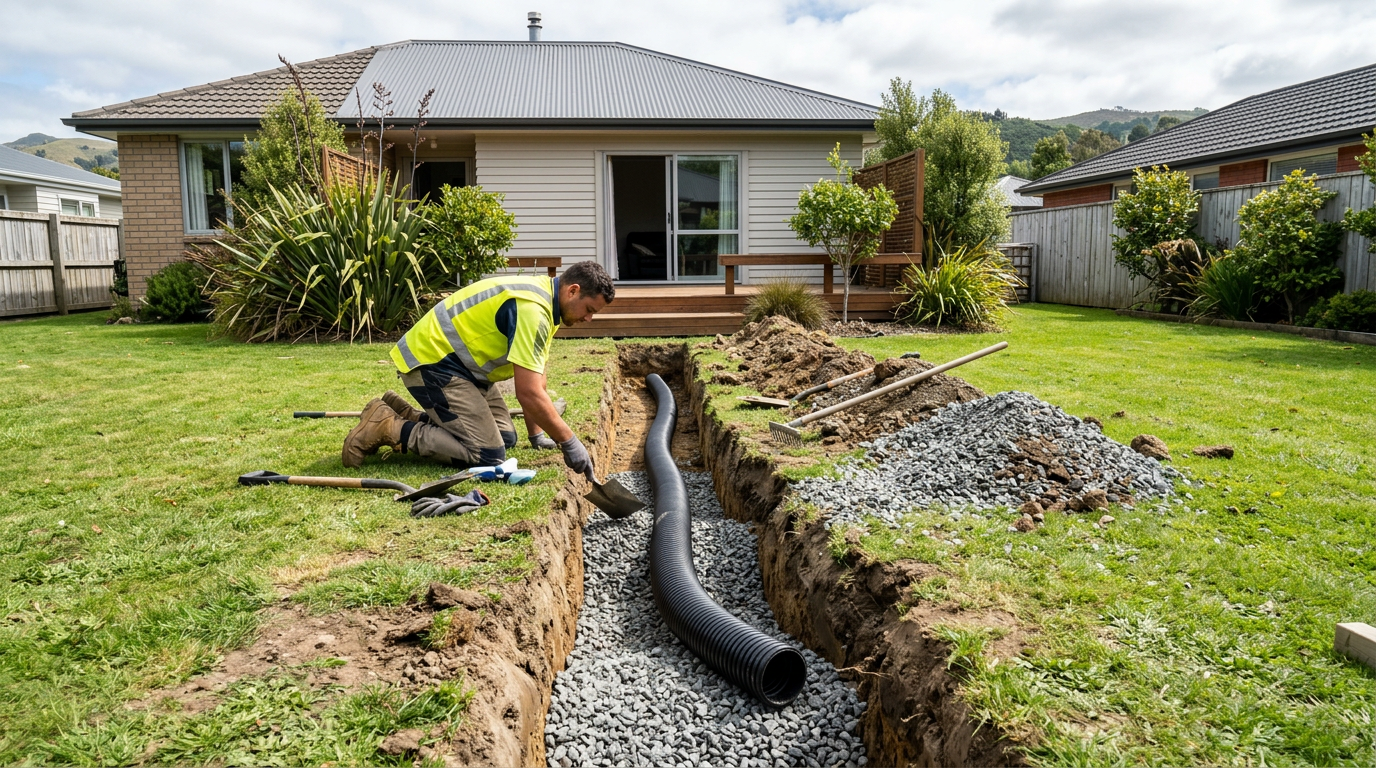
A wet backyard can turn from a nuisance into a long-term problem fast. Pooling water can kill lawn, invite mosquitoes, damage paths and sheds, and even affect your home’s foundations if runoff is directed the wrong way. The good news is that many drainage issues can be improved with a mix of simple surface fixes and, where needed, professional drainage work.
The best approach depends on why your yard stays soggy. Sometimes it is poor grading or compacted soil. Other times it is stormwater overflow, blocked pits, or a downpipe that is sending water to the wrong place. Start by watching where water sits after heavy rain, then match the solution to the problem.
First, Work Out What’s Causing The Wet Patch
Before digging anything up, inspect the yard during and after rain. Look for low points, overflow from gutters, water coming off paved areas, and areas where clay soil stays saturated for days. If only one section is boggy, the issue may be localised. If the whole yard is wet, the soil type and site slope may be the bigger factors.
Common causes of a wet backyard in Australia include:
- Downpipes discharging too close to the house
- Blocked gutters or stormwater pits
- Soil compaction from foot traffic or vehicles
- Clay-heavy soil that drains slowly
- Hard surfaces sloping towards garden beds or the house
- Poorly designed garden beds that trap water
If you suspect stormwater, blocked drains, or anything connected to the home’s plumbing system, bring in a licensed plumber. In Australia, stormwater and plumbing work is regulated, and DIY can create compliance and safety issues.
Practical Ways To Improve Drainage
For many homes, a combination of surface improvements works best. These options are usually the most practical starting points:
Regrade The Surface
If water is sitting because the yard is flat or slopes towards the house, the surface may need reshaping so water moves away from problem areas. A gentle fall away from the home and towards a legal drainage point is ideal. This is often one of the most effective fixes, but it needs care so you do not create runoff problems for neighbouring properties.
Install Or Improve Surface Drainage
Surface drainage can include spoon drains, grated channels, or swales that guide water away from lawns and paths. These can be useful where runoff gathers along paved areas or at the base of fences. A licensed plumber or experienced drainage contractor can advise on the right setup and connection points.
Break Up Compacted Soil
Compacted ground stops water soaking in. Aerating lawns, loosening the topsoil, and mixing in organic matter can help improve infiltration. For garden beds, adding compost and improving soil structure is often a better long-term fix than simply topping up with sand.
Use Raised Beds And Mounds
If certain garden areas stay wet, raise planting zones above the surrounding ground. This is especially useful for plants that dislike sitting in water. Raised beds also help you manage heavy clay soils by keeping root zones higher and better drained.
Install A Soakage Solution
In some yards, a soakwell or infiltration trench can help disperse stormwater underground. These systems need to be sized and installed correctly for local conditions, soil type and site restrictions. A licensed plumber should handle any stormwater connection or design that links to the home’s drainage system.
Which Fix Is Best For Your Yard?
| Problem | Likely Fix | Best For |
|---|---|---|
| Water pooling near paths or patios | Channel drain or surface regrading | Runoff that does not soak in |
| Whole yard stays wet after rain | Soil improvement, regrading, soakage system | Clay soils and flat blocks |
| Water coming from downpipes | Stormwater redirection by licensed plumber | Roof runoff and blocked discharge points |
| Garden beds holding water | Raised beds and improved soil structure | Planting areas with poor drainage |
When To Call A Professional
Some drainage jobs are suitable for a confident DIYer, like improving soil, cleaning gutters you can safely reach, or reshaping a small garden bed. But anything involving excavation near services, stormwater pipes, soak wells, or connections to the home’s plumbing should be done by a licensed professional.
You should also get help if the wet area is close to your slab, retaining walls, boundary fences, or driveways. Bad drainage work can undermine structures, create slip hazards, and cause water to move where it should not. In Australia, licensed plumbers and drainage specialists can work to the National Construction Code and state-based requirements, while Safe Work Australia guidance is a useful reference for safe site practices.
If the job involves electrical components such as sump pumps, remember that electrical work must be done by a licensed electrician. Never attempt wiring yourself.
Maintenance That Helps Keep A Backyard Dry
Once drainage is improved, keep on top of maintenance so the problem does not return. Clean gutters regularly, check that downpipes are flowing, remove leaf litter from grates, and make sure garden beds have not sunk over time. On many Australian blocks, a seasonal check after heavy rain is the easiest way to spot issues early.
For landscaping materials, many homeowners choose products from Bunnings or Mitre 10, while treated pine, fibre cement and steel products from Australian suppliers such as James Hardie, CSR Gyprock, Dulux, Taubmans, British Paints and Colorbond by BlueScope can be useful elsewhere in the broader outdoor project. The key is to choose materials suited to wet conditions and install them correctly.
Every yard is different, but the basic rule is simple: get water moving away from the house, reduce the amount sitting on the surface, and fix the cause rather than just treating the muddy patch. If you need a second opinion, it can also help to compare advice with Trade Directory NZ.
Need help sorting out a wet backyard? Find local plumbers on Aussie Trade Directory and connect with a qualified professional near you.