
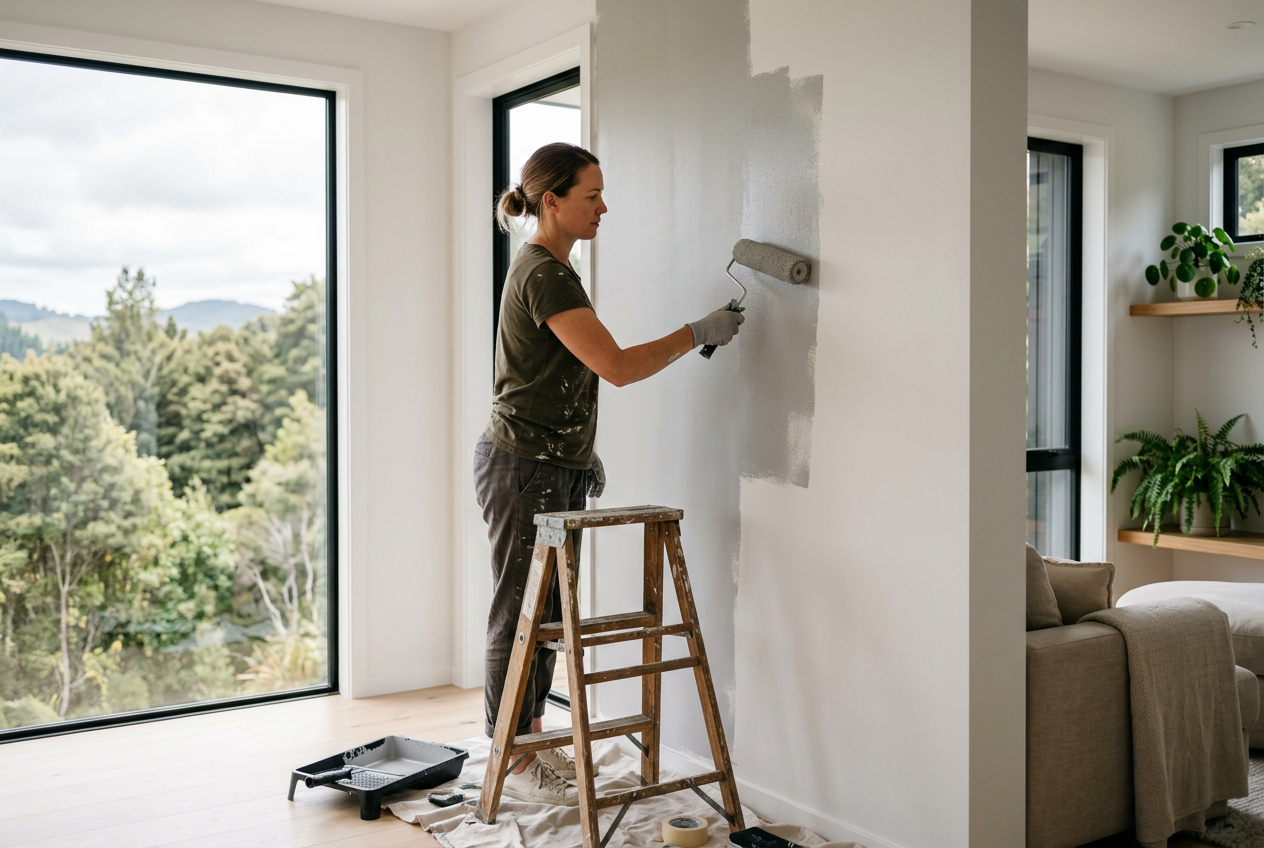
Getting your home ready before the painters arrive can make the job smoother, cleaner and faster. Good preparation helps the finish look better, reduces delays and gives your painter a clear run at the work. Whether you’re painting a single room, the whole interior, or external walls exposed to Australia’s sun and weather, a bit of planning goes a long way.
Start With A Proper Walk-Through
Before any drop sheet goes down, walk through the home with your painter and agree on exactly what is being painted. That includes walls, ceilings, trims, doors, windows, skirtings, eaves, fences or exterior cladding such as James Hardie fibre cement or Colorbond surfaces. Clarify the paint finish you want, any repairs needed, and which areas are staying untouched.
This is also the time to point out stains, cracks, mould, water damage, flaky old paint and any patches that may need extra prep. If there are signs of leaking, dampness or structural movement, those issues should be sorted before painting begins. A painter can spot many surface problems, but active roof leaks, plumbing faults or electrical issues must be fixed by licensed trades in line with Australian rules and the National Construction Code.
Clear The Space And Protect Your Belongings
The best thing you can do is give your painter room to work. Move small furniture, rugs, wall art, ornaments, electronics and valuables out of the area if possible. For larger items, shift them to the centre of the room and away from walls, or ask your painter whether they prefer them fully removed.
It’s a good idea to pack away breakables, remove curtain tie-backs and take down blinds, if they’re in the way. In kitchens and bathrooms, clear benchtops, shelves and vanity tops so everything can be covered properly. If you’re painting outside, move pot plants, outdoor furniture, bikes and children’s toys away from the work zone.
Here’s a simple way to think about what should happen before painting starts:
| Task | Best Done By | Why It Matters |
|---|---|---|
| Removing small furniture and valuables | Homeowner | Reduces risk of damage and speeds up setup |
| Covering floors and larger items | Painter, with homeowner access provided | Protects surfaces from dust, paint splatter and drips |
| Fixing electrical, gas or plumbing faults | Licensed professional | These trades are legally restricted and must be compliant |
| Major patching or structural repairs | Qualified tradesperson | Gives a sound surface for painting and avoids future failures |
Clean, Repair And Make Surfaces Paint-Ready
Paint sticks best to clean, dry surfaces. In Australian homes, that often means giving walls and trims a wipe-down to remove dust, cobwebs, grease and smoke residue. Kitchens can benefit from a degreasing clean, while bathrooms may need mould treated before painting begins. Use suitable cleaning products and follow the label instructions carefully.
Small dents, nail holes and minor cracks can usually be patched before the painter arrives, provided you know what you’re doing. For plasterboard repairs, products from Gyprock or CSR are commonly used in Australian homes. Sand patched areas smooth once they’re dry so they blend into the surrounding surface. If there’s significant cracking, bubbling paint, chalky render or damaged external sheeting, let the painter assess it first.
For exteriors, check for peeling paint, loose caulking and dirty surfaces, especially after wet weather, coastal air or strong summer UV. Power washing can help on some surfaces, but it must be done carefully to avoid forcing water into wall cavities or damaging timber, render or fibre cement. When in doubt, ask the painter what prep they want completed beforehand.
Give The Painter Good Access
A painter works more efficiently when access is easy. Make sure driveways, side paths, gates and garages are clear. If scaffolding, ladders or elevated work platforms are needed, keep the area free from obstacles. Unlock gates on the day if needed, and let your painter know about pets, alarm systems, security cameras or access codes in advance.
For exterior work, trim back overgrown plants and remove anything leaning against walls or fences. If the painter will be working near power points, light fittings or switchboards, tell them in advance so they can protect the area and plan safely. Remember, anything electrical that needs alteration or repair must be handled by a licensed electrician.
Discuss Colours, Finishes And Timing Early
Australia’s climate can affect painting schedules, particularly in hot summers, humid coastal areas and wetter regions. Ask your painter when conditions are suitable for the job, especially for exterior painting. Surfaces should be dry, and some products perform better in mild weather than in extreme heat or high humidity.
Final colour choices should be locked in before the job begins. Test pots from Dulux, Taubmans or British Paints can help you see how colours look in natural light at different times of day. Confirm your sheen levels too: matte, low sheen, semi-gloss and gloss each create a different look and suit different rooms or surfaces. Trims and doors often need a harder-wearing finish than walls.
If you’re living in the home during the work, agree on which rooms will be done first, where the family can move through safely, and when furniture needs to be shifted back. Clear communication up front can prevent frustration later.
Quick Pre-Paint Checklist
- Confirm the exact rooms and surfaces to be painted
- Move small furniture, valuables and fragile items
- Remove wall art, curtain hardware and loose fittings where practical
- Clean walls, trims and high-use areas
- Pencil in repairs to holes, cracks and damaged patches
- Make sure electrical, gas and plumbing faults are repaired by licensed trades
- Clear driveways, paths and access points
- Choose colours and finishes before work starts
Preparing well helps your painter spend more time on quality work and less time shifting furniture or dealing with avoidable problems. That usually means a tidier site, a better finish and fewer surprises once the job is underway. If you’re comparing advice across the ditch, you can also check Trade Directory NZ.
Ready to get started? Find qualified local painters on Aussie Trade Directory and book a professional who can help you get the best result from day one.