
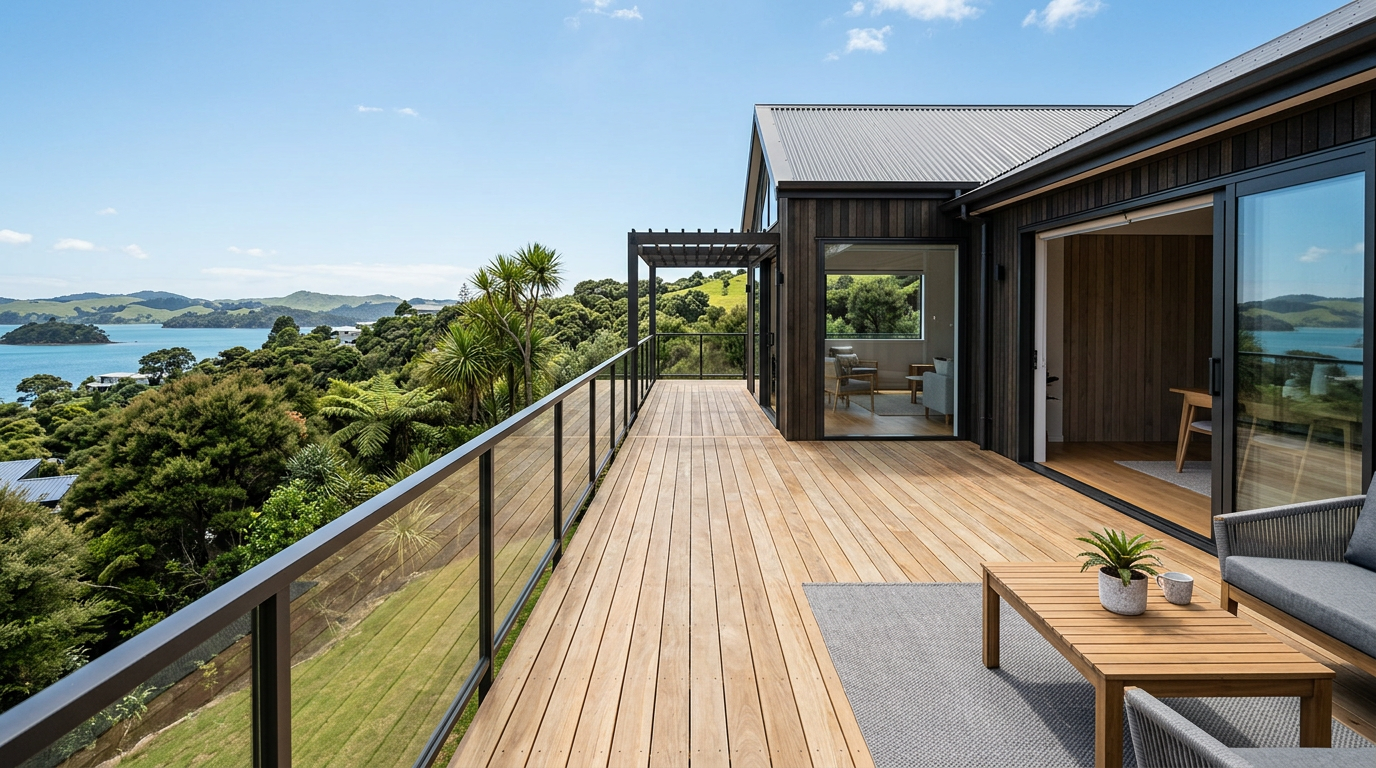
Deck boards that cup or split are usually trying to tell you something: too much moisture movement, poor fixing, or timber that was never properly selected or installed for Australian conditions. The good news is that most of the damage can be prevented with the right timber choice, correct installation, and a bit of ongoing maintenance.
In Australia, decks cop plenty of sun, summer heat, coastal salt air, heavy rain and long dry spells. That constant cycle of wetting and drying is hard on timber, especially if the boards are installed incorrectly or left unsealed for too long. Here’s how to reduce the risk of cupping and splitting, and keep your deck looking good for longer.
Why Deck Timber Cups And Splits
Cupping happens when the board edges stay wetter than the centre, or vice versa, causing the timber to bend across its width. Splitting usually comes from the timber drying too quickly, movement around fixings, or stress near the ends of boards and fastener holes.
Common causes include:
- Using timber that was too wet at installation
- Poor airflow under the deck
- Boards fixed too tightly
- Fixings placed too close to the ends
- No sealing on cut ends
- Delayed maintenance coating after installation
- Long exposure to harsh sun and weather
If your deck is near the coast, in a bushfire-prone area, or fully exposed to the western sun, the timber will need extra attention. The National Construction Code and Australian Standards set the framework for safe, compliant building, but good workmanship still makes the biggest difference to how timber performs over time.
Choose Timber And Fixings That Suit Australian Conditions
Start with the right materials. Not every decking board is equally suited to every environment. Your local timber merchant, Bunnings or Mitre 10 can help you compare options for exposure, durability and maintenance needs.
| What Helps | Why It Matters |
|---|---|
| Seasoned, correctly dried decking timber | Less movement after installation, so less cupping and splitting |
| Timber suitable for outdoor use | Better resistance to weather and decay |
| Stainless steel or approved corrosion-resistant fixings | Reduces staining, rust and fastener failure |
| Hidden or face fixings installed correctly | Helps control movement without over-stressing the board |
| End-grain sealer | Slows moisture uptake and reduces end splitting |
Don’t mix and match fixings without checking suitability. In coastal areas especially, lower-grade screws and nails can corrode quickly. If in doubt, follow the decking system manufacturer’s recommendations and ask a qualified carpenter or builder.
Install The Deck So The Timber Can Move Naturally
Even the best timber will move if it is forced to sit or fasten the wrong way. Good installation is about allowing the board to breathe, dry evenly and expand and contract without unnecessary stress.
Key installation habits that help
- Leave the correct spacing between boards so water can drain and air can circulate
- Keep the subframe level and well ventilated
- Use the right fixing pattern and spacing
- Pre-drill near ends to reduce splitting
- Do not drive screws too hard and crush the board fibres
- Seal all cut ends straight away
It also helps to install decking with the growth rings orientated consistently where recommended, as this can reduce the tendency for boards to cup. Boards should be laid with enough support underneath, because flexing under foot traffic can accelerate cracking and movement.
If your deck is over a balcony, near a boundary, or forms part of a larger building project, check whether approvals or compliance obligations apply. A licensed carpenter or builder can advise on the right approach under state-based licensing and Fair Trading requirements.
Seal And Maintain The Timber Regularly
Australian sun is brutal on exposed timber. Once the surface dries out and the coating breaks down, moisture gets in more easily and movement increases. A regular maintenance routine is one of the simplest ways to reduce damage.
Use an exterior decking oil, stain or coating from a trusted brand such as Dulux, Taubmans or British Paints, and recoat according to the product instructions and your deck’s exposure. The aim is not just appearance; it is moisture control.
Maintenance tips that really help
- Sweep off leaves and dirt so moisture does not sit on the boards
- Wash off grime, mildew and tannin staining using products suitable for timber decks
- Check for raised nails or screws and fix them promptly
- Recoat before the timber goes grey and dry
- Inspect end grain, board edges and high-traffic areas more often
A deck that faces full weather exposure may need attention more often than a covered one. If you notice coating failure in patches, treat those areas early rather than waiting for the whole deck to deteriorate.
What To Do If Your Deck Is Already Cupping Or Splitting
Minor cupping can sometimes be improved by fixing the underlying moisture issue and allowing the board to dry out more evenly. But once the timber has warped badly, cracked deeply, or started lifting fixings, replacement is often the safer long-term option.
Splits that run through structural areas, boards that have become springy, or timber that shows rot should be checked by a qualified tradesperson. If the deck includes electrical lighting, pumps, or other electrical work, that must be handled by a licensed electrician. Plumbing and gas work also need licensed professionals in Australia.
If you are replacing boards, do a full inspection of the subframe, drainage, ventilation and fixings at the same time. There is little point putting new boards over a damp, poorly ventilated base.
Simple Prevention Checklist
- Use properly seasoned decking timber
- Allow for drainage and airflow underneath
- Fix boards correctly without over-tightening
- Pre-drill near board ends
- Seal cut ends immediately
- Use exterior-grade coatings and keep them maintained
- Inspect the deck regularly after wet and hot weather
Timber decks are a great fit for Australian homes, but they need the right setup and maintenance to stay stable. If you want the job done properly, speak with a licensed local professional. You can also compare helpful resources with Trade Directory NZ.
Need help with repairs, replacement boards or a full deck assessment? Find trusted local carpenters on Aussie Trade Directory and get your deck back in shape.