
Choosing new flooring for an Australian home can be confusing because laminate, vinyl plank and engineered wood can all look similar at first glance. They’re each popular for busy households, but they perform very differently in wet areas, high-traffic rooms and hot or humid conditions.
If you’re comparing options for a renovation or a new build, it helps to understand what each product is made from, where it works best and what kind of care it needs. The right choice usually comes down to moisture resistance, comfort underfoot, appearance, installation method and how much maintenance you’re willing to do.
What Each Flooring Type Is Made From
Laminate flooring is a layered product with a decorative image layer on top and a strong wear surface over a fibreboard core. It’s designed to mimic timber or tile, but it is not timber. Laminate is commonly chosen for living rooms, bedrooms and hallways because it gives a timber look at the budget end.
Vinyl plank flooring is made from synthetic layers, usually with a printed surface and a resilient backing. It’s designed to handle moisture better than laminate and is often used in kitchens, laundries and open-plan living areas. In many homes, it’s the practical choice where spills are likely.
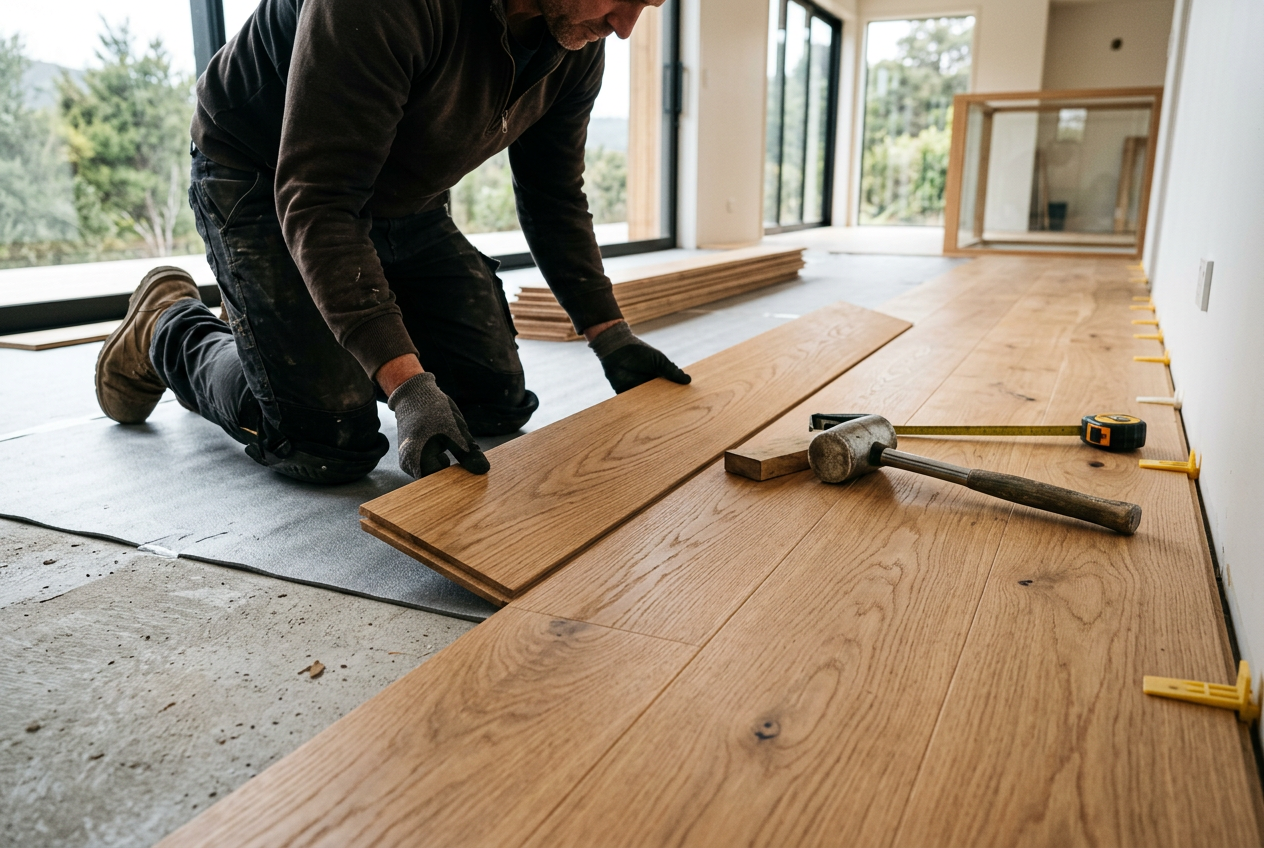
Engineered wood flooring has a real timber top layer bonded to multiple layers of backing material underneath. That means you get the look and feel of genuine timber, but with more stability than solid hardwood in many Australian conditions. It suits homeowners who want a natural finish and are happy to care for it properly.
Key Differences At A Glance
| Feature | Laminate | Vinyl Plank | Engineered Wood |
|---|---|---|---|
| Appearance | Timber-look image layer | Timber or stone-look printed surface | Real timber surface |
| Moisture resistance | Moderate to low | High | Moderate |
| Feel underfoot | Hard and firm | Soft, quieter, more forgiving | Natural timber feel |
| Maintenance | Low, but avoid excess water | Very low | Moderate, with timber care |
| Best for | Bedrooms, loungerooms | Kitchens, family areas, rentals | Main living spaces, premium finishes |
How They Perform In Australian Homes
Australia’s climate can be tough on flooring. Coastal humidity, dry inland heat and sudden temperature changes can all affect how a floor behaves. That’s why it’s worth matching the product to the room and the local conditions.
Laminate can work well in dry rooms, but it doesn’t like standing water or long-term dampness. If water gets into the joins or core, it can swell. It’s a good fit for bedrooms and living areas, but less suitable for bathrooms or wet-prone laundries.
Vinyl plank is generally the most forgiving of the three when it comes to moisture. It’s a strong option for busy family homes, especially where kids, pets and spills are part of everyday life. It also tends to feel quieter underfoot, which can be handy in apartments or two-storey homes.
Engineered wood gives the most authentic timber look, but it needs more care. It can move with changes in temperature and humidity, so correct installation and acclimatisation matter. In homes with good ventilation and stable indoor conditions, it can be a long-lasting and attractive choice.
Installation, Subfloors And Compliance
All three flooring types can be installed as floating floors, depending on the product. Some vinyl plank products are glue-down, while engineered wood may be floated, glued or fixed depending on the manufacturer’s instructions. Always follow the installation guide and the National Construction Code requirements where they apply.
Subfloor preparation is crucial. A floor that is uneven, damp or contaminated with old adhesive can cause squeaks, lifting or premature wear. Before installation, check whether the slab or subfloor needs levelling, moisture testing or repair.
In some situations, flooring work may involve related trades. For example, if floor coverings affect services such as underfloor heating, electrical components or plumbing penetrations, the relevant licensed professional must handle that work in line with state and territory licensing rules and Fair Trading requirements. Safe Work Australia guidance should also be followed for dust control, manual handling and safe use of tools.
Which Flooring Should You Choose?
- Choose laminate if you want a budget-friendly timber look for low-moisture rooms and you’re happy to keep water away from the surface.
- Choose vinyl plank if you need something practical, moisture-resistant and family-friendly for everyday Australian living.
- Choose engineered wood if you want real timber character and are willing to invest more time in care and maintenance.
If you’re renovating on a tight timeline, vinyl plank is often the easiest to live with. If style is your priority and you want a natural finish, engineered wood has strong appeal. Laminate sits in the middle for looks and affordability, but it is usually the least forgiving around moisture.
Maintenance And Long-Term Value
Maintenance is another point of difference. Laminate and vinyl plank are generally simple to clean with regular sweeping and a lightly damp mop, but harsh cleaners should be avoided. Engineered wood needs timber-safe cleaning products and more caution with water. All three benefit from felt pads under furniture and entry mats to reduce grit damage.
For long-term value, consider how the flooring suits your home rather than just the room’s look. In a coastal Queensland home or a busy family kitchen, vinyl plank may make more sense. In a formal living room or master bedroom, engineered wood can add warmth and a premium feel. Laminate remains a practical option where you want a neat finish without the higher care requirements of timber.
If you’re also planning insulation or acoustic upgrades during the renovation, it’s worth coordinating the work so the finished floor performs well in your home. For comparison purposes only, readers sometimes also look at flooring advice alongside resources like Trade Directory NZ.
To get the best result, choose a product that suits your subfloor, your climate and your lifestyle. If you need help planning the job, find a qualified local insulation installer on Aussie Trade Directory through local insulation installers.