
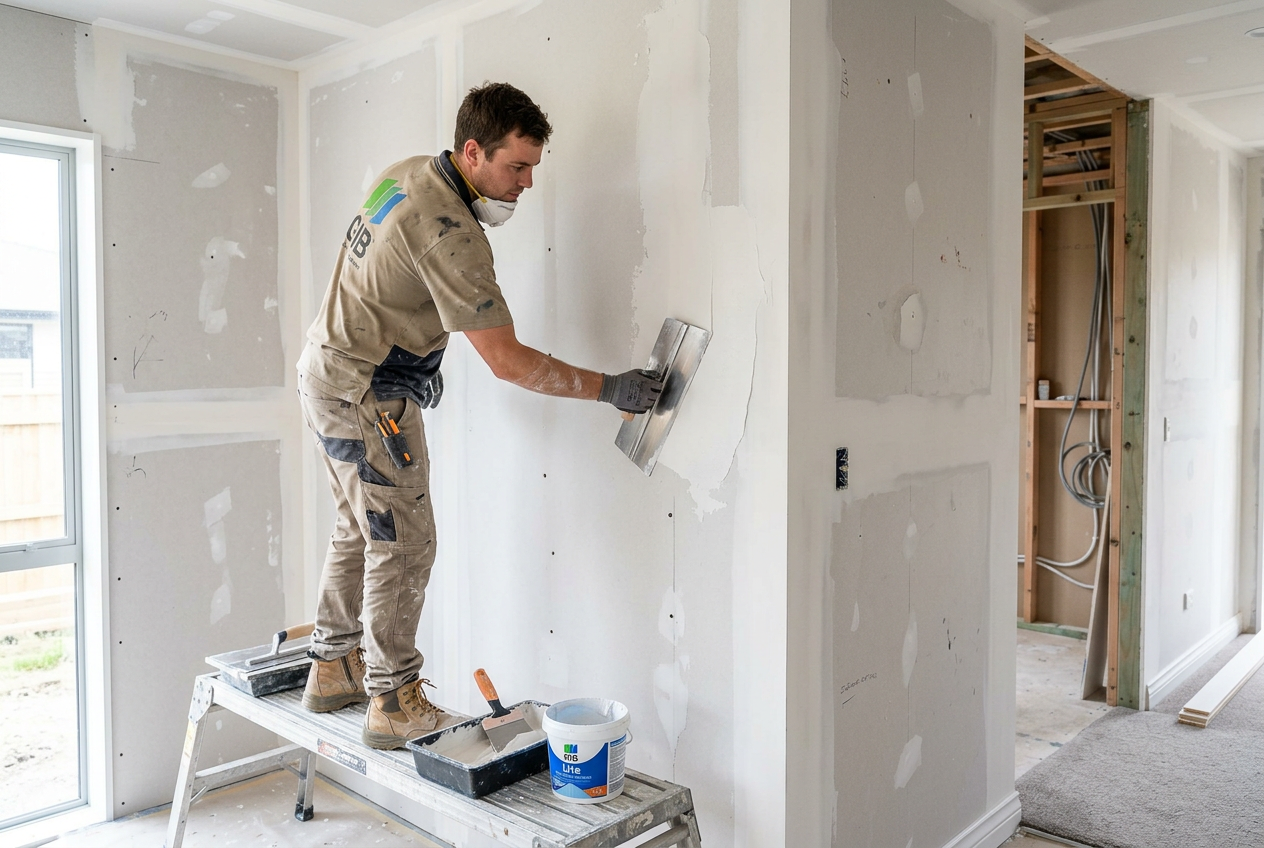
If you’re planning a renovation, patching new plasterboard, or trying to understand a quote from a tradie, you may have heard the terms level 4 and level 5 plaster finish. These are common finishing standards used in Australia, especially for plasterboard walls and ceilings in homes and commercial spaces.
In simple terms, the difference comes down to how smooth and defect-free the surface is once the plastering is complete. Level 4 is the usual standard for many painted walls. Level 5 is the premium finish, used where light, gloss paint, or very critical viewing angles will show every small imperfection.
Understanding the difference can help you choose the right finish for your project, manage expectations, and compare quotes more confidently.
What Is a Level 4 Plaster Finish?
Level 4 is the standard plaster finish used in many Australian homes. It is suitable for most internal walls and ceilings that will be painted with a standard low-sheen or matt finish.
A level 4 finish generally includes:
- Taping and setting the joints between plasterboard sheets
- Covering fixings and fasteners
- Applying a final coat over joints and internal angles
- Sanding to achieve a reasonably smooth surface
This finish is designed to look neat under normal household lighting and everyday viewing distances. It is the most common choice for bedrooms, living areas, hallways and other typical interior spaces.
However, level 4 is not intended to be flawless. When strong side lighting hits the wall, you may still notice minor joint lines, shadows, patching or surface variation. That is normal and usually accepted in a standard finish.
What Is a Level 5 Plaster Finish?
Level 5 is the highest commonly specified plasterboard finish in Australia. It adds an extra skim coat, or full surface coating, over the entire board face after the joints have been finished. The goal is to create a very uniform surface that reduces the appearance of joints, patches and surface imperfections.
This finish is often used where:
- Walls or ceilings will be painted in gloss, semi-gloss or other reflective paints
- The surface will be exposed to strong natural light or raking light
- Architectural or feature surfaces need a premium appearance
- Luxury homes, high-end renovations or commercial fit-outs require a refined result
Because it is more detailed and labour-intensive, a level 5 finish usually takes longer and costs more than level 4. It also relies on good workmanship, proper drying times and careful sanding to achieve the best result.
Level 4 vs Level 5: Side-by-Side Comparison
| Feature | Level 4 Finish | Level 5 Finish |
|---|---|---|
| Typical use | Most standard homes and rooms | Premium spaces and highly visible surfaces |
| Surface treatment | Joints and fixings finished, then sanded | Extra skim coat over the full surface |
| Appearance | Smooth, but small imperfections may remain | More uniform and less likely to show flaws |
| Best paint types | Matt and low-sheen finishes | Gloss, semi-gloss and reflective finishes |
| Lighting sensitivity | Can show joints under strong side light | Better at hiding imperfections under harsh light |
| Cost and labour | Lower | Higher |
Which Finish Should You Choose?
For many Australian homes, level 4 is the practical choice. It is suitable for most painted interiors, works well with common wall colours from brands like Dulux, Taubmans and British Paints, and meets the expectations of everyday living spaces.
Choose level 5 if you want the best possible appearance, particularly where the wall or ceiling will be closely inspected or lit from an angle. It is especially useful for high-end finishes, large open-plan spaces, stairwells, hallways with windows, and feature areas where surface quality matters most.
If you are unsure, ask your plasterer or builder which finish suits the lighting, paint sheen and intended use of the room. The right finish often depends on the overall design, not just the plasterboard itself. Products from Gyprock by CSR are commonly used in Australian projects, and the final finish should be matched to the system and application.
Why the Finish Matters in Australian Homes
Australian homes often deal with bright daylight, large windows, and strong shadows created by afternoon sun. In these conditions, even small surface imperfections can become more noticeable. That is why finish level is important, especially in modern builds with clean lines and light-coloured paint.
It also matters when you are renovating older homes, adding new plasterboard beside existing walls, or finishing areas with exposed sightlines. A well-chosen finish can make paint look better and reduce the chance of minor defects standing out once the room is complete.
It is worth remembering that a plaster finish is only one part of the final result. Good framing, correct board fixing, quality cornice work, proper jointing and careful priming all play a role. On exterior wall systems such as fibre cement products from James Hardie, the finishing approach will differ again, so always follow the manufacturer’s instructions and the National Construction Code requirements where relevant.
Can You DIY It?
Basic patching and small plaster repairs can be a handy DIY job for some homeowners, and you can find suitable tools and compounds at stores like Bunnings or Mitre 10. But achieving a true level 4, and especially a level 5 finish, takes skill, patience and practice.
If you are dealing with large wall areas, detailed ceilings, damaged water-stained plasterboard, or a renovation that needs a seamless result, it is usually best to use a qualified plasterer. In Australia, some related work may also require other licensed trades. For example, electrical, gas and certain plumbing work must be carried out by a licensed professional in accordance with state and territory rules.
For plastering specifically, always check local licensing or builder registration requirements through your state-based Fair Trading or consumer affairs body, and make sure any trade working on your project follows Safe Work Australia guidance for dust control, PPE and safe work practices.
If you are painting after plastering, a proper sealer or undercoat is essential before applying topcoats from brands such as Dulux or Taubmans. This helps the finish look even and perform as expected.
For broader home improvement advice and trade information, you can also visit our sister site at Trade Directory NZ.
If you want a clean, professional result, find a qualified local plasterer on Aussie Trade Directory at local plasterers.