
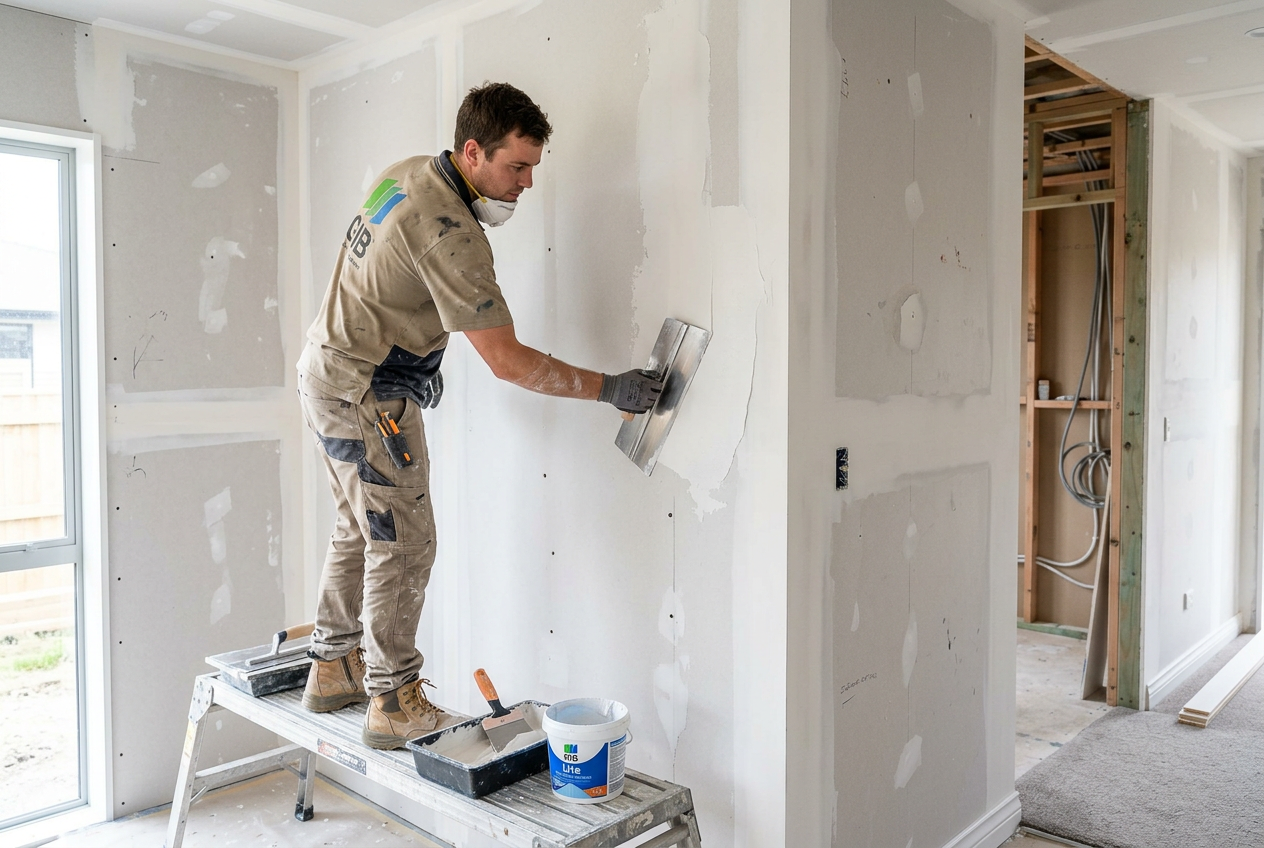
If you’re comparing exterior wall finishes for a new build or renovation, it’s easy to mix up plaster render and a plaster cladding system. They can look similar from the street, but they are not the same thing. In simple terms, render is a finish, while a plaster cladding system is a complete wall system that includes the substrate, fixing method, reinforcement, base coats and finish coats.
For Australian homes, that difference matters. Our climate can throw up harsh sun, wind, driving rain, coastal salt exposure and big temperature swings, so the right wall system needs to be more than just attractive. It also needs to comply with the National Construction Code and be installed according to the manufacturer’s specifications.
What Is Plaster Render?
Plaster render is a coating applied over a wall surface to improve appearance and, in some cases, help protect the wall beneath. It is commonly used over masonry, brick, concrete block or other suitable substrates. Render can create a smooth, textured or decorative finish, and it is often painted afterwards with exterior paint such as Dulux, Taubmans or British Paints.
Think of render as the outer skin. It does not usually form the whole wall system on its own. Instead, it depends on the surface beneath for structural support. On an existing brick home, for example, render may be applied to update the look and cover uneven surfaces.
Common Uses For Render
- Refreshing older brick homes
- Smoothing out masonry walls
- Creating a modern painted façade
- Helping with minor cosmetic surface imperfections
Render can be cement-based, acrylic or polymer-modified, depending on the job and substrate. The right choice depends on the wall type, movement in the building, exposure conditions and the desired finish.
What Is A Plaster Cladding System?
A plaster cladding system is a complete exterior wall system designed to be fixed to a frame or substrate and finished with a plaster-like coating. In Australia, these systems are often associated with lightweight cladding products and proprietary systems from manufacturers such as James Hardie or Gyprock/CSR, used as part of a compliant wall assembly.
Unlike render alone, a cladding system includes multiple components working together. That might include the sheet cladding, fixings, joint treatment, mesh, base coats, sealants and finish coat. Some systems are designed for framed homes and extensions, while others are used as part of a modern façade upgrade.
The key point is that a plaster cladding system is engineered as a whole. It is not just a decorative coating. It is part of the building envelope and must be installed to the manufacturer’s instructions to meet performance requirements for weather resistance, movement and durability.
Typical Components Of A Cladding System
- Framing or supporting substrate
- Cladding sheets or panels
- Fixings and jointing materials
- Reinforcement mesh where required
- Base coat and finish coat
- Sealants, flashings and control joints
Plaster Render Vs Plaster Cladding System: Side-By-Side
| Feature | Plaster Render | Plaster Cladding System |
|---|---|---|
| What it is | A finish coat applied to an existing wall surface | A complete wall system with sheets, fixings and finishes |
| Main purpose | Improve appearance and surface protection | Create the exterior wall envelope and finished façade |
| Structural role | Not structural | Part of the wall assembly, though not usually structural on its own |
| Best suited to | Masonry and concrete surfaces | Framed homes, extensions and façade upgrades |
| Installation complexity | Generally simpler | More involved and system-specific |
| Compliance | Must suit the substrate and product instructions | Must meet NCC requirements and manufacturer specifications |
Which One Should You Choose?
The best option depends on the wall you already have, the look you want and how the building is constructed. If you have a sound masonry wall and want to improve its appearance, render may be the right solution. If you are building a new framed wall, enclosing an extension or creating a lightweight façade, a plaster cladding system may be more suitable.
In coastal or weather-exposed areas, it’s especially important to choose a system that handles moisture movement, UV exposure and ongoing building movement. A properly detailed cladding system may offer better long-term performance where a simple render finish would not be enough on its own.
It is also worth considering maintenance. Rendered surfaces need the right preparation and repainting with quality exterior paint systems from brands available at Bunnings or Mitre 10. Cladding systems may require periodic inspection of joints, sealants and coatings, particularly around windows and penetrations.
Why Proper Installation Matters
Both render and plaster cladding can fail if they are poorly installed. Common problems include cracking, delamination, water ingress, staining and mould growth. These issues often come down to poor substrate preparation, movement joints being missed, incorrect sealants, or using products outside their intended application.
For plaster cladding systems, installation should always follow the manufacturer’s instructions. For render, correct surface prep, reinforcement and curing are essential. In both cases, the installer should understand the local climate, the substrate and the finish system being used.
If electrical services, gas work or any regulated plumbing is involved in the wider renovation, that work must be done by a licensed professional. For building and plastering work, check the relevant state or territory licensing and Fair Trading body requirements before you hire.
Getting The Right Advice For Your Project
If you are unsure whether your home needs render or a plaster cladding system, start by identifying the wall construction. Brick, block, fibre cement, framed timber and steel each have different requirements. A qualified plasterer or façade specialist can assess the substrate, exposure conditions and compliance needs before work begins.
For products and accessories, Australian homeowners often compare options at Bunnings or Mitre 10 and then match them to the specified system rather than choosing by appearance alone. That approach helps avoid mismatched materials and expensive repairs later.
For broader renovation inspiration and trade information, you can also check out Trade Directory NZ.
If you want the job done properly, find trusted local plasterers on Aussie Trade Directory and connect with a qualified professional near you.