
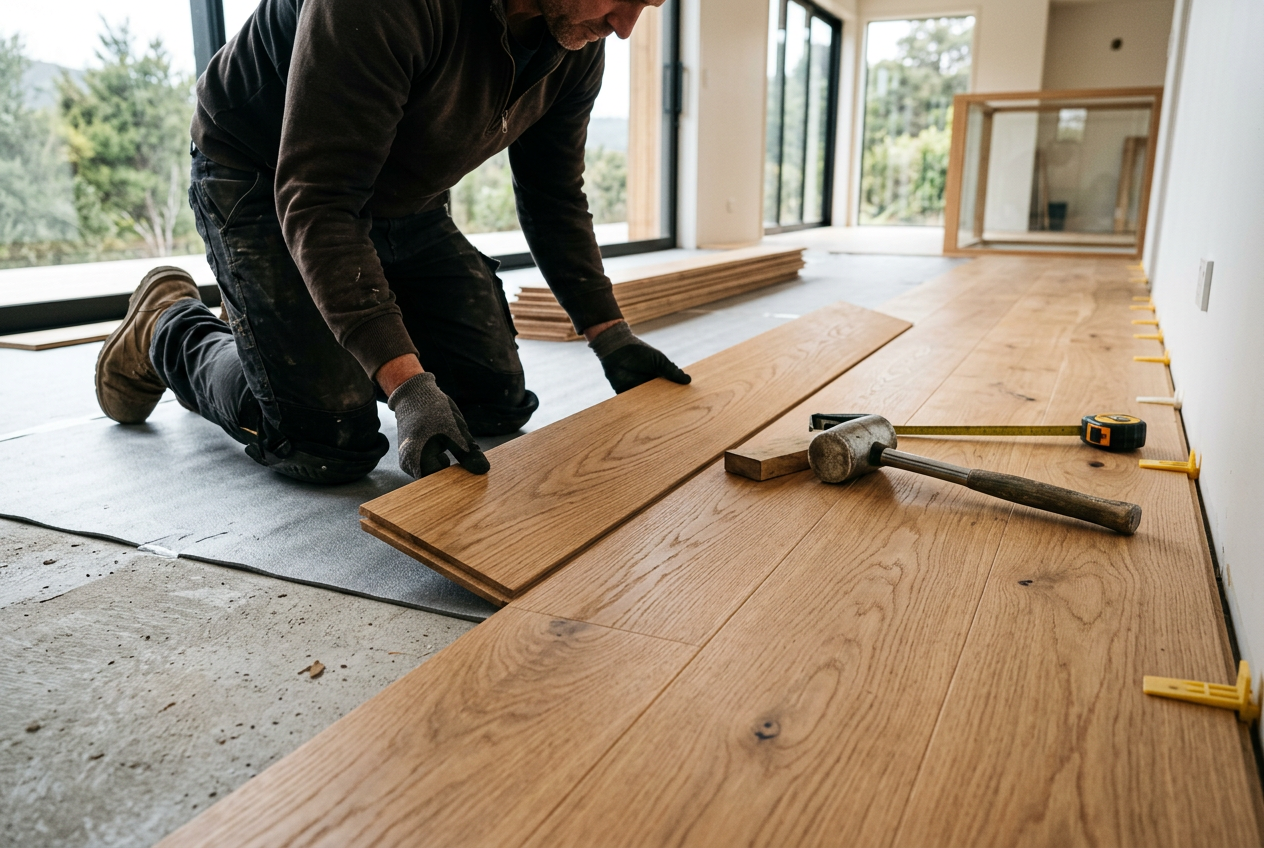
Floors cop a lot in an Australian home: sandy feet after a beach trip, muddy boots from the backyard, chair scratches, pet claws and the occasional spill that sits a bit too long. Timber floors are tough, but they are not indestructible. Over time, the surface coating wears down and the boards underneath start to show their age.
If you are wondering whether your floor just needs a clean or it is time for proper sanding, there are some clear signs to look for. Knowing when to call in a floor sander can help you protect the timber, improve the look of your home and avoid a bigger repair job later.
Common Signs Your Timber Floor Needs Sanding
The first clue is usually visual. When the protective coating starts failing, the floor can look dull, patchy or uneven. In some cases, the timber itself will also show damage. Here are the main warning signs.
- Deep scratches and scuffs: Light surface marks can often be hidden by cleaning and polishing, but if scratches are deep enough to catch your fingernail, sanding may be the better option.
- Patchy sheen or worn finish: If certain areas near doorways, hallways or kitchen traffic zones look much flatter or more faded than the rest of the room, the coating is likely worn through.
- Discolouration: Sunlight, water exposure and age can change the colour of timber. Uneven fading or dark stains may mean the old finish has broken down.
- Splinters or rough patches: If the floor feels rough underfoot, the surface may be damaged enough to need sanding and resealing.
- Water marks or staining: Cup rings, pet accidents or old leaks can leave marks that cleaning will not remove.
- Gaps, cupping or movement: While sanding will not fix structural problems, it can reveal issues that should be assessed before any refinishing work begins.
When Cleaning Or Recoating Is Not Enough
Some floors only need a refresh, not a full sand. If the finish is still intact and the damage is mostly surface-level, a professional might recommend cleaning and recoating instead. But there are situations where sanding becomes the smarter choice.
If the coating has worn away in several places, a new topcoat alone will not bond well or give an even result. Likewise, if the timber has yellowed, stained or picked up years of build-up from floor polish, sanding removes the old layers and gives you a clean base to start again.
It is also worth calling a floor sander if you are preparing the home for sale or renovation and want the timber floor to look consistent across the whole room. A well-sanded floor can make a big difference to presentation, especially in older homes where original boards are one of the main features.
DIY Or Call A Professional?
Small maintenance jobs can be handled by handy homeowners, but sanding is a different story. Floor sanding equipment is powerful, and it is easy to leave drum marks, gouges or uneven patches if you are not experienced. Timber floors also vary in thickness, age and condition, which affects how much material can be safely removed.
Calling a professional is usually the safer option if:
- the floor has significant wear or damage
- you are dealing with polished timber in a high-traffic area
- the home has old floorboards that may have been sanded before
- there are stains, cupping or movement that need proper assessment
- you want a stain or finish matched across multiple rooms
In Australia, flooring contractors may need to hold appropriate licences or registrations depending on the work and state or territory requirements. Always check with your local state or territory Fair Trading or building authority before booking someone in, and ask for proof of insurance and relevant experience. If your project involves nearby electrical work, that part must be handled by a licensed electrician. Any gas work also needs a licensed gasfitter.
What A Floor Sander Will Usually Check
A good floor sander will inspect the timber before quoting or starting work. They will look for loose boards, raised nails, previous coatings, moisture problems and how many times the floor has already been sanded. They may also test how the timber is responding in a small area before committing to the whole room.
| Sign | What It Usually Means | Best Next Step |
|---|---|---|
| Light surface marks | Wear is mostly in the finish | Clean and consider recoating |
| Deep scratches or dull patches | Finish is worn through in places | Get the floor inspected for sanding |
| Water staining or discolouration | Damage has reached beyond the topcoat | Call a floor sander to assess |
| Rough feel or splinters | Surface timber is breaking down | Sand and reseal may be needed |
| Old, uneven finish | Coating has aged and looks patchy | Professional sanding likely |
Getting Your Home Ready Before The Job Starts
Once you decide to go ahead, a little preparation helps the job run smoothly. Remove furniture, rugs and loose items from the area. Check that nearby skirting boards, doors and vents are clear. If you are unsure about what to move or cover, ask the tradesperson before the work begins.
It is also a good time to think about ventilation and drying. Australian weather can be hot, humid or dusty depending on where you live, so curing times and indoor airflow matter. Your floor sander may advise when it is safe to walk on the floor and when furniture can be moved back.
If you are planning other upgrades at the same time, such as insulation, painting with Dulux, Taubmans or British Paints, or minor carpentry repairs, coordinate the sequence carefully so the new floor finish stays clean and protected.
Final Signs It Is Time To Act
If you keep noticing the same worn patches, if the floor no longer looks even after cleaning, or if the timber feels rough and tired underfoot, it is probably time to call a floor sander. The earlier you deal with wear, the more likely you are to preserve the boards and avoid more extensive work later.
For homeowners comparing options, it can help to talk to a qualified tradesperson early and get advice on whether sanding, recoating or simple maintenance is the better fit for your floor and budget. If you are also weighing up home comfort improvements, you might find similar guidance through Trade Directory NZ.
Ready to refresh tired floors? Find qualified local insulation installers and other trusted trades through local insulation installers on Aussie Trade Directory.