
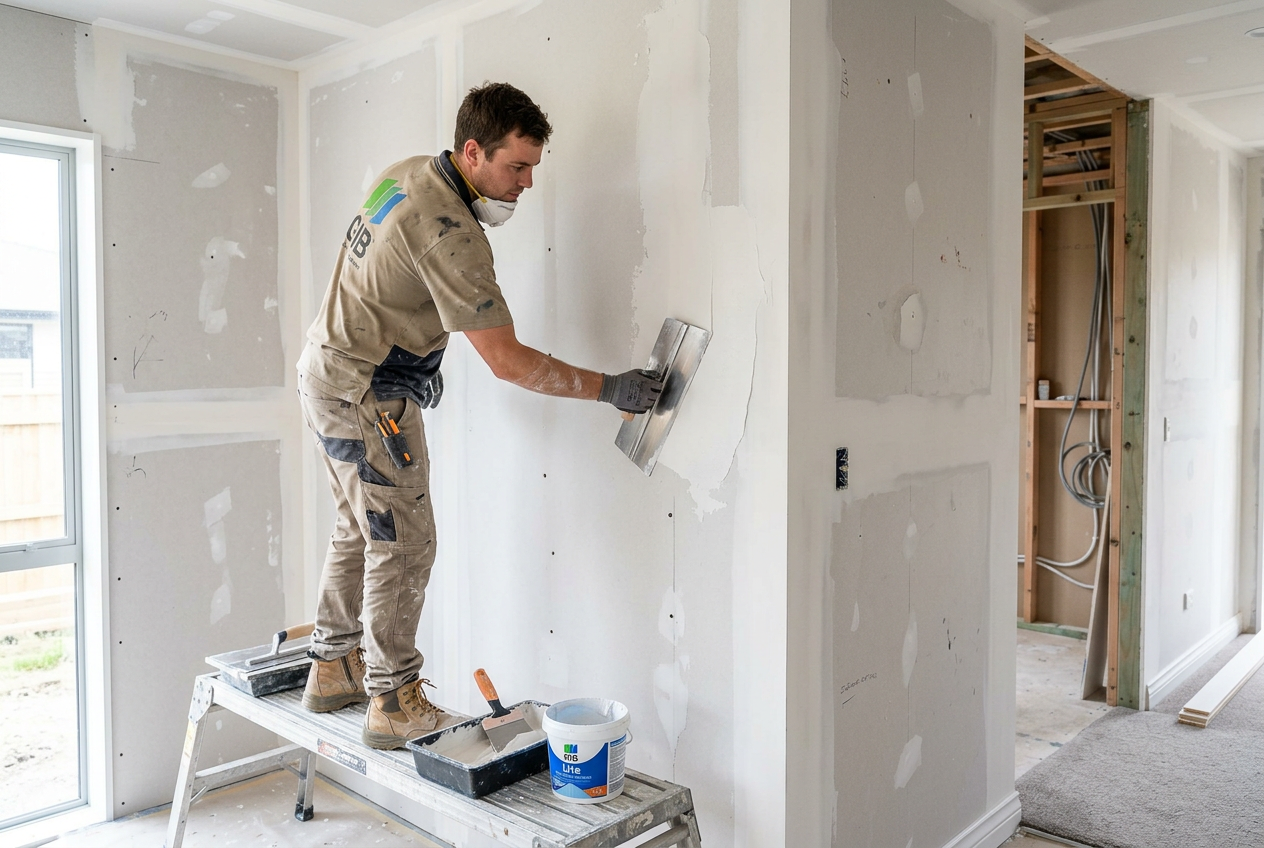
Most minor dents and hairline cracks in walls can wait a while, but some plaster problems point to bigger issues or a finish that’s beyond a quick DIY patch. If you’re dealing with damaged plasterboard, sagging ceilings, water stains or cracks that keep coming back, it may be time to bring in a plasterer.
A qualified plasterer can repair walls and ceilings so they’re safe, smooth and ready for painting. They also know when a “simple patch” is really a sign of movement, moisture or poor previous workmanship that needs proper attention.
Common Signs You Need A Plasterer
Some issues are cosmetic, while others can affect the performance of your walls and ceilings. In Australian homes, especially older properties or homes that have been renovated in stages, these are the warning signs to watch for:
- Cracks that keep returning: Small movement cracks are common, but if they reappear after patching, the wall or ceiling may need a more thorough repair.
- Ceiling sagging or bubbling: This can indicate plasterboard movement, moisture damage, or failing fixings. Don’t ignore it.
- Water stains or soft spots: Brown marks, swelling, or a spongy feel often mean a leak has damaged the plasterboard or plaster.
- Holes, dents or impact damage: Big holes from doors, furniture or renovation work often need proper patching and sanding to blend in.
- Peeling paint with cracks underneath: Paint problems can sometimes hide damaged plaster beneath the surface.
- Uneven joins or visible tape lines: Poor plastering or settling can leave joints showing through, especially in strong natural light.
If you’re seeing any of these across more than one room, or the damage is getting worse, a plasterer can assess whether it’s a repair job, a replacement section, or something that needs further investigation.
When DIY Is Fine And When It Isn’t
For tiny nail holes or a very small scratch, a homeowner may be able to use a filler from Bunnings or Mitre 10, then sand, prime and repaint with Dulux, Taubmans or British Paints. That can be a sensible weekend job if the surrounding plaster is sound.
But DIY becomes harder when the damage affects the structure of the wall or ceiling, or when the finish needs to match an existing surface. A poor patch job often shows up after painting, especially in daylight or under downlights. If you’ve already repaired the area once and it still looks uneven, that’s usually a sign to call a plasterer.
It’s also worth handing over the job when the wall contains asbestos, or when the area is connected to other trades. For example, if a leak has damaged plaster near plumbing, or if there’s electrical wiring in the wall or ceiling cavity, those related works must be handled by licensed professionals. Safe Work Australia guidance also makes it clear that damaged materials can pose hazards during demolition or repair.
Situations Where A Plasterer Is The Right Call
Not every plaster issue is an emergency, but some jobs are best left to an experienced tradesperson straight away. A plasterer is usually the right call if you notice:
- large cracks across ceilings, cornices or wall joins
- bulging or loose plasterboard
- damage after a roof leak, burst pipe or storm event
- new walls or renovations that need a smooth finish
- cornice repair or replacement
- patches that need to match an existing textured or level finish
- ongoing cracks in homes with movement or settlement issues
Homes in hotter, drier areas can also develop more visible movement cracks, while humid coastal conditions can worsen moisture-related plaster damage. In both cases, fixing the symptom without checking the cause can lead to repeat problems.
What A Plasterer Can Do That A Patch Kit Can’t
A good plasterer does more than fill a hole. They can assess whether the plasterboard, framing, fixings or jointing need attention. They’ll know how to cut back damaged sections, set joints properly, repair cornices, and sand surfaces so they’re ready for painting. If the job involves new plasterboard, they’ll also be familiar with products from Gyprock/CSR and fibre cement systems from James Hardie, depending on the area and application.
They can also help if the finish needs to suit the home’s style. For example, a smooth modern wall, a repaired ceiling in an older home, or a consistent finish across a renovated room all take experience to blend properly. In some cases, the plasterer may recommend coordinating with a carpenter, painter or waterproofer to make sure the underlying problem is fixed first.
| Problem | Likely Action | Call A Plasterer? |
|---|---|---|
| Small picture hook hole | Fill, sand and repaint | Usually no |
| Hairline crack that hasn’t grown | Monitor and patch if needed | Maybe, if it keeps returning |
| Ceiling sag or bubbling | Inspect for moisture or failed fixings | Yes |
| Water-damaged wall | Dry out, cut back and replace damaged section | Yes |
| Uneven renovation joins | Re-set and finish surfaces properly | Yes |
How To Choose The Right Plasterer
In Australia, plastering work may be covered by state or territory licensing and home building rules depending on the size and type of job. Always check that the tradie is appropriately licensed or registered where required, and ask about insurance before work starts. For larger renovation work, it’s sensible to confirm they’re familiar with the National Construction Code and the products being installed.
When comparing tradespeople, ask about:
- experience with internal walls, ceilings and cornices
- whether they handle repairs, new plasterboard, or both
- how they deal with water-damaged areas
- their approach to dust protection and cleanup
- what preparation is needed before painting
Look for someone who explains the cause of the damage, not just the visible symptom. A reliable plasterer should be able to tell you whether the area needs patching, replacement, or referral to another licensed trade first.
If you’re unsure whether a crack is cosmetic or a sign of a larger issue, it’s usually safer to get it checked sooner rather than later. Catching plaster problems early can help protect your home’s finish and avoid a more disruptive repair down the track. If you need more home improvement inspiration, you can also explore Building or renovating across the Tasman? Our sister site Trade Directory NZ covers the same topics for New Zealand homeowners.