
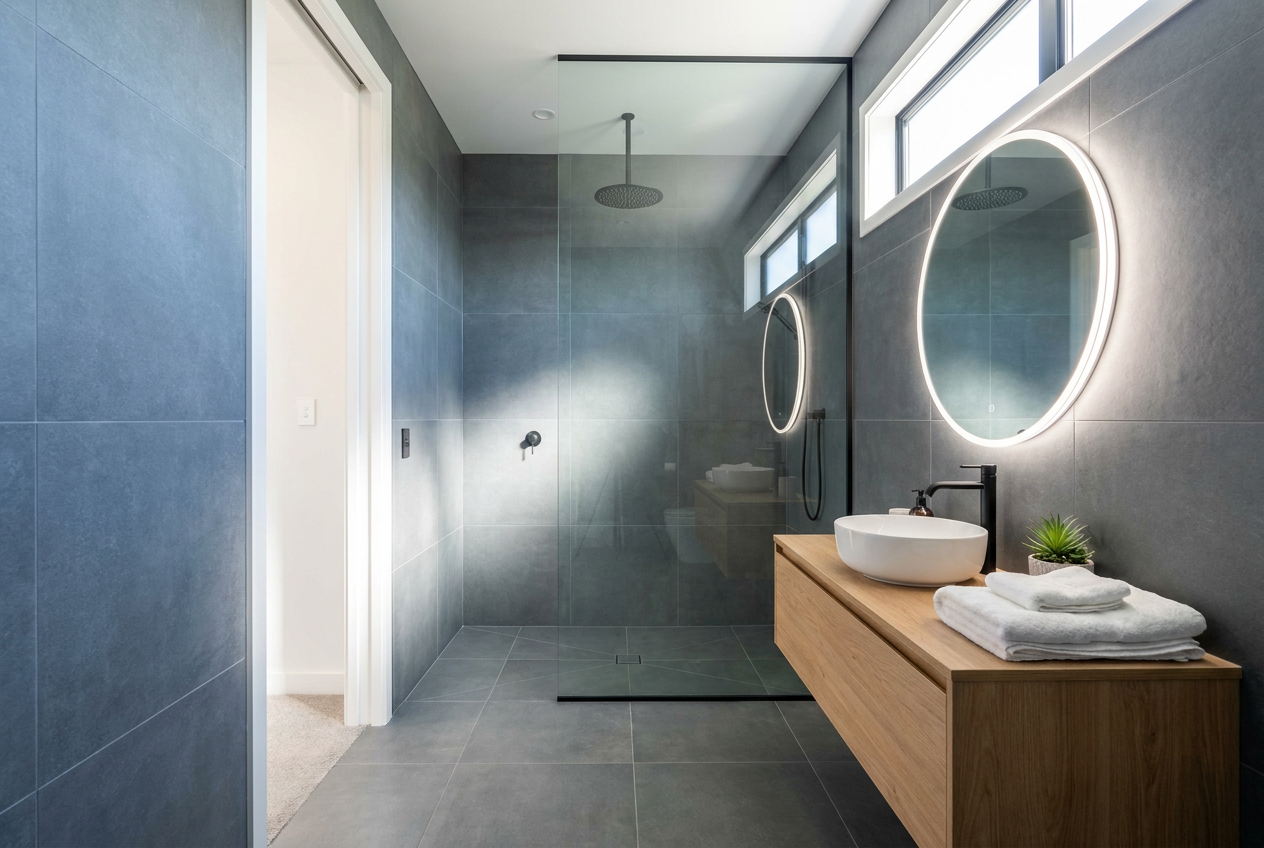
If you’re planning a bathroom renovation, one of the first decisions you’ll face is the type of shower base or waterproofing system to use. Two common terms you’ll hear are tanked shower and pre formed shower. They may sound similar, but they are quite different in how they’re built, how they handle waterproofing, and when each option makes sense.
Understanding the difference can help you avoid leaks, choose the right finish for your bathroom, and work out what needs to be done by a licensed trade professional.
What Is A Tanked Shower?
A tanked shower is a shower area that has been waterproofed in place, usually by applying a waterproof membrane to the floor and walls before the tiles go on. In other words, the shower is built on site and “tanked” to keep water from getting into the structure underneath.
The waterproofing membrane is a critical part of the system. It is designed to work with the shower fall, floor waste, wall sheeting, adhesive and tiles. In Australia, waterproofing work in wet areas must comply with the National Construction Code and relevant Australian Standards, and it should be carried out by a qualified waterproofing professional or licensed tradesperson where required.
Tanked showers are common in tiled bathrooms because they allow for a custom layout. They can suit awkward spaces, larger walk-in showers, and renovations where the floor needs to be built up or levelled. The final look is usually fully tiled and can be matched to the rest of the bathroom.
What Is A Pre Formed Shower?
A pre formed shower uses a factory-made shower base or hob that already has the correct shape and fall built into it. These bases are typically made from acrylic, fibreglass, stone composite, or another moulded material. Instead of building the base from scratch, the installer places the ready-made unit into the bathroom and connects it to the waste.
Pre formed showers are often chosen for straightforward bathroom layouts and for homeowners who want a quicker, simpler installation. They can be paired with wall linings such as tiles, waterproof wall panels, or other suitable finishes depending on the product and the room design.
Because the base is formed off site, much of the guesswork around falls and drainage is removed. That can make installation easier, but it also means you are working within the dimensions and style of the prefabricated unit.
Tanked Vs Pre Formed: Key Differences
| Feature | Tanked Shower | Pre Formed Shower |
|---|---|---|
| How it is built | Constructed on site with waterproof membrane and tiles | Factory-made base installed into the bathroom |
| Waterproofing | Applied on site as part of the shower build | Built into the shower base, with surrounding waterproofing still required |
| Finish | Usually fully tiled and customisable | Usually moulded base, often less custom in appearance |
| Installation | More complex and reliant on correct workmanship | Often quicker and more straightforward |
| Best for | Custom renovations, walk-in showers, premium tiled bathrooms | Practical bathroom upgrades, simpler layouts, faster installs |
The biggest difference is that a tanked shower relies on on-site waterproofing and tiled construction, while a pre formed shower uses a ready-made base with the shape already built in. Both still need correct installation, sealing and drainage to perform properly.
Which Option Is Better For Australian Homes?
There is no single “best” option for every bathroom. The right choice depends on the room, budget, style and condition of the existing floor and framing.
- Choose a tanked shower if you want a fully tiled, custom look or you are redesigning the space from the ground up.
- Choose a pre formed shower if you want a more practical solution and your bathroom layout suits a standard base.
- Choose a tanked shower if the bathroom has unusual dimensions or you need a seamless transition for accessibility.
- Choose a pre formed shower if you want to simplify the build and reduce the amount of on-site waterproofing and tiling work.
In Australian conditions, bathroom ventilation matters as well. Our climate can be humid in many regions, and poor ventilation can lead to mould, swelling and long-term moisture damage. No matter which shower type you choose, make sure the room has suitable exhaust ventilation and that the waterproofing details are done properly.
What Trades Do You Need?
For either shower type, you may need several trades depending on the job. A licensed plumber is required for shower wastes, drainage and any plumbing connections. Waterproofing must be done to code, and in many cases it is best handled by a licensed waterproofing specialist. Tiling work, carpentry, plastering and wall linings may also be involved, especially in a full bathroom renovation.
If you are changing wall materials or building a new shower area, products from Bunnings or Mitre 10 may be part of the planning stage, but product selection should always suit the substrate and the waterproofing system. In many renovations, builders also coordinate wall sheets such as Gyprock/CSR or fibre cement products from James Hardie, depending on the room design and moisture exposure.
Electrical work in bathrooms, including lights, exhaust fans and heated towel rails, must be done by a licensed electrician. Safe Work Australia guidance also applies to safe handling of chemicals, cutting tools and dust control during renovation work.
How To Decide Before You Start
Before committing to either option, ask these questions:
- Is the shower area being fully renovated or just refreshed?
- Do you want a tiled, seamless finish or a simpler moulded base?
- Is the floor level suitable for a pre formed base?
- Will the room need extra waterproofing or structural changes?
- Do you want a custom layout or a standard size installation?
If your bathroom is older, hidden water damage may already be present under tiles, flooring or wall linings. That is another reason to have the area assessed early by an experienced professional rather than trying to guess what is behind the walls.
For painted finishes around the bathroom, Australian brands such as Dulux, Taubmans and British Paints offer moisture-resistant options, but paint should never be used as a substitute for proper waterproofing in a wet area.
Whether you choose tanked or pre formed, the key is making sure the shower is designed and installed for long-term water control. A well-built shower protects the rest of your home, reduces maintenance and helps avoid expensive remedial work later on.
If you are comparing options or planning a bathroom upgrade, Trade Directory NZ has useful resources too, but for Australian homeowners the best next step is to speak with a qualified local expert.
Find trusted local trade professionals on Aussie Trade Directory to get the right advice and a proper installation for your bathroom project.
Building or renovating across the Tasman? Our sister site Trade Directory NZ covers the same topics for New Zealand homeowners.