
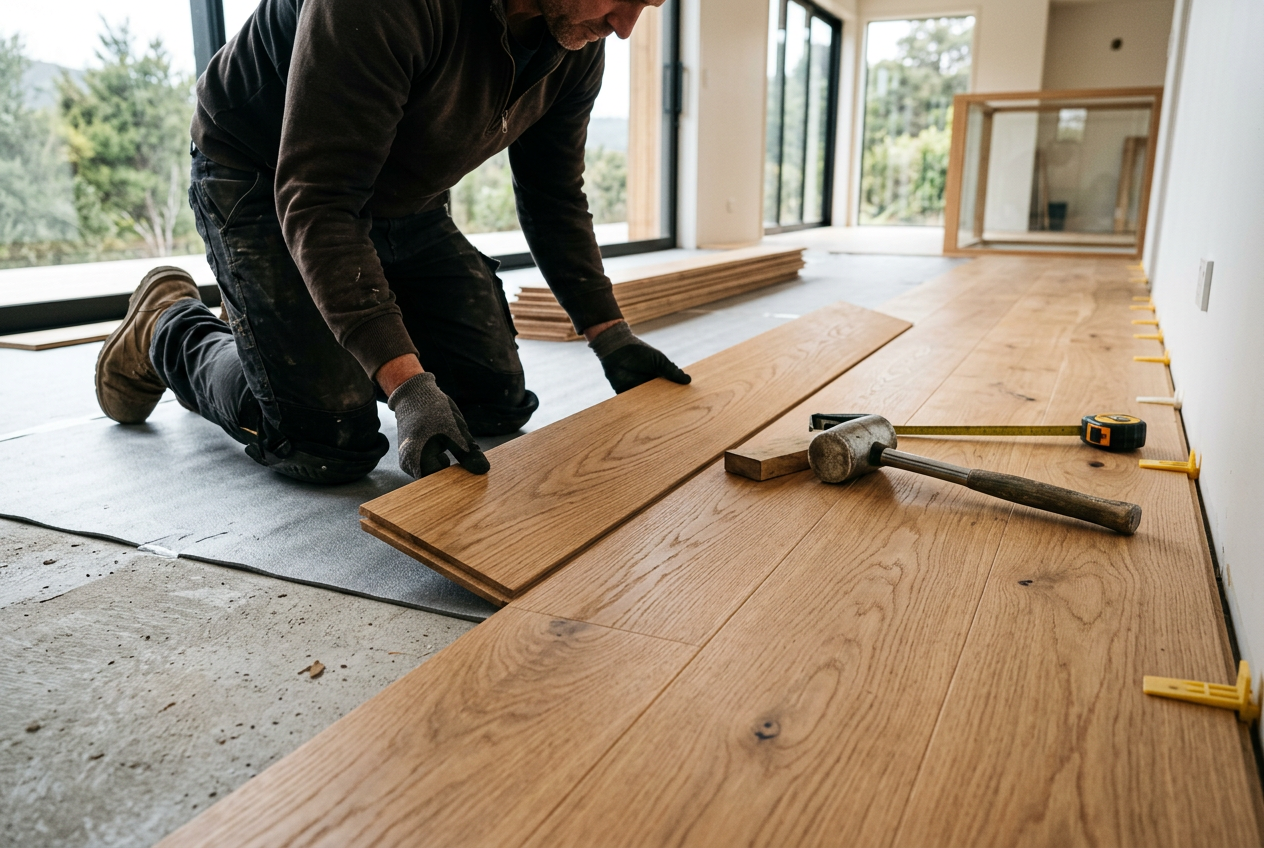
If you’ve ever looked at a dull, scratched timber floor and wondered what a floor sander actually does, the short answer is this: it strips back the old surface so the timber underneath can be cleaned up, smoothed and refinished. For many Australian homes, especially older weatherboard places and post-war houses with original floorboards, sanding is the step that turns tired timber into a floor you’d be proud to show off again.
A floor sander is not just a big “scraper”. It uses abrasive belts, discs or pads to remove the top layer of the floor in a controlled way. That means it can take off old polish, lacquer, stains, scuffs and minor surface damage, while also evening out small height differences between boards. The result is a flatter, cleaner surface ready for sealing, staining or coating with products from brands you’ll find at Bunnings or Mitre 10, such as Dulux, Taubmans or British Paints finishes.
What A Floor Sander Actually Does To Timber
A floor sander works by progressively abrading the timber surface. A coarse abrasive is usually used first to remove the old finish and any roughness, then finer abrasives are used to refine the surface. On some jobs, edge sanders and detail sanders are also used along skirting boards, in corners and around tight spots that a larger machine can’t reach.
In practical terms, sanding can help with:
- removing old coatings, waxes and built-up grime
- smoothing out scratches and wear marks
- reducing minor unevenness between boards
- preparing the floor for staining or clear coating
- refreshing the look of a timber floor without replacing it
It’s worth noting that a floor sander is designed for timber floors only, and not every timber floor is suitable for sanding. Engineered boards, previously sanded floors, or floors with thin veneers may have limited sanding life. A qualified flooring tradesperson can assess whether your floor has enough wear layer left to safely sand.
Types Of Floor Sanders You Might Come Across
Different machines suit different stages of the job. If you’re speaking with a flooring contractor, they may mention one or more of these:
| Machine Type | What It Does | Where It’s Used |
|---|---|---|
| Belt sander | Removes material quickly and levels the main floor area | Open floor spaces and the early sanding stages |
| Drum sander | Uses a rotating drum to strip and smooth timber | Common on larger sanding jobs for solid timber floors |
| Orbital or multi-disc sander | Gives a finer finish with less aggressive cutting | Final sanding stages and more delicate floors |
| Edge sander | Sands close to walls, corners and trims | Perimeter areas the main machine can’t reach |
Modern sanding equipment often includes dust collection, but you should still expect some dust. Good operators will use sheeting, extraction and cleanup methods that help keep the job controlled. In Australian homes, especially during hot, dry weather, dust management matters even more because fine dust can travel quickly through the house.
What Sanding Can Fix — And What It Can’t
Floor sanding is great for many surface-level problems, but it won’t solve everything. It can improve the appearance of worn boards, light scratches and old coatings. It can also help make the floor feel more even underfoot.
However, sanding won’t fix major structural issues. If your floor has water damage, rot, bouncy joists, loose boards, termite activity, severe cupping or mould from a leak, those issues need to be addressed first. In some cases, the floor may need repairs before sanding can even begin. If there are signs of ongoing moisture ingress, get that investigated first, especially in humid coastal areas or homes exposed to seasonal wet weather.
If you’re dealing with related building work, remember that some tasks are regulated in Australia. Electrical, gas and certain plumbing work must be carried out by a licensed professional. For flooring and general building matters, check state-based licensing and Fair Trading or consumer affairs requirements, and make sure any installer follows the National Construction Code where relevant.
Why Timing, Timber Type And Finish Matter
The way a floor sands depends on the timber, the condition of the boards and the finish you want. Some floors are forgiving and sand back beautifully. Others are patchy, thin or previously coated in ways that make the job more complicated.
Australian conditions can also affect the result. Timber moves with heat and moisture, so a floor that looked fine in winter may behave differently in a summer heatwave or during humid coastal weather. That’s why professional sanding is usually planned with the season and the home’s ventilation in mind.
Once sanding is complete, the floor is usually sealed or coated. That might mean a clear finish to show off the grain, or a stain plus topcoat for a different look. A good finish not only improves appearance, it helps protect the timber from everyday wear. Many homeowners choose finishes that suit busy family living, pets and the practical realities of Australian homes.
Should You DIY A Floor Sanding Job?
Some homeowners are tempted to hire a machine and do it themselves. While that can be possible for very handy people, floor sanding is easier to get wrong than many expect. The most common problems are sanding too deeply, leaving swirl marks, creating visible gouges, or missing edge work so the floor looks uneven once it’s coated.
DIY sanding also creates a lot of dust and noise, and the machines are heavy and unforgiving. If the floor is valuable, old, or in poor condition, a professional is usually the safer choice. A qualified floor sander can judge the right sequence of abrasives, deal with edge details and recommend a finish suited to Australian conditions and your lifestyle.
If you’re also planning related renovations, such as wall lining or insulation upgrades, it can help to coordinate trades early. For example, if you’re improving thermal comfort in the same renovation, a separate specialist may be needed for insulation work. The right planning can save disruption and make the overall result more polished.
For readers comparing resources beyond Australia, you can also visit our sister site at Trade Directory NZ.
If your floors need restoring, the best next step is to speak with a qualified local professional who can assess the timber and advise on the right approach. Find trusted local insulation installers on Aussie Trade Directory and connect with the right expert for your home improvements.