
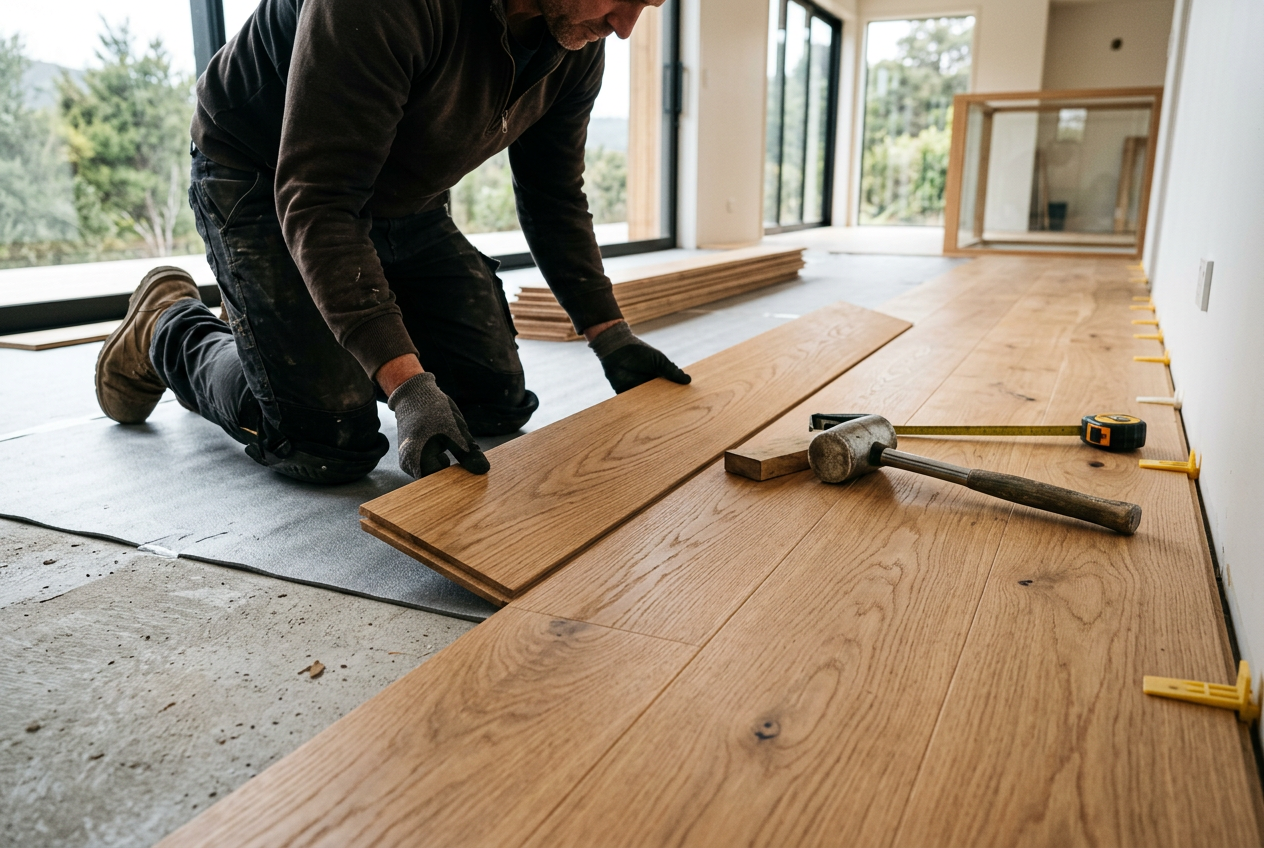
If you’re planning new floors, a flooring installer is the tradesperson who turns a product in a box or roll into a finished surface that looks right, lasts well and performs as expected in your home. Whether it’s carpet, timber, hybrid, laminate, vinyl plank or sheet vinyl, the installer’s job is much more than just laying it down.
In Australia, good flooring work needs careful measuring, suitable preparation and the right installation method for the product and the room. That matters because our homes can face hot summers, coastal moisture, wet boots at the door and the occasional slab or subfloor issue that needs sorting before anything goes in.
What A Flooring Installer Does Day To Day
A flooring installer handles the practical side of getting your floors ready and installed properly. The exact job depends on the flooring type, but most installers will do some or all of the following:
- measure rooms accurately and work out material quantities
- inspect the existing floor, slab or subfloor
- remove old flooring and underlay where needed
- prepare the surface so it is clean, flat and suitable
- check moisture levels and movement issues
- cut, fit and finish the new flooring
- install trims, trims at doorways and transitions between rooms
- seal edges or joins where required by the product
- clean up and explain aftercare and maintenance
A good installer is part tradesperson, part problem-solver. They will often spot issues the homeowner has missed, such as uneven concrete, squeaky boards, damaged particleboard, poor ventilation under the house or doors that need trimming after the new floor goes in.
Preparation Is A Big Part Of The Job
Many flooring problems start before the first plank or carpet run is installed. That is why preparation is a major part of what a flooring installer does. On a typical job, they may need to:
- repair or level surfaces
- install new underlay
- check that the subfloor is dry enough for the chosen product
- test for movement, rot or damage in timber floors
- make sure the slab is suitable for adhesives or floating systems
In some homes, especially older Australian houses, the subfloor may need more attention than expected. A timber floor can move with seasonal changes, and a concrete slab can hold moisture longer in humid or coastal areas. The installer’s job is to reduce the risk of cupping, lifting, gapping, bubbling or premature wear.
If the work involves structural repairs, electrical issues, gas fittings or plumbing changes, those tasks must be carried out by the appropriate licensed professional. Flooring installers may coordinate with other trades, but they should not do restricted work outside their licence or qualifications.
Different Flooring Types, Different Skills
Not all flooring is installed the same way. A skilled installer understands the product, the room and the manufacturer’s requirements. Here’s a simple comparison:
| Flooring Type | What The Installer Usually Does | Key Considerations |
|---|---|---|
| Carpet | Measures, cuts, lays and stretches carpet with underlay | Seams, joins, pile direction and neat finish at edges |
| Timber | Installs boards, trims around obstacles and finishes joins | Moisture, expansion gaps and subfloor movement |
| Hybrid / Laminate | Prepares the floor and fits floating planks or boards | Flatness, underlay, expansion space and doorway transitions |
| Vinyl Plank / Sheet Vinyl | Levels the surface and fits planks or sheets accurately | Adhesive compatibility, surface smoothness and clean joins |
For floating floors sold through retailers such as Bunnings or Mitre 10, the installer still needs to follow the product’s installation instructions carefully. That can affect warranty coverage, especially if the floor is laid over an unsuitable surface or without the correct expansion space.
Why Hiring A Qualified Installer Makes A Difference
Anyone can make a floor look “laid”. A qualified installer makes it look right, feel solid and hold up under everyday use. In practical terms, that means fewer squeaks, fewer gaps, less chance of lifting or edge damage, and a cleaner finish around skirting boards, architraves and doorways.
In Australia, flooring installation is generally not one of the heavily regulated trades like electrical or gas work, but licensing and registration can still apply depending on the state or territory and the type of building work involved. Always check the relevant state-based Fair Trading or consumer affairs body, and make sure the installer understands the National Construction Code requirements where they apply.
A reputable installer should also be able to talk you through:
- which floor products suit your home and lifestyle
- whether your existing floor needs repair or moisture testing
- how long the installation will take in practical terms
- how to care for the floor after installation
- what happens if unexpected issues are found on site
What To Expect On Installation Day
On the day, the installer will usually arrive with the tools, fixings and materials needed for the job. They may start by confirming the layout, the direction of boards or carpet runs, and any tricky areas like hallways, stairs, pantry spaces or sliding doors.
You can help the process by clearing the room, removing breakables and arranging access to power and parking. If old flooring is being removed, there may be dust, noise and temporary disruptions, so it is smart to plan around pets, children and furniture storage.
After the floor goes down, the installer should inspect the finish, tidy up and let you know about curing times, furniture return times or cleaning restrictions. That is especially important for glued products and for timber floors that may need a short settling period.
How To Choose The Right Flooring Installer
When you compare installers, look for experience with the specific floor you want, not just general handyman skills. Ask to see photos of similar jobs, check reviews and make sure they are comfortable explaining the preparation required. A reliable tradesperson will be upfront if your slab needs levelling, if old carpet tack strips need careful removal, or if another trade needs to fix a problem first.
It can also help to choose someone who knows the Australian climate and local conditions. Humidity, summer heat and coastal air all affect how floors behave, especially timber and floating systems. Good advice at the start can save a lot of frustration later.
If you’re comparing options for home improvements, you might also find useful advice on products and trades through Building or renovating across the Tasman? Our sister site Trade Directory NZ covers the same topics for New Zealand homeowners.