
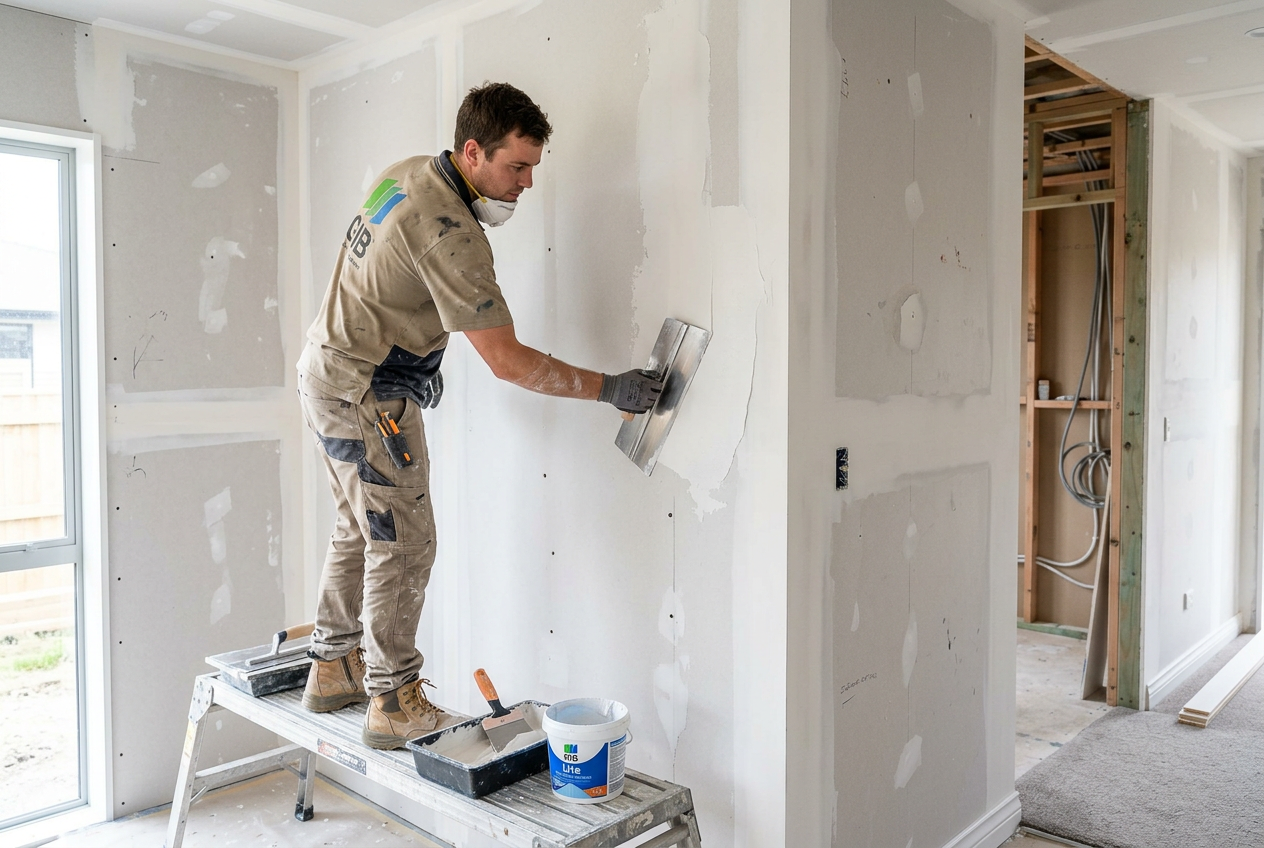
If you’ve ever wondered what a plasterer actually does, the short answer is: they create the smooth, durable wall and ceiling surfaces that make a home look finished. In Australian homes, plasterers work on everything from new builds and renovations to patch-ups after water damage, cracking, or general wear and tear.
Plastering is one of those trades that can be easy to overlook until something goes wrong. A well-finished wall or ceiling looks simple, but it takes skill to make joins disappear, surfaces stay straight, and corners look sharp. Plasterers also help prepare surfaces so paint from brands like Dulux, Taubmans, or British Paints goes on properly and lasts longer.
What A Plasterer Does Day To Day
Plasterers handle a mix of structural and finishing work. In many Australian homes, they install and finish plasterboard lining, repair damaged walls, and prepare surfaces for painting. Depending on the job, they may also work with ornate decorative features, internal cornices, bulkheads, and ceiling battens.
Typical tasks can include:
- Measuring and cutting plasterboard to fit walls and ceilings
- Fixing sheets to framing using the correct fasteners and adhesives
- Taping joints and setting them with joint compounds
- Applying multiple coats to create a smooth finish
- Repairing cracks, dents, holes, and water-damaged sections
- Setting corners, cornices, and trims for a neat edge
- Sanding and preparing surfaces for painting or wallpapering
In new homes and renovations, plasterers often work with plasterboard systems from suppliers such as Gyprock/CSR. On some projects, they may also handle fibre cement lining and external sheet products such as James Hardie materials, depending on the scope of the build and the framing system.
Where Plasterers Work And What They Cover
Plasterers are usually involved in internal lining work, but their role can extend beyond standard walls and ceilings. In Australian conditions, homes need finishes that can cope with heat, humidity, and occasional storm damage, so the quality of installation matters just as much as the final look.
Here are some common areas a plasterer may work on:
- Living rooms, bedrooms, and hallways
- Bathrooms, laundries, and kitchens
- Ceilings, including sagging or cracked areas
- Garages, extensions, and converted spaces
- Alfresco areas where suitable lining products are used
- Feature walls, cornices, and ceiling details
Plasterers also play an important role in making sure the finished surface meets the required standard under the National Construction Code. On building sites, they may coordinate with carpenters, painters, builders, and insulation installers to make sure the walls are ready for the next stage.
Plasterer, Tiler Or Painter: What’s The Difference?
Homeowners sometimes confuse plasterers with painters, tilers, or general handymen. While there can be some overlap in surface preparation, plasterers specialise in forming and repairing wall and ceiling surfaces. Their work comes before painting, and it is different from waterproofing or tiling.
| Trade | What They Do | Typical Result |
|---|---|---|
| Plasterer | Installs, patches, and finishes wall and ceiling linings | Smooth, even surfaces ready for painting |
| Painter | Prepares and coats finished surfaces | Colour and protection for the room |
| Tiler | Sets tiles on floors and walls | Water-resistant or decorative tiled surfaces |
If the issue is a cracked ceiling, a damaged wall, or new plasterboard installation, a plasterer is usually the right tradie to call. If the surface has already been finished and just needs a repaint, that’s generally a painter’s job.
When You Should Call A Plasterer
You may need a plasterer if you notice visible damage, uneven surfaces, or signs that a wall or ceiling has shifted. In Australian homes, common triggers include roof leaks after heavy rain, minor impact damage, settlement cracks, or older plasterboard that has started to buckle.
Call a plasterer when you need help with:
- Cracks around doors, windows, and ceiling joints
- Water damage from a leaking roof, pipe, or air conditioning issue
- Holes from renovations, removals, or accidental damage
- New room additions or internal wall changes
- Uneven finishes before painting
If water damage is involved, it’s important to fix the cause first. A plasterer can replace the damaged lining, but plumbing problems must be handled by a licensed plumber, and any electrical issues behind walls or ceilings must be handled by a licensed electrician. Safety and compliance are also important when working at heights, using dust-producing tools, or handling materials with silica-containing components, so Safe Work Australia guidance should always be followed.
What To Expect During A Plastering Job
A plastering job usually starts with inspection and preparation. The plasterer will assess the area, check for movement or moisture issues, remove damaged material if needed, and prepare the framing or existing surface. They’ll then install or repair the lining, set the joints, allow drying time, sand the area, and leave it ready for paint.
For homeowners, the practical benefit is a cleaner finish and fewer visible defects. Good plasterwork helps paint look better, makes rooms easier to maintain, and can improve the overall feel of the home. It also supports other trades by providing a reliable surface for finishing work.
Why Good Plastering Matters In Australia
Australian homes face plenty of wear from hot summers, coastal moisture, sudden weather changes, and everyday family life. That means plastering needs to be neat, solid, and suited to the conditions. A rushed job can lead to cracking, sagging ceilings, and painting problems later on.
Using quality materials from trusted suppliers and following proper installation methods helps the finish last longer. Whether it’s a renovation in a weatherboard home, a modern brick veneer build, or a unit repair after damage, a skilled plasterer can make a big difference to the final result.
If you’re comparing services, it can help to ask whether the plasterer handles patching, setting, cornices, ceiling repairs, and full room lining, and whether they’re familiar with the products and standards used in your type of home.
For more trade guidance and homeowner resources, you can also visit Trade Directory NZ.
Ready to get the job sorted? Find qualified local plasterers on Aussie Trade Directory and connect with a tradie who can assess your walls or ceilings properly.