
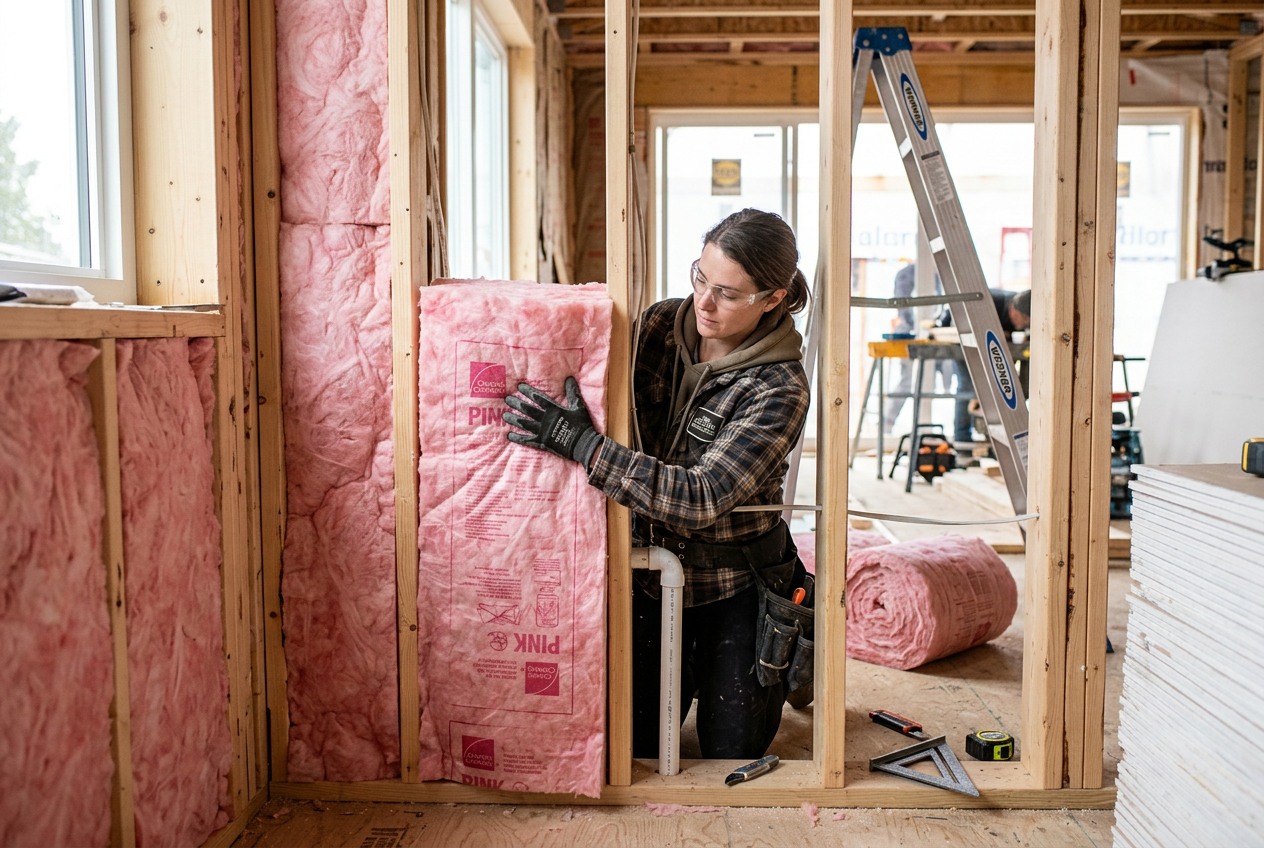
Insulation installers do far more than just lay batts in a roof space. Their job is to help make Australian homes more comfortable, energy efficient and better suited to local conditions, whether that means reducing summer heat in Queensland, holding warmth in a southern winter, or improving all-round comfort in a new build or renovation.
A good insulation installer assesses the home, recommends suitable products, installs them correctly and checks that the finished result performs as intended. That might sound straightforward, but there is real skill involved. Poorly fitted insulation can leave gaps, get compressed, or create moisture issues, which means the home may not get the full benefit.
What An Insulation Installer Actually Does
An insulation installer works across different parts of a home, including ceilings, walls, underfloors and sometimes sheds or extensions. They may be involved in new homes, retrofits, renovation work or repairs after building defects, pest damage or water damage.
Typical tasks can include:
- Inspecting the site and identifying areas where heat or cold is escaping.
- Measuring spaces so the right insulation type and quantity can be selected.
- Installing bulk insulation such as glasswool or polyester batts in ceilings, walls and floors.
- Fitting sarking or reflective foil products where appropriate.
- Working around downlights, exhaust fans, ducting and framing without leaving major gaps.
- Sealing obvious gaps and advising on draught reduction where relevant.
- Checking ventilation and clearance requirements so the installation meets the National Construction Code and manufacturer directions.
In Australian homes, the installer also needs to think about the climate zone and how the house is built. A fibro cottage in the suburbs, a brick veneer home, or a new Colorbond-clad build will all have different insulation needs.
Types Of Insulation They May Install
Insulation installers usually work with a range of products, and the right choice depends on the home, the location and the performance goal.
| Insulation Type | Common Use | What It Does Well |
|---|---|---|
| Bulk insulation | Ceilings, walls, underfloors | Helps slow heat flow and improve winter and summer comfort |
| Reflective insulation | Roofs, walls, hot climate areas | Helps reduce radiant heat from the sun |
| Sarking | Under roofing or wall cladding | Provides a radiant barrier and can improve weather resistance |
| Acoustic insulation | Internal walls, floors, multi-unit homes | Helps reduce noise transfer between rooms or dwellings |
Brands available through Australian suppliers such as Bunnings and Mitre 10 vary by region and project type, but the installer’s role is to choose and fit the right product for the job, not just the most familiar one.
How They Work On The Job
A proper insulation job starts with preparation. The installer may inspect roof access, check for existing insulation, identify hazards and confirm the scope of work. In older homes, they may need to deal with dust, brittle materials or limited access. In newer homes, they may need to work around tightly packed services and energy efficiency requirements.
They also need to use care around building elements such as Gyprock linings, James Hardie cladding, ducting, electrical cabling and roof framing. Insulation should never be stuffed around unsafe or non-compliant conditions without attention to detail. If electrical work is required, it must be done by a licensed electrician. If plumbing or gas work is involved, that must be handled by the appropriate licensed professional.
On site, an installer typically:
- Prepares the area and moves safely through confined spaces.
- Cuts and fits materials neatly around obstacles.
- Maintains correct thickness and coverage.
- Avoids compressing insulation, which reduces its performance.
- Makes sure safety clearances are maintained around heat sources and fittings.
- Cleans up waste and leaves the area safe and tidy.
Safe Work Australia guidance is relevant because insulation work can involve heat, dust, confined spaces and overhead hazards. Roof spaces in Australian summer can be extremely hot, so installers need the right PPE, hydration and work practices.
Why Hire A Professional Instead Of Doing It Yourself?
Some homeowners can buy insulation from Bunnings, Mitre 10 or other suppliers and tackle basic jobs themselves, especially in easy-to-access areas. But professional installation is often worth it when the roof space is difficult, the home has tricky framing, the job needs to meet building requirements, or the result needs to be consistent across the whole house.
A professional insulation installer can help avoid common mistakes such as:
- Leaving gaps around lights, vents or framing.
- Using the wrong product for the climate or location.
- Compressing batts so they perform poorly.
- Blocking ventilation paths or creating moisture problems.
- Missing hidden damage, mould or pest issues that should be dealt with first.
For renovations, installers can also work alongside builders, plasterers and roofers to coordinate timing. That matters when you are dealing with a full home upgrade, re-roofing in BlueScope or Colorbond materials, or wall linings that still need to go on.
What To Ask Before You Hire One
Not every insulation installer offers the same level of service, so it is worth asking a few practical questions before you book the work.
- What types of insulation do you install?
- Have you worked on homes like mine before?
- Will you check existing insulation and identify any problem areas?
- Do you coordinate with other trades if electrical, plumbing or roofing issues come up?
- Will the installation meet the manufacturer’s instructions and the National Construction Code requirements?
- Are you insured and familiar with the relevant state-based licensing or Fair Trading rules if the job overlaps with regulated work?
A good installer should be able to explain their process clearly and recommend products based on the house, not just on what is easiest to install.
Whether you are improving an older home, fitting out a new build or trying to make summer more bearable, a skilled insulation installer can make a real difference to comfort and energy performance. If you are comparing options or planning a renovation, it can also help to understand how similar building trades work in different markets through Building or renovating across the Tasman? Our sister site Trade Directory NZ covers the same topics for New Zealand homeowners.