
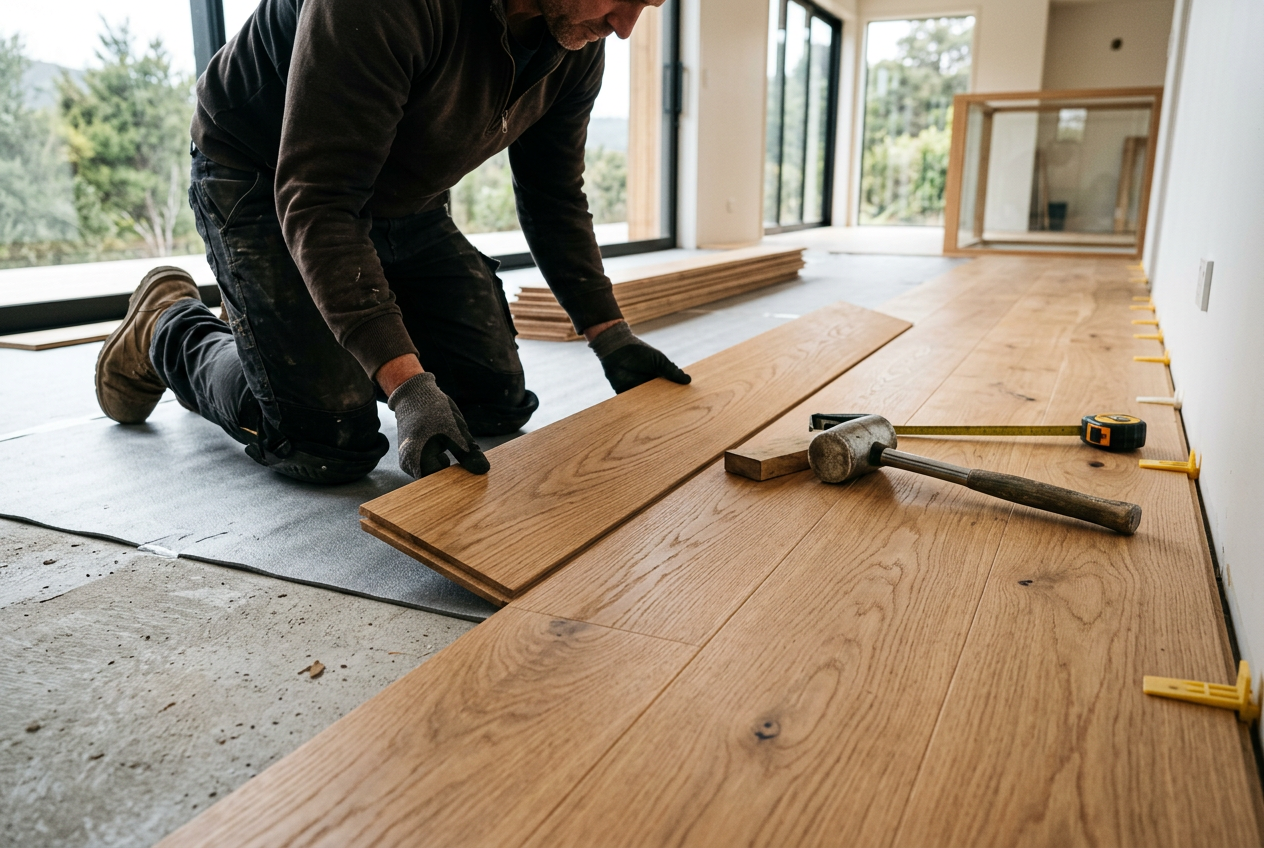
If you are planning new flooring over a concrete slab, dampness is one of the first things to check. In short: you should not lay most flooring directly over a damp concrete floor. Trapping moisture under floor coverings can lead to cupping, lifting, mould, adhesive failure and an expensive re-do.
Australian homes face a wide range of slab conditions, from older homes with little or no vapour barrier to newer builds dealing with wet weather, poor drainage or post-flood moisture. Before installing carpet, timber, hybrid, vinyl or floating floors, the slab needs to be dry enough for the flooring system you choose.
Why Damp Concrete Is A Problem
Concrete looks solid, but it can hold moisture for a long time. That moisture may come from the ground, rain entering during construction, poor drainage around the home, plumbing leaks, or recent cleaning and flooding. When flooring is laid over a damp slab, the moisture can move into the adhesive, underlay or boards and cause damage.
Common problems include:
- Adhesives losing bond and flooring lifting
- Timber or hybrid boards swelling, crowning or gapping
- Carpet backing holding moisture and developing odours or mould
- Efflorescence, where salts in the slab rise to the surface
- Damage to skirtings, joins and trims
Australian building requirements and manufacturer instructions are important here. The National Construction Code, product data sheets and relevant state-based building or fair trading guidance all expect substrates to be suitable before installation. If in doubt, seek advice from a licensed flooring professional.
How To Tell If Your Concrete Floor Is Too Damp
You should not rely on touch alone. A slab can feel dry on top while still holding moisture below the surface. Signs that suggest a moisture issue include dark patches, a persistent musty smell, condensation, white powdery deposits, or previous flooring failure.
For a proper check, installers often use moisture testing methods suited to the flooring system, such as:
- Plastic sheet checks for a rough indication only
- Concrete moisture meters
- Relative humidity testing in the slab
- Manufacturer-approved test methods before adhesive flooring is installed
For older homes, slabs without an effective vapour barrier can be a recurring issue. In coastal areas, humid weather can also slow drying. After heavy rain or flooding, allow the slab to dry thoroughly and identify the source of moisture before moving ahead.
What Flooring Can Go Over A Damp Slab?
Most flooring types still need a dry, sound slab, but some systems handle minor moisture better than others. The key is not to guess. Always follow the flooring manufacturer’s instructions and the adhesive supplier’s requirements.
| Flooring Type | Suitability Over Damp Concrete | Notes |
|---|---|---|
| Solid timber | Not recommended | Very sensitive to moisture and movement. |
| Engineered timber | Sometimes, if slab is within tolerance | Needs verified moisture levels and correct underlay or adhesive system. |
| Hybrid / rigid core | Sometimes | May tolerate minor moisture, but only where the product allows it. |
| Vinyl sheet or plank | Sometimes | Usually requires a very smooth, dry slab and compatible adhesive. |
| Carpet | Only if slab is suitably dry | Dampness can cause odour, mildew and backing failure. |
If the slab is only slightly damp, a suitable moisture barrier or primer system may be part of the solution. Some products are stocked through Australian retailers such as Bunnings and Mitre 10, but the right choice depends on the slab condition and the flooring type, not just what is on the shelf.
How To Fix A Damp Concrete Floor Before Flooring
The best fix depends on the cause. If the moisture is coming from a leak, drainage issue or surface water entry, that problem must be corrected first. If the slab is drying out after rain or washing, give it time and ventilation. If moisture is rising through the slab, a surface treatment alone may not be enough.
Possible steps include:
- Repair leaks and improve external drainage
- Remove old glue, paint or contaminants from the slab
- Allow the slab to dry fully with airflow and, if needed, dehumidification
- Use a manufacturer-approved moisture barrier or sealer where suitable
- Level and patch the surface with compatible products before installation
Do not apply a waterproof coating or sealer unless it is designed for the flooring system you are using. Some coatings can affect adhesion or trap moisture in the wrong place. Products from brands such as Dulux, Taubmans and British Paints may be suitable for certain concrete treatments, but always check that the product is intended for floors and for use beneath your chosen finish.
When To Call A Professional
Call a licensed flooring installer, builder or concrete remediation specialist if you are dealing with ongoing dampness, slab cracking, signs of mould, or a previous failed installation. If the issue is linked to structural movement, waterproofing, drainage or plumbing, those trades may need to be involved too. In Australia, plumbing, gas and electrical work must be carried out by licensed professionals where applicable.
For homes with suspended slabs, wet areas or complex transitions, professional advice is especially worthwhile. A good installer can assess the slab, recommend a suitable barrier or system, and make sure the final floor meets the National Construction Code and manufacturer requirements. Safe Work Australia guidance is also relevant when moisture, mould or chemical products are involved.
In many cases, the safest answer to “can I lay flooring over a damp concrete floor?” is no, not yet. Dry the slab, fix the cause, then install the right flooring system for Australian conditions. If you are comparing resources across the Tasman, you can also visit Trade Directory NZ.
Ready to get it done properly? Find qualified local insulation installers through local insulation installers on Aussie Trade Directory and connect with a professional who can assess your slab and recommend the right solution.