
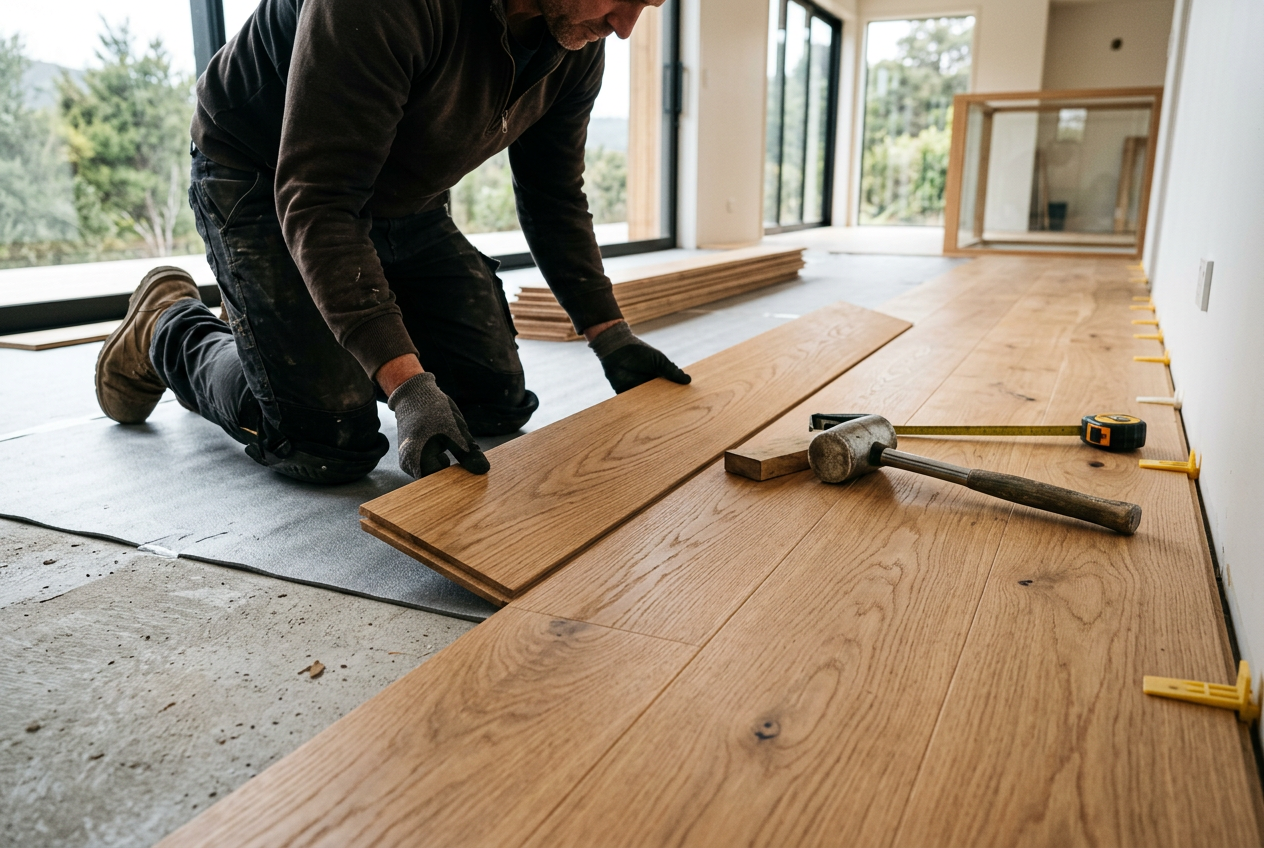
Yes, in many Australian homes you can lay new flooring over existing floorboards, but only if the current floor is sound, level, dry and properly prepared. The right answer depends on the condition of the boards underneath, the type of new flooring you want to install, and whether the extra height will cause problems at doors, skirting boards, stairs or appliances.
If the existing floorboards are in good shape, overlaying them can save time, reduce mess and avoid pulling up old timber. But if there’s movement, damage, moisture, squeaks or rot, those problems usually need fixing first. A rushed overlay can lead to uneven floors, noisy boards and premature wear.
When It Makes Sense To Lay New Flooring Over Floorboards
Overlaying is often a practical option when the floorboards are structurally sound and tightly fixed to the joists. This is common in many older Australian homes where timber flooring has settled over time but is still stable. You may be able to install:
- Hybrid flooring
- Engineered timber
- Laminate
- Carpet underlay and carpet
- Some sheet vinyl products, if the subfloor is suitable and prepared correctly
In homes across Australia, this approach can also help improve comfort and appearance without the disruption of a full floor removal. It can be especially useful where existing floorboards are uneven but still serviceable, because a suitable underlay or levelling layer may help create a more consistent base.
Key Checks Before You Start
- Movement: Walk the room and listen for squeaks, bounce or loose boards.
- Condition: Look for cracking, cupping, water staining, mould or termite damage.
- Moisture: Check for damp areas, especially near bathrooms, laundries, external walls and under old leak points.
- Height: Make sure doors, skirtings, cabinetry and transitions still work once the new floor is added.
- Flatness: Confirm the floor is within the tolerances required for the flooring product and the National Construction Code where relevant.
When You Should Remove Or Repair The Old Floor First
Sometimes laying over floorboards is the wrong call. If the boards are heavily damaged, rotten, loose, heavily cupped or affected by moisture, it is better to repair or replace the problem area first. Covering defects can trap issues underneath and make future repairs harder.
You should also think twice if the existing floor has significant height variation. Some floating floors can handle minor imperfections, but they still need a reasonably flat surface. Excessive movement or dips may cause clicking, gapping or early failure.
Another factor is ventilation and access. In some older homes, floorboards provide access under the house. If you need regular access to services or underfloor ventilation, an overlay may not be appropriate without proper planning.
Common Problems To Fix First
- Loose or squeaky boards
- Water damage or active leaks
- Termite damage or timber decay
- Substantial unevenness
- Previous poor repairs or patch jobs
- Old adhesive residue that affects adhesion or flatness
What Flooring Types Work Best Over Floorboards?
The best choice depends on the condition of the base floor and the product instructions. Always follow the manufacturer’s installation requirements, because some systems are designed for floating installation while others need direct fixing or a very specific underlay.
| Flooring Type | Usually Suitable Over Floorboards? | Notes |
|---|---|---|
| Hybrid | Yes, often | Needs a flat, stable base and correct expansion gaps. |
| Laminate | Yes, often | Common in floating installations with underlay. |
| Engineered timber | Yes, sometimes | May be floated, glued or fixed depending on the product. |
| Carpet | Yes | Usually straightforward if the subfloor is firm and even. |
| Sheet vinyl | Sometimes | Needs an especially smooth surface; floor prep is critical. |
If you are unsure, take the product information to a flooring specialist at Bunnings, Mitre 10 or a reputable flooring supplier and ask what the installation requirements are for timber subfloors in your home.
How To Prepare Floorboards For A New Floor
Preparation is the difference between a flooring job that lasts and one that becomes noisy or uneven. Start by cleaning thoroughly so dust, grit and old debris do not interfere with the new floor. Then inspect every room for loose boards, protruding nails or screws, and signs of moisture.
Typical preparation steps include:
- Re-fixing squeaky or loose boards to the joists
- Replacing damaged boards where necessary
- Light sanding or planing high spots
- Filling gaps or low spots with a suitable product
- Installing the correct underlay or acoustic layer if required
- Checking door clearances and trim levels
For tiled areas or where you need a particularly flat finish, you may need a professional assessment and additional levelling work. If the project involves structural repairs, moisture issues, or any electrical, plumbing or gas-related work nearby, that portion must be handled by a licensed professional in line with Australian requirements.
Practical Tips For Australian Homes
Australian homes deal with a wide range of conditions, from humid coastal areas to dry inland climates. Timber moves with changes in temperature and humidity, so allow flooring materials to acclimatise before installation where required. Keep the home reasonably ventilated, and avoid trapping moisture beneath the new floor.
Also consider how the new floor will meet wet areas and external doors. Thresholds may need adjusting, and skirting boards or architraves may need trimming or removal and refitting. In older homes, minor settlement is common, so a little extra planning around transitions can save headaches later.
For fire safety and compliance, always follow the flooring manufacturer’s directions and any applicable building requirements. If you are making broader renovation changes, check the National Construction Code and your state or territory building and Fair Trading guidance before you begin.
So, Can You Do It?
In short, yes — often you can lay new flooring over existing floorboards, provided the boards are sound, dry, flat enough and suitable for the product you choose. The safest approach is to inspect carefully, fix defects first and match the new flooring to the condition of the old one. If you are dealing with moisture damage, major movement or uncertain subfloor conditions, getting expert advice before you start is well worth it.
For more home improvement guidance, you can also check out Trade Directory NZ.
If your renovation plan includes insulation upgrades or you want to improve comfort under the new floor, find qualified local insulation installers on Aussie Trade Directory at local insulation installers.