
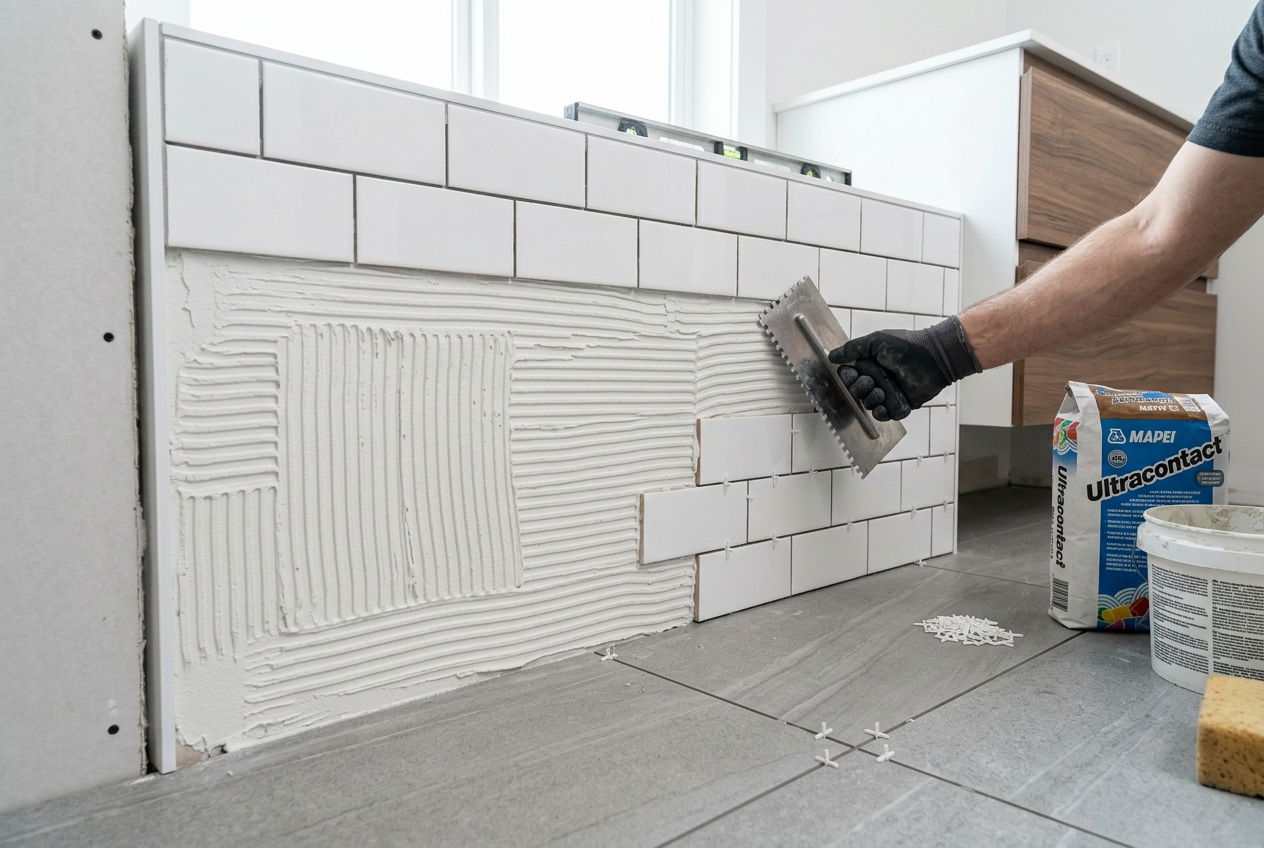
Short answer: sometimes, yes. Priming before tiling helps the adhesive bond properly, controls suction, and can stop problems like tiles lifting, hollow spots, or grout cracking later on. But not every surface needs the same treatment, so the right approach depends on what you’re tiling over.
If you’re working on a bathroom, laundry, kitchen splashback, balcony, or concrete floor, the condition of the substrate matters just as much as the tile choice. In Australia’s mixed climate, heat, moisture, and movement can all affect how a tiling job performs over time.
When Priming Is Usually Needed
Priming is commonly used on porous or dusty surfaces that would otherwise pull moisture out of the adhesive too quickly. It is also helpful on dense or smooth surfaces that need extra grip before tiling.
Common surfaces that may need primer
- New plasterboard or render that is very absorbent
- Concrete that is dusty, porous, or patch-repaired
- Compressed fibre cement sheets, depending on the tiling system
- Old surfaces that have been cleaned back but still have fine residue
- Some waterproofing membranes and difficult non-porous substrates, if the adhesive manufacturer allows it
Priming is often part of the system rather than a standalone step. Tilers will usually follow the adhesive and substrate manufacturer’s instructions, along with the National Construction Code and relevant Australian Standards where they apply.
When You May Not Need to Prime
Some surfaces are already prepared to receive tile adhesive. In those cases, adding the wrong primer can actually cause trouble.
You may not need to prime if the surface is:
- Clean, sound, and specifically designed for tiling
- A compatible waterproofed surface that the adhesive can bond to directly
- Already sealed or rendered with a product intended for tile installation
For example, some tile backer boards and engineered surfaces from brands such as Gyprock/CSR or James Hardie are made to be tiled once installed correctly and treated according to the manufacturer’s directions. The key is always compatibility, not guesswork.
Wall vs Floor: What Changes?
Walls and floors behave differently, so the preparation needs can differ too. Floors often face more movement, wear, and moisture exposure, especially in wet areas and on concrete slabs. Walls can be more forgiving in some situations, but splash zones, showers, and external walls still need careful prep.
| Surface | Typical Considerations | Primer Needed? |
|---|---|---|
| Plasterboard wall | Can be very absorbent; needs correct prep in wet areas | Often yes, depending on the adhesive system |
| Concrete floor | May be dusty, porous, or uneven; can draw moisture from adhesive | Often yes |
| Existing tiles | Needs degreasing, scuffing, and a suitable bonding system | Sometimes, with the correct product |
| Fibre cement sheet | Must be fixed correctly and prepared to manufacturer directions | Sometimes |
If you’re tiling over old tiles, don’t assume primer alone will solve poor adhesion. The surface must be solid, clean, and well bonded. Loose tiles, silicone residue, soap scum, or floor polish need to be removed before anything else.
How to Tell If a Surface Is Ready
A good tiling base should be clean, dry, stable, and free from dust, paint flakes, grease, and movement. Run your hand over it and check for powdery residue. If your hand comes away dusty, it probably needs more prep.
Simple checks before tiling
- Vacuum or sweep thoroughly
- Remove paint, adhesive bumps, and loose material
- Patch holes and cracks with a compatible repair product
- Check for moisture issues, especially in bathrooms and slab-on-ground homes
- Confirm the surface matches the adhesive and primer recommendations
In wet areas, proper waterproofing is essential. If you’re unsure about waterproofing requirements, it is worth speaking with a licensed waterproofing contractor or tiler. In Australia, some related work may be restricted, and plumbing and electrical work must always be carried out by a licensed professional.
Choosing the Right Primer
Not all primers do the same job. Some are designed to reduce suction on porous surfaces, while others improve adhesion on smooth or difficult substrates. The right choice depends on what you are tiling over and which adhesive you plan to use.
Australian retailers such as Bunnings and Mitre 10 stock a wide range of tile primers and prep products, and the product label should clearly state which surfaces they suit. Stick to systems from recognised manufacturers and follow the instructions carefully. Brands you may come across in Australia include Dunlop, Sika, Davco, Mapei, and Ardex, among others.
If the primer, adhesive, or waterproofing products are not compatible, the bond can fail. That is why tilers often buy the whole system from one manufacturer where possible.
Practical Advice for DIYers
If you’re doing a small tiling job yourself, preparation is where most of the success happens. Rushing straight to the tiles is one of the most common mistakes homeowners make.
- Read the primer, adhesive, and tile manufacturer instructions before starting
- Test the surface for dust, dampness, and movement
- Use the correct trowel size and adhesive for the tile type
- Allow primer to dry fully before applying adhesive
- Never use a random sealer or paint as a substitute for primer
For outdoor areas, balconies, and parts of the home exposed to heat or wind-driven rain, expansion, waterproofing, and substrate movement all matter. Australian conditions can be harsh, so preparation needs to be more than just “good enough”.
If the substrate is damaged, uneven, or not suitable for tiling, it may need to be repaired or replaced before any primer goes on. A tiler can help assess whether the surface is salvageable or whether a new underlay is the better option.
If you’re comparing home improvement advice across the Tasman, you might also find useful information from our sister site at Trade Directory NZ.
For a finish that lasts, the safest option is to match the substrate, primer, adhesive, and waterproofing system correctly from the start. If you want help with that, find local tilers on Aussie Trade Directory and get your project done properly.