
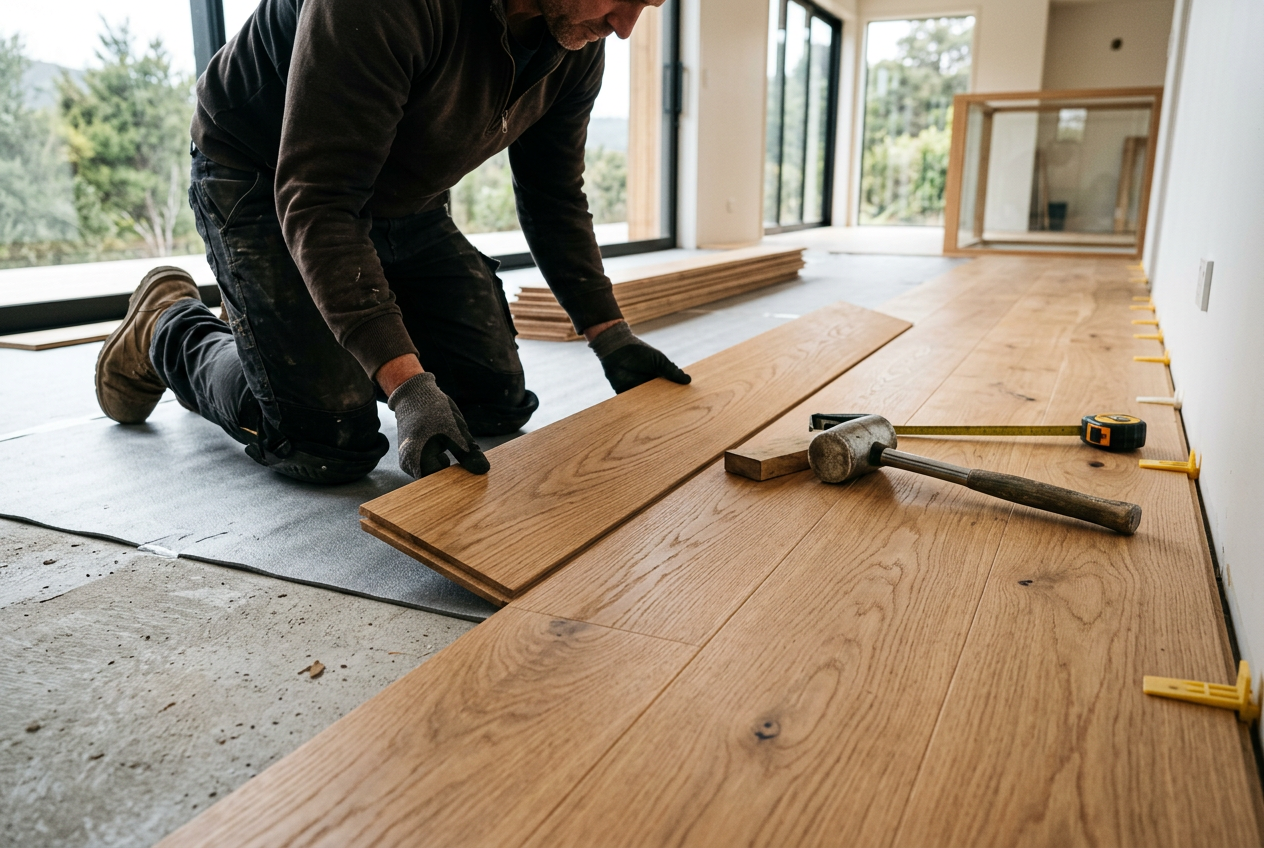
Choosing one flooring style that works through the whole house can make an Australian home feel bigger, calmer and more considered. The trick is not just picking a look you love, but choosing a material that suits your rooms, climate, lifestyle and maintenance habits from the front door to the back living area.
In Australia, that means thinking about heat, humidity, coastal air, sand, pets, kids and whether your home is slab-on-ground, timber-framed or a mix of old and new extensions. A floor that looks great in a display home may not be the best choice for a busy family home in Perth, a humid Queensland coastal area or a cooler southern house with lots of winter condensation.
Start With The Way Your Home Is Used
Before you compare samples, map out how each room is used. Continuous flooring works best when the material can handle the toughest space it will be installed in. If you choose timber-look hybrid for the kitchen, hallways and living zones, it needs to cope with spill-prone areas, dropped items and regular cleaning.
- Entry and hallways: Need scratch resistance and easy cleaning because they cop a lot of foot traffic and grit.
- Living and dining: Should feel comfortable underfoot and visually connected to the rest of the house.
- Kitchen: Needs moisture resistance and good slip performance.
- Bedrooms: Often suit warmer, softer finishes if you want a quieter feel.
- Laundry and wet areas: May need different flooring altogether for waterproofing and safety reasons.
If you want the whole house to flow, you do not always need the same product in every room. You do need a plan that keeps the visual line consistent and avoids awkward transitions.
Pick A Material That Suits Australian Conditions
The best whole-house flooring is one that matches your local climate and your household. In many Australian homes, popular choices include engineered timber, laminate, hybrid flooring, ceramic or porcelain tile, polished concrete and quality carpet in bedrooms. Each has strengths and trade-offs.
| Flooring Type | Best For | Things To Watch |
|---|---|---|
| Hybrid flooring | Open-plan homes, busy family areas, good visual continuity | Quality varies, and subfloor preparation is important |
| Engineered timber | A natural look with more stability than solid timber | Can still be affected by moisture and deep scratches |
| Laminate | Budget-conscious renovations and low to moderate traffic | Not all products handle moisture well |
| Tile | Hot climates, kitchens, entries, easy cleaning | Can feel hard and cold underfoot |
| Polished concrete | Modern homes and slab construction | Needs careful planning and may feel hard in bedrooms |
| Carpet | Bedrooms and quieter spaces | Hard to maintain if you want one seamless finish throughout |
For many Australian renovators, the most practical “flow” solution is a single hard flooring product through the main areas, then carpet in bedrooms if comfort is a priority. If you want one finish everywhere, a well-chosen hybrid or engineered timber style often gives the cleanest result.
Think About Colour, Board Size And Light
Consistency is about more than material. Colour and plank size have a big impact on how connected your home feels. Lighter tones can make smaller rooms feel more open, while medium natural shades often hide dust and everyday marks better than very dark boards. Dark floors can look striking, but they may show lint, scratches and dust more readily, especially in homes with pets or lots of sun.
If your house has different levels of natural light, try to choose a finish that still looks good in both bright and shaded rooms. Always view samples in morning light, afternoon light and at night under your own globes. The warm white tone you see in a showroom can look very different at home.
Larger planks and fewer visible joints can help a floor feel continuous. Matching trims, skirting and stair details also matter. In some homes, changing the skirting colour to a clean white from Dulux, Taubmans or British Paints can help the floor read as one continuous design element rather than a series of separate rooms.
Plan The Transitions Properly
A good flow often comes down to the join between rooms. Ideally, flooring should run in the same direction through adjoining spaces where possible, especially along hallways and open-plan living areas. That creates an uninterrupted line of sight and makes rooms feel more spacious.
Where the floor needs to change, make the transition deliberate. Use thresholds, trims or colour-matched joiners rather than leaving an awkward edge. Wet areas may need their own flooring choice for compliance, water resistance and safety. The National Construction Code and relevant Australian standards can affect how wet areas, stairs and moisture-prone spaces are finished, so it is worth checking with a licensed flooring installer or builder.
If your home has underlying issues such as uneven slab levels, moisture problems or damaged particleboard, get them assessed first. A beautiful product will not perform properly if the subfloor is not sound. If the job involves electrical, gas or certain plumbing work during a renovation, it must be handled by a licensed professional in your state or territory.
Match The Floor To Your Renovation Style
For older homes, a warm timber-look floor can bridge the gap between original rooms and modern additions. In contemporary homes, a low-contrast floor can help open-plan living feel calm and cohesive. If you have a renovation with new Gyprock or CSR wall linings, James Hardie external cladding elements or a Colorbond roofline visible from inside, choosing a floor tone that complements those finishes can help the whole home feel intentional.
Before you commit, collect samples from Bunnings or Mitre 10 and compare them against your cabinetry, paint, benchtops and window furnishings. Place them near doors and windows, and check how they look beside your furniture and rugs. A floor that works with your existing items will make the whole house flow more naturally.
If you are unsure, ask a flooring specialist to assess your subfloor, movement joints, acoustic needs and product suitability. Australian flooring installers should also understand local licensing rules and Safe Work Australia guidance for safe cutting, dust control and manual handling.
For more home improvement ideas, you can also browse Trade Directory NZ.
Ready to create a seamless finish throughout your home? Find a qualified local trade through Aussie Trade Directory and connect with local insulation installers who can help you improve comfort and performance as part of your renovation plan.