
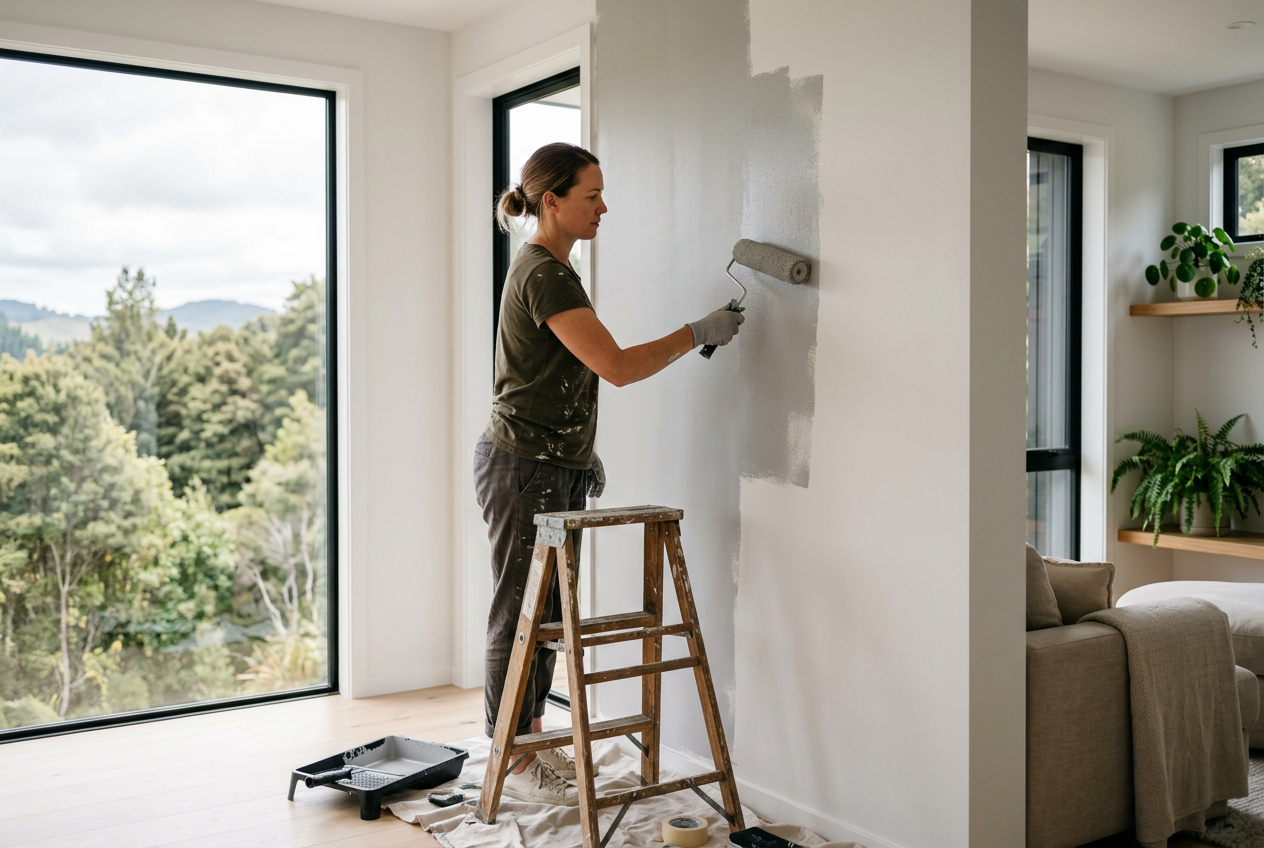
Trying to match an existing paint colour can be fiddly, especially once paint has faded, walls have been cleaned a few times, or the original tin has long disappeared. The good news is that with a bit of method, you can usually get very close to the original finish without repainting the whole room.
Whether you are touching up a feature wall, repairing plaster after a small patch job, or trying to blend new trim into an older room, the key is to identify both the colour and the finish. Here’s how Australian homeowners can do it properly.
Start With What You Already Have
If you still have the original paint tin, check the label first. Many paints sold through Bunnings, Mitre 10, Dulux, Taubmans and British Paints include useful details such as the colour name, product range, and finish type. Even when a colour name is listed, it may not be enough on its own, because different products can vary slightly between ranges.
Look for:
- Colour name or code
- Finish type, such as matt, low sheen, satin or semi-gloss
- Brand and product range
- Batch or tint details if available
If the tin is missing, check inside a cupboard door, behind a switch plate, in the garage, or on a hidden section of the wall for an unweathered patch. Paint that has been exposed to sunlight, sea air, smoke or kitchen grease can change noticeably over time, especially in harsh Australian conditions.
Take A Proper Sample To A Paint Store
The most reliable way to match paint is to take a physical sample to a paint specialist at a large hardware store or dedicated paint centre. A sample from the actual surface is better than a photo on your phone, because camera settings and indoor lighting can distort the colour.
Best sample options include:
- A removable chip of the original paint
- A small section from behind a switch plate or return wall
- A painted piece of trim or timber offcut from the same job
If you cannot remove a chip, take a clean section of wall that has not been affected by sun or shadow. Ask the staff to compare it under natural light if possible. They can often use colour-matching systems to find a close tint in a Dulux, Taubmans or British Paints range.
Always test the matched colour before painting the whole area. Paint a sample patch on the wall and let it dry fully. Wet paint can look quite different from the final finish, and your existing wall may also have changed colour with age.
Check The Finish, Lighting And Surface Condition
Getting the colour right is only half the job. The wrong sheen can make a patch stand out even if the colour is close. For example, a flat wall paint will not blend well with a low sheen surface, and a fresh gloss trim coat can look noticeably different next to older paint.
Lighting matters too. In Australian homes, strong sunlight through windows can make pale colours look warmer or more washed out. North-facing rooms, shaded alfresco areas and spaces near bright exterior surfaces can all affect how the paint appears.
Surface condition also plays a role. A patched area on older plasterboard or Gyprock may reflect light differently from the surrounding wall. Even the same paint can look slightly off if the surface has been repaired, sanded, or sealed unevenly. For new linings, priming with the right sealer is important before any colour matching begins.
| What To Match | Why It Matters | Practical Tip |
|---|---|---|
| Colour | Old paint may fade or yellow | Match to an unexposed sample if possible |
| Finish | Sheen affects appearance | Confirm matt, low sheen, satin or gloss |
| Lighting | Different rooms change perception | View test patches in daylight and at night |
| Surface | Repairs can change texture and reflectivity | Prime and prepare the area evenly |
When You Can’t Get An Exact Match
Sometimes an exact match is impossible. Older colours may be discontinued, faded, or altered by ageing. In those cases, the best approach is usually one of these:
- Paint the whole wall or section from corner to corner
- Repaint the entire room for a consistent finish
- Use the matched colour on a feature area and accept a near match
If you are repainting external surfaces, keep in mind the Australian climate. Intense UV, coastal salt and heavy rain can all affect exterior coatings, so it is worth choosing a quality exterior paint system suitable for the surface, whether it is masonry, timber, fibre-cement or Colorbond cladding. For products and surface preparation advice, the team at Bunnings, Mitre 10 or a paint specialist can help you choose the right system.
For a more complex colour match on rendered walls, weatherboards, fences or older interiors, a professional painter may be the safest and neatest option. A licensed painter will know how to handle preparation, patching, sealing and blending so the repair is less noticeable. If the job involves electrical, gas or plumbing-related removal or reinstatement, that work must be done by a licensed professional in the relevant trade.
Always check state and territory licensing and Fair Trading requirements before hiring anyone for regulated work, and make sure all work complies with the National Construction Code where applicable.
If you are unsure, test first, paint second, and do not rush the prep. A little patience now can save you repainting the whole area later. For more trade resources and practical guides, you can also visit Trade Directory NZ.
If you want a clean result without the guesswork, find a qualified local painter on Aussie Trade Directory through our local painters directory.