
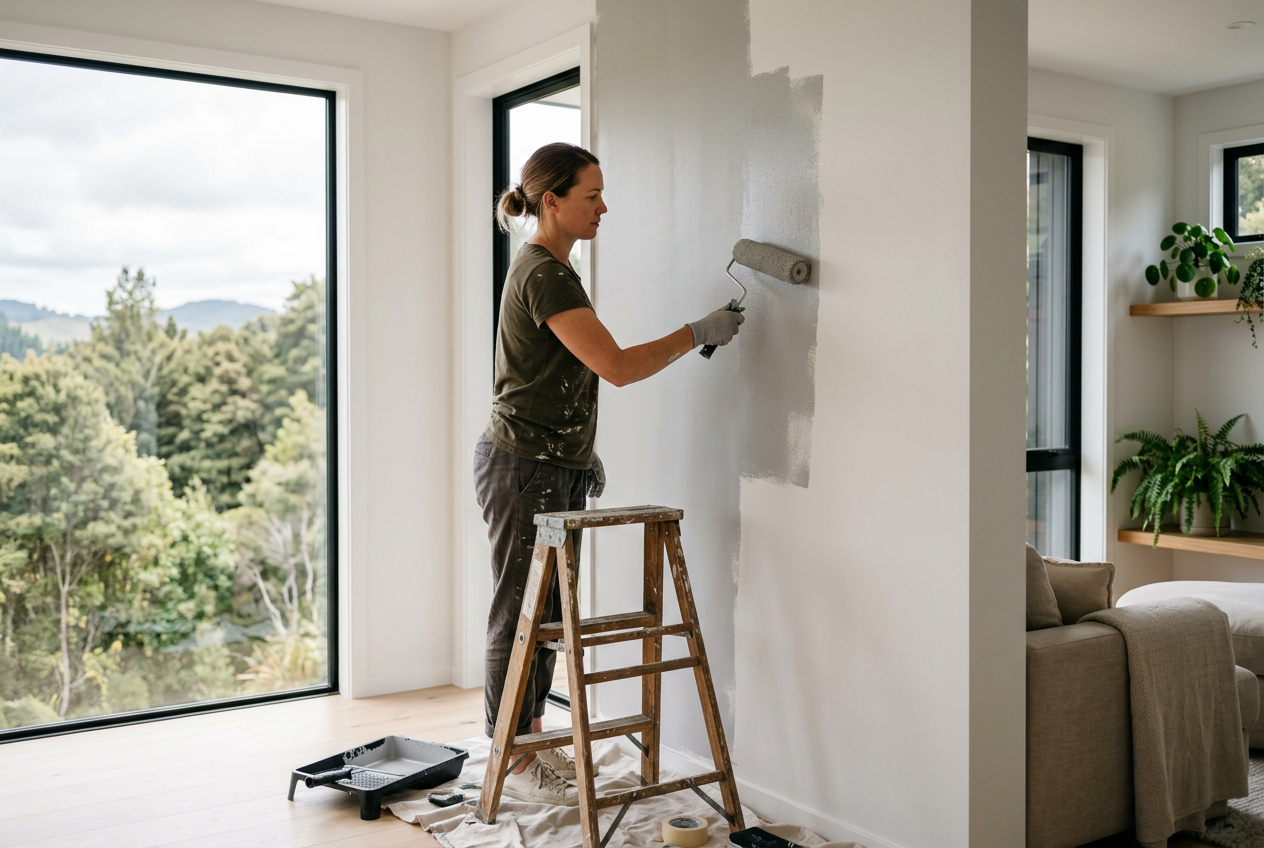
Painting a freshly plastered or skimmed wall is a bit different from painting an older painted surface. Fresh plaster is thirsty, dusty and often patchy in porosity, so if you rush in with topcoat paint too soon, you can end up with uneven sheen, poor adhesion or a blotchy finish. The good news is that with the right prep, primer and painting method, you can get a smooth, long-lasting result that looks professional.
Before You Paint: Let The Surface Cure Properly
The first step is patience. Fresh plaster or a skim coat needs to dry and cure before painting. Drying time depends on the plaster type, thickness, room ventilation and the Australian climate. A room in humid coastal conditions will usually take longer than a dry inland space. As a general rule, don’t paint until the wall is fully dry, firm and no longer cool or damp to the touch.
Check for obvious signs the wall is ready: the colour should be even, there should be no dark patches, and the surface should feel powdery only at a very light level. If you’re unsure, follow the plasterer’s advice and the product instructions from the plaster or compound manufacturer. Good airflow helps, so open windows where possible and use fans to circulate air, but avoid forcing heat directly onto the wall, which can cause cracking or uneven drying.
Prepare The Surface For A Quality Finish
Fresh plaster often needs more prep than previously painted walls. Start by removing dust with a soft brush, vacuum with a brush attachment, or wipe down gently if the product instructions allow it. Dust left on the wall can interfere with primer adhesion and leave a gritty finish.
Next, inspect for small flaws such as trowel marks, ridges, pinholes or hairline cracks. Fill minor defects with a suitable patching compound and sand lightly when dry. Use fine sandpaper and keep pressure light so you don’t damage the fresh surface. Then remove all sanding dust again.
If the wall has any stains, mould, water damage or efflorescence, fix the cause before painting. In Australian homes, moisture issues can come from leaks, condensation or poor ventilation. If there is any sign of active water entry, have it checked before you paint, otherwise the finish won’t last.
Use The Right Sealer Or Primer
This is the most important step for freshly plastered or skimmed walls. Fresh plaster is porous, so it usually needs a sealer or primer specifically designed for new surfaces. Products from Dulux, Taubmans and British Paints are commonly available at Bunnings and Mitre 10, and many painters use a dedicated plaster sealer or undercoat to lock in the surface and create an even base for topcoats.
For most new plaster, a quality sealer/primer is better than jumping straight to topcoat. It helps stop the wall sucking in paint unevenly, reduces flashing, and improves colour consistency. If you are painting over new plasterboard with joint compounds, be sure to seal both the board and the jointed areas so the finish matches.
| Step | Why It Matters | Common Mistake |
|---|---|---|
| Dry the wall fully | Prevents peeling and patchiness | Painting while the wall still feels damp |
| Remove dust | Improves adhesion | Priming over sanding dust |
| Patch and sand | Creates a smooth surface | Trying to hide flaws with more paint |
| Apply sealer/primer | Controls porosity and sheen | Using topcoat only on fresh plaster |
Apply Paint In Thin, Even Coats
Once the primer is dry, apply your topcoat in thin, even layers rather than trying to cover everything in one heavy coat. Most painters will use a quality roller for walls and a brush for edges and corners. Work in manageable sections and maintain a wet edge to avoid lap marks.
For a standard interior wall, two topcoats are usually needed after priming, but follow the paint manufacturer’s instructions. Light colours generally hide less than you might expect over fresh plaster, so don’t be tempted to overwork the paint to force coverage. Let each coat dry properly before applying the next.
Choose low-VOC or low-odour interior paint if you are painting bedrooms, living areas or rooms with limited ventilation. In warmer parts of Australia, paint may dry faster on the surface than in cooler conditions, so keep an eye on recoat times and don’t assume the wall is ready just because it feels dry to touch.
Common Problems And How To Avoid Them
- Flashing: Usually caused by uneven porosity. A proper sealer/primer helps.
- Peeling or poor adhesion: Often due to dust, moisture or painting too early.
- Patchy sheen: Can happen when fresh plaster absorbs paint unevenly.
- Visible repairs: Prime patched areas as well as the surrounding wall.
- Cracking: May indicate movement, shrinkage or ongoing moisture issues.
If you’re painting a bathroom, laundry or another humid area, make sure the room has proper ventilation and use a paint suitable for high-moisture spaces. For exterior rendered or fibre cement surfaces, or where fire-rated, structural or weatherproofing systems are involved, check the relevant Australian standards and product instructions, and use trades who understand the National Construction Code requirements. Electrical, gas and certain plumbing work must be done by a licensed professional.
When To Call In A Professional Painter
DIY painting can be straightforward on a small, well-prepared wall, but a professional painter is worth considering if the surface is large, the finish needs to be flawless, or the wall has damage, patching or moisture concerns. A qualified painter can assess the plaster condition, choose the right sealer, and produce a smoother result with fewer defects. If the job is part of a larger renovation, they can also coordinate with plasterers, builders and other licensed trades where needed, while keeping compliance and safety in mind under Safe Work Australia guidance and your state’s licensing and Fair Trading requirements.
If you need more project information or trade comparisons, you can also check Trade Directory NZ.
Ready to get a clean, long-lasting finish on your new wall? Find experienced local painters on Aussie Trade Directory and choose a qualified professional for your job.