
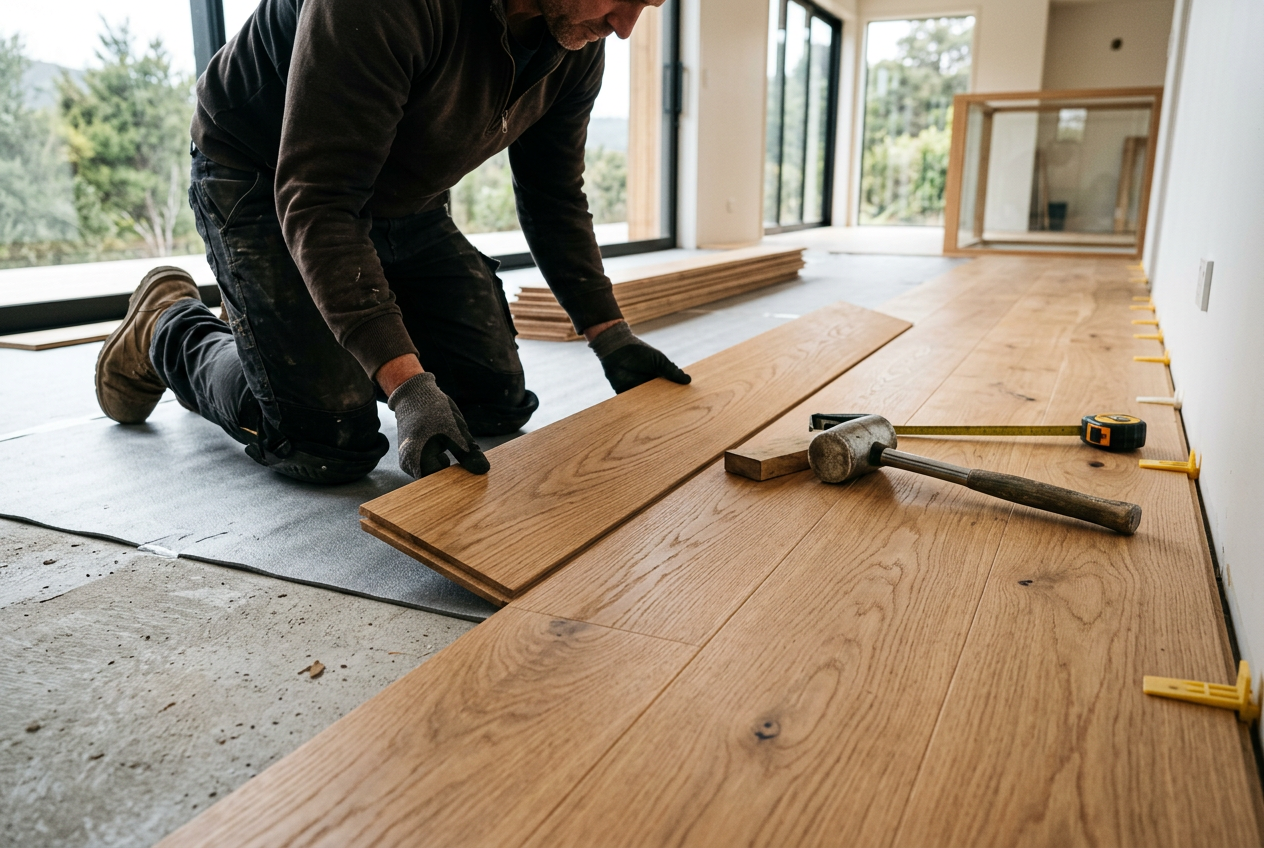
Getting new flooring is a big improvement, whether you are choosing hybrid, laminate, timber, carpet, vinyl, or tiles. A smooth install starts well before the installer arrives. A bit of preparation helps the job run faster, reduces the risk of damage, and gives your flooring installer the best chance of a tidy finish.
Here is a practical guide for Australian homeowners preparing for a flooring installation, with tips suited to our homes, climate, and building conditions.
Check What Needs To Be Done Before Installation Day
The first step is to understand exactly what your flooring installer will and won’t handle. Some installers will remove existing flooring, move furniture, and dispose of waste. Others may only install the new product and expect the room to be fully cleared. Confirm this early so there are no surprises on the day.
It is also worth asking whether the subfloor needs preparation. In Australian homes, old concrete slabs, uneven floorboards, moisture issues, and squeaky joists are common. If there is levelling, screeding, or repair work required, it should be organised before the new flooring goes down. If the job involves structural changes, waterproofing, electrical work, or plumbing adjustments, those tasks must be completed by the relevant licensed professional under Australian rules.
Questions to ask your installer
- Do I need to remove furniture and appliances?
- Should existing flooring be lifted before you arrive?
- Will you check moisture and floor levels?
- Do skirting boards, trims, and architraves need attention?
- How long should I keep the area clear after installation?
Clear The Space And Protect What Stays
The easiest way to help your flooring installer is to clear the room completely where possible. Remove small furniture, rugs, lamps, decorative items, toys, and breakables. For larger furniture, move it out ahead of time or arrange for the installer to handle it only if that has been agreed in advance.
In Australian homes, it is smart to think about heat, dust, and access. If you are storing items in the garage, laundry, or spare room, make sure the installer can still reach the work area easily. Keep pets secured away from the room and let everyone in the house know which areas are off limits.
If some furniture must stay, cover it with clean sheets or moving blankets rather than loose plastic, which can trap condensation in warmer weather. Take down wall art and fragile items from shelves and nearby surfaces, as cutting and sanding can cause vibrations.
Appliances and fixed items
If the room has a fridge, dishwasher, washing machine, or other appliance, ask the installer whether it needs to be disconnected and moved. For gas, water, and hardwired electrical connections, this is not a DIY job if the work involves disconnection or reconnection. Use a licensed tradesperson where required.
Prepare The Floor, Skirting, And Access Points
Before installation, inspect the area for obvious issues. Look for cracks, loose boards, lifted tiles, damaged plaster, or signs of moisture. If you notice mould, persistent dampness, or movement in the floor, raise it with the installer early. In many cases, the issue needs to be fixed first to avoid problems later.
It also helps to remove doors if the installer has asked for extra clearance. Check whether door bottoms may need trimming once the new flooring goes in. In some cases, skirting boards, trims, and transitions between rooms may need to be adjusted for the final floor height.
If you are doing any last-minute patching or painting, use products suited to the surface and follow label instructions. Australian homeowners often rely on brands such as Dulux, Taubmans, or British Paints for touch-ups, but make sure any preparation work is fully dry before installation day.
| Area To Check | What To Do | Who Usually Handles It |
|---|---|---|
| Furniture | Move out small items and confirm larger pieces in advance | Homeowner or installer by agreement |
| Subfloor | Fix uneven, damp, or damaged areas before install | Installer or suitable trade |
| Skirting and trims | Check for clearance and finish requirements | Installer or carpenter |
| Appliances | Disconnect and reconnect services safely | Licensed electrician, plumber, or gasfitter where required |
| Doors | Remove or trim if new flooring affects clearance | Installer or carpenter |
Get The House Ready For A Smooth Install Day
A successful installation is as much about access and timing as it is about the flooring itself. Make sure there is a clear path from the street, driveway, or garage to the work area. If the flooring will be delivered before the installer arrives, have a dry, level storage spot ready and follow the manufacturer’s instructions for acclimatisation where applicable.
It is also a good idea to manage indoor conditions. In much of Australia, hot, humid, or very dry weather can affect some flooring materials. Keep the home at a stable temperature where practical and close windows if dust or rain could cause problems. If your property has recent plastering or painting work, make sure it has cured properly before flooring installation begins.
Finally, confirm the basics the day before: arrival time, parking access, bathroom access, and who will be home to answer questions. If you live in a strata or apartment setting, check any building rules about loading zones, lifts, noise, and work hours so the installer is not delayed.
Before The Installer Leaves
Once the work is complete, inspect the finished floor in good light. Look along joins, edges, doorways, and transitions into other rooms. If anything seems uneven or unfinished, raise it straight away rather than waiting. Keep a copy of the care instructions and ask when it is safe to move furniture back or place rugs down.
If your flooring project is part of a larger home update, it may be worth coordinating with other trades carefully. For example, electrical, plumbing, and gas work must always be handled by licensed professionals where the law requires it. A well-planned sequence keeps the job compliant and avoids damage to fresh flooring.
For homeowners comparing home improvement resources across the Tasman, you may also find useful information at Trade Directory NZ.
Ready to get your floors sorted? Find a qualified local insulation installer on Aussie Trade Directory and connect with local insulation installers who can help prepare your home properly for the job.