
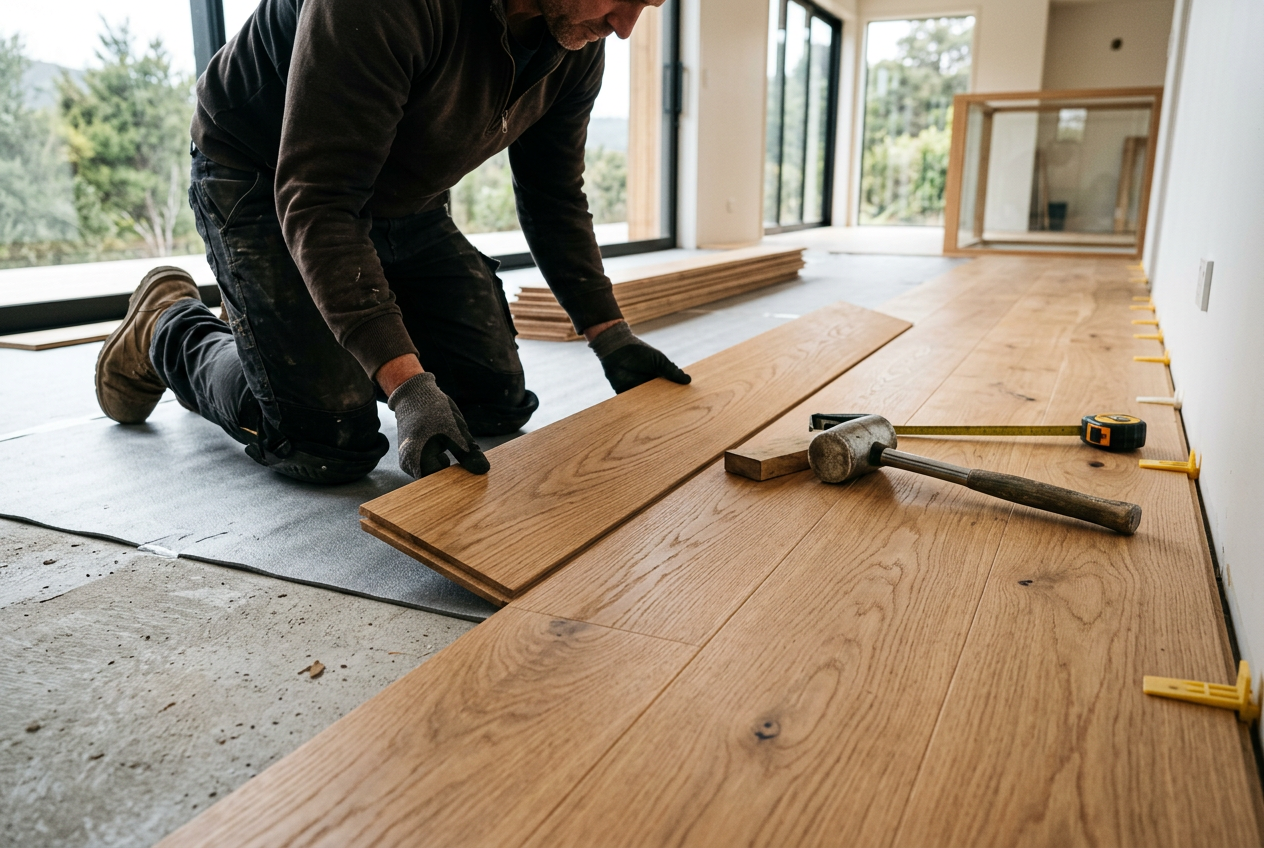
A floating floor that sounds hollow can be annoying, especially in open-plan homes where every step seems to echo. The good news is that the noise is often caused by a few common issues, many of which can be improved without ripping the whole floor up. If you live in Australia, the right fix will depend on your floor type, subfloor, and climate conditions, because moisture and movement can affect flooring performance over time.
Before you start, it helps to understand that “hollow” noise usually comes from gaps, loose boards, poor underlay, or a subfloor that isn’t as level as it should be. In some cases, the problem can also be made worse by expansion and contraction in hot, dry weather or humid coastal conditions.
Why Floating Floors Sound Hollow
Floating floors are designed to sit above the subfloor, not be fixed directly into it. That structure can be quiet and comfortable when installed well, but it can also create a drum-like sound if there are air pockets underneath or if the floor is not supported evenly.
Common causes include:
- Poor-quality or worn underlay
- Uneven subfloor or concrete slab
- Insufficient expansion gaps around the edges
- Loose click-lock joints or poorly connected boards
- Voids caused by debris, dust, or movement beneath the floor
If the floor was installed over concrete, check whether moisture may be involved. Australian homes, especially in wetter or coastal areas, can experience moisture movement through slabs if a suitable moisture barrier was not used. That can affect both noise and long-term floor stability.
Practical Ways To Reduce The Hollow Sound
Some fixes are simple DIY jobs, while others are better left to an experienced flooring installer. Start with the least invasive checks first.
| Likely Cause | What You Can Do | Best For |
|---|---|---|
| Loose or thin underlay | Check access points, skirting edges, or any lifted board to confirm the underlay is suitable and intact | Laminate and hybrid floating floors |
| Uneven subfloor | Have the floor assessed and, if needed, levelled with a suitable compound | Concrete slabs and older homes |
| Expansion gaps | Remove trims or skirting where needed and confirm the floor has room to move properly | All floating floors |
| Movement in boards | Re-lock or refit affected boards, or replace damaged sections | Click-lock flooring |
| Acoustic issue between levels | Add acoustic underlay or floor treatment suited to the system | Upper-storey homes and townhouses |
If the floor feels spongy as well as hollow, the underlay may be too soft, too thin, or not matched to the flooring system. A flooring supplier such as Bunnings or Mitre 10 can help you compare underlay options, but always check the flooring manufacturer’s installation instructions first. Using the wrong underlay can void warranties or make the problem worse.
For hard floors installed over concrete, a professional may recommend levelling compounds, moisture barriers, or acoustic products that comply with the National Construction Code. If the flooring is in a strata property, there may also be building rules about acoustic performance, so it is worth checking before making changes.
When To Call A Professional
Some jobs are suitable for handy homeowners, but others need a flooring specialist. Call a professional if:
- the floor has widespread hollow patches or movement
- you suspect slab moisture or water damage
- boards are lifting, separating, or buckling
- the noise is coming from an upper-level floor and needs acoustic treatment
- you are unsure whether the floor is installed to manufacturer requirements
In many cases, a qualified installer can identify whether the issue is underlay-related, subfloor-related, or simply a sign of poor installation. If the job involves structural repairs, subfloor correction, or moisture management, it is usually better handled by a tradesperson with flooring experience. Any electrical, gas, or regulated plumbing work associated with renovation must be done by a licensed professional in Australia.
For added peace of mind, check that your tradesperson is properly licensed or registered with the relevant state or territory licensing or Fair Trading body. That is especially important if your project also involves nearby skirting, wet areas, or integrated cabinetry.
How To Prevent The Problem Coming Back
Once the floor is quieter, a few maintenance habits can help keep it that way:
- Keep indoor humidity as stable as possible, especially in humid or very dry periods
- Use mats at entry points to reduce grit underfoot
- Clean with methods recommended by the flooring manufacturer
- Avoid dragging heavy furniture across the floor
- Inspect edge trims and skirting if noise starts returning
If you are renovating, choose products designed for Australian conditions and follow the installation guide closely. A quality underlay, proper subfloor preparation, and the correct expansion gaps will usually do more to reduce hollow sounding floors than quick fixes on top.
If you are weighing up whether to repair, relay, or replace the floor, a flooring specialist can inspect the subfloor, assess the underlay, and recommend the best option for your home and climate zone. And if you are comparing trades resources across the Tasman, you can also visit Trade Directory NZ.
For help finding a qualified local expert, search Aussie Trade Directory for local insulation installers and connect with a professional who can help make your home quieter and more comfortable.