
If the power has gone out in part of your home, a tripped RCD or circuit breaker is often the reason. In many Australian homes, these devices are designed to shut off power quickly when they detect a fault, helping protect people, appliances and wiring. The good news is that resetting one is usually straightforward. The important part is knowing when it is safe to do it yourself, and when to stop and call a licensed electrician.
This guide explains the difference between an RCD and a circuit breaker, how to reset each one, and what to do if the switch trips again. It’s written for Australian homes and the way switchboards are commonly set up here.
What Is an RCD or Circuit Breaker?
An RCD, sometimes called a safety switch, is designed to detect electricity leaking where it should not. That can happen if a faulty appliance, damaged cord or wiring issue is creating a shock risk. A circuit breaker, by contrast, protects a circuit from too much current, such as when too many devices are running or there is a fault on that circuit.
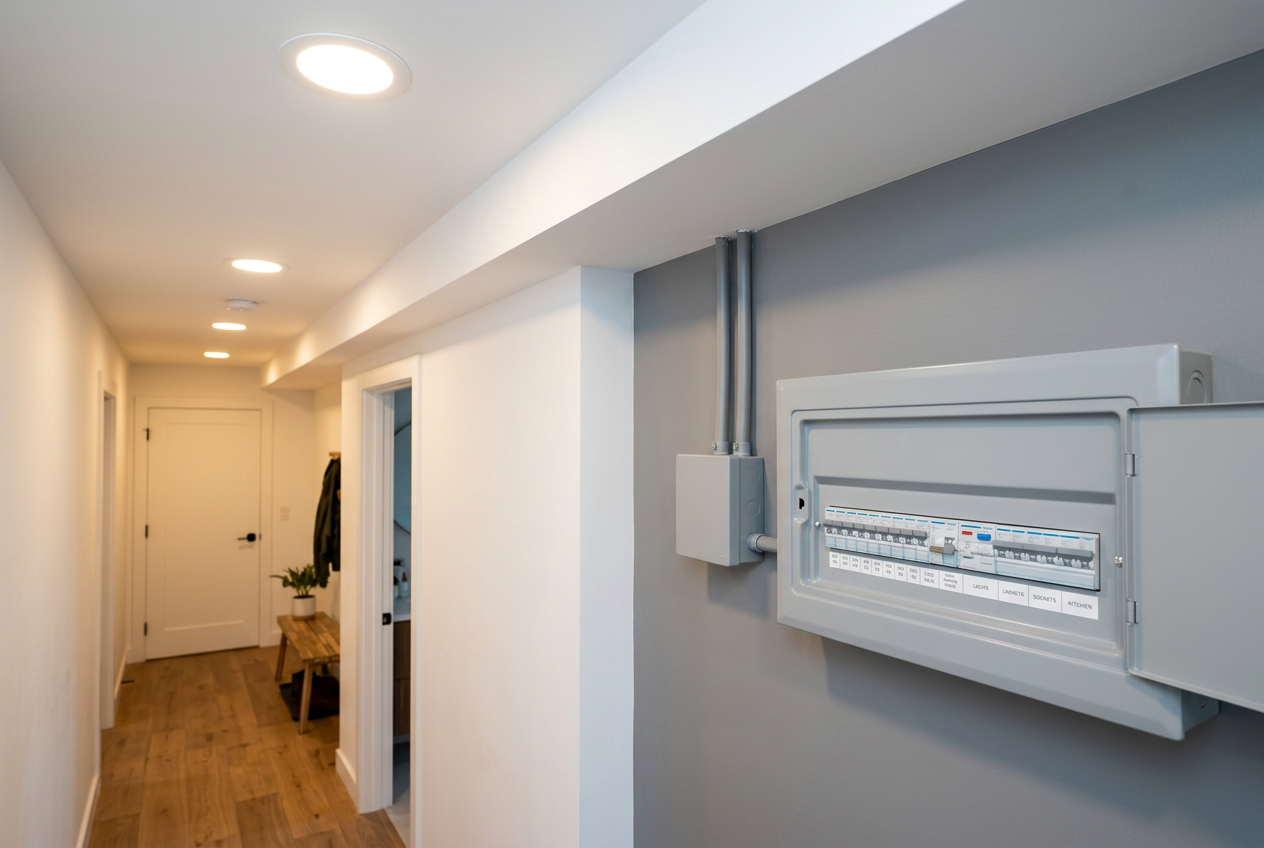
Both devices usually sit in your switchboard, often in the garage, laundry or outside meter box area. The switch that has tripped will usually look different from the others and may be sitting in the middle position or clearly marked as off.
| Device | What It Protects Against | Common Reason It Trips |
|---|---|---|
| RCD / Safety switch | Electric shock and earth leakage | Faulty appliance, damaged cord, moisture, wiring fault |
| Circuit breaker | Overload or short circuit | Too many appliances, appliance fault, wiring issue |
How To Reset a Tripped RCD or Circuit Breaker
Before touching the switchboard, make sure the area is dry. If you can smell burning, see scorch marks, hear buzzing, or notice heat from the board, stop immediately and call a licensed electrician. Do not touch the board if there is water nearby or if you are unsure whether it is safe.
Basic reset steps
- Stand on a dry surface and keep your hands dry.
- Open the switchboard cover carefully if needed.
- Find the switch that is in the off or middle position.
- Push the switch fully to the off position first, then flip it back on.
- If it stays on, check the affected lights or power points.
If the switch will not stay on, or trips again straight away, unplug appliances on that circuit and try once more. If it still trips, there is likely an underlying fault that needs proper diagnosis.
If a specific appliance caused the trip
If the power went out after you turned on a kettle, toaster, washing machine, heater, or another appliance, unplug that item before resetting the switch. Plug it in again only if the circuit resets normally. If the same appliance causes another trip, stop using it and have it checked by a qualified repairer or electrician.
What To Do If It Trips Again
A breaker or RCD that keeps tripping is not something to ignore. Repeated trips can point to a faulty appliance, an overloaded circuit, moisture in a fitting, damaged wiring, or a more serious electrical fault. In Australian homes, electrical work is restricted to licensed professionals under state and territory rules, so don’t remove covers, test wiring, or attempt repairs yourself.
Try these safe checks first:
- Unplug appliances one by one from the affected circuit.
- Look for damaged cords, cracked plugs or signs of overheating.
- Check whether the problem started after rain, a leak or recent DIY work.
- Reduce the number of high-load appliances running on the same circuit.
If the RCD trips and no obvious appliance is the cause, or if multiple circuits are affected, contact a licensed electrician promptly. Persistent faults can become a fire or shock hazard.
When You Should Call an Electrician Straight Away
Some situations should not be treated as a simple reset job. Call a licensed electrician if you notice any of the following:
- Burning smell, smoke, sparks or heat from the switchboard.
- Water inside or near the switchboard.
- Repeated tripping with no clear appliance cause.
- A switch that feels loose, damaged or won’t reset.
- Lights flickering, buzzing, or power cutting in and out.
If you rent, let your property manager know as soon as possible. If you own the home and the switchboard looks old or overcrowded, ask an electrician whether it meets current requirements under the National Construction Code and modern safety expectations.
Simple Ways To Reduce Future Trips
While not every trip can be prevented, a few habits can reduce nuisance shutdowns:
- Avoid overloading power boards with heaters, kettles and other high-draw appliances.
- Keep appliances and power points dry, especially in laundries, bathrooms and outdoor areas.
- Replace damaged extension leads and worn plugs.
- Have outdoor power points and garden equipment checked after heavy rain or storms.
- Consider whether an older switchboard may need an upgrade by a licensed electrician.
Australian weather can be tough on electrical gear, especially after summer storms, wet winters and humid coastal conditions. If your home has recurring issues, a proper inspection is usually the safest long-term fix.
For broader homeowner guidance, it’s always worth checking advice from trusted Australian sources such as Safe Work Australia, state Fair Trading or consumer affairs bodies, and your state’s electrical licensing authority.
If you need a second opinion or are comparing home maintenance advice, you can also visit Trade Directory NZ.
For any electrical fault that keeps returning, find a qualified local electrician on Aussie Trade Directory and get the issue checked properly by local electricians.