
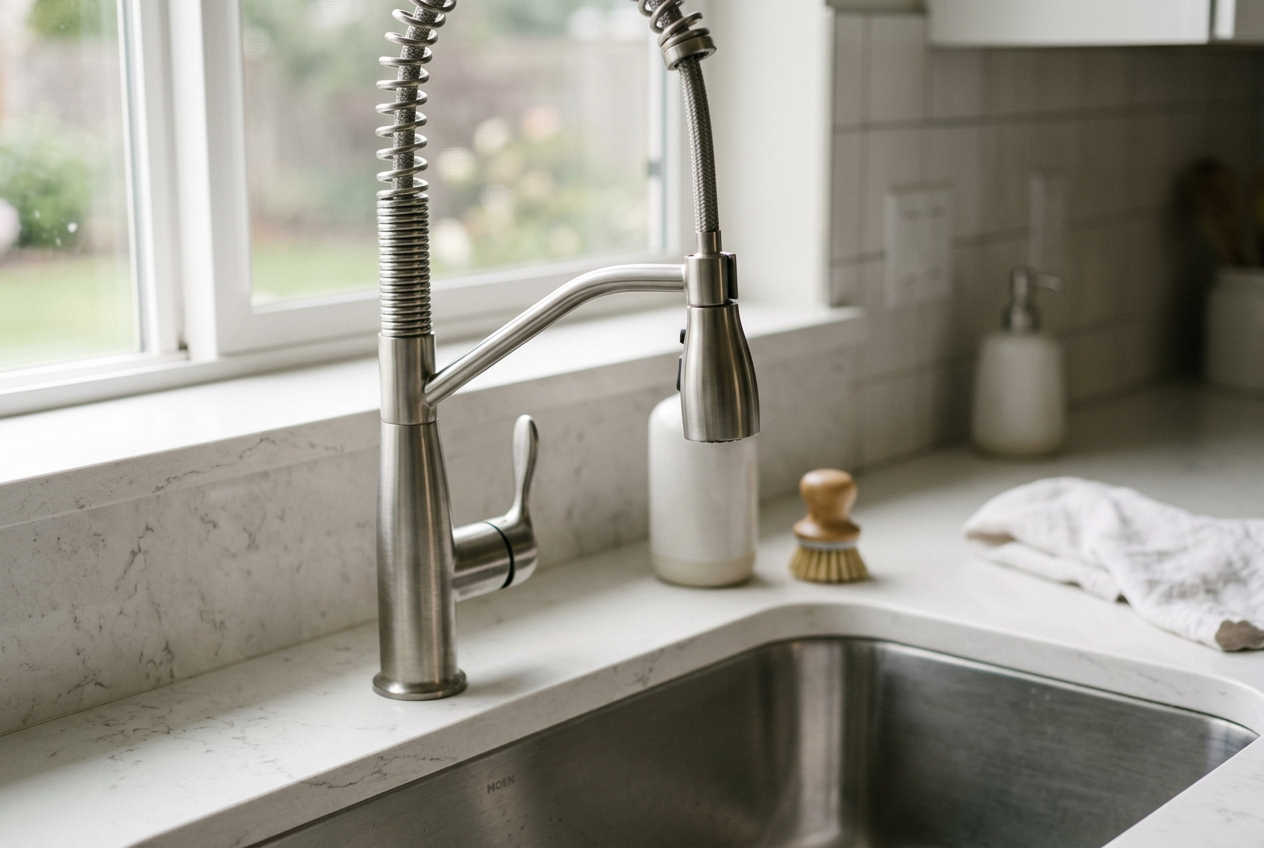
Hard water scale on tapware is one of those frustrating household jobs that keeps coming back. In many Australian homes, mineral-rich water can leave white, crusty marks on taps, shower fittings and mixer handles, especially around kitchens and bathrooms where water splashes and dries quickly.
The good news is that you can slow scale down dramatically with the right cleaning habits, a few simple home fixes and, where needed, help from a licensed plumber. The aim is not just to clean the build-up, but to stop it setting in so fast in the first place.
Why Scale Forms On Tapware
Hard water contains dissolved minerals, mainly calcium and magnesium. When water dries on chrome, stainless steel, brushed finishes or matte tapware, those minerals are left behind as a chalky deposit. Heat, steam and frequent splashing make the problem worse, which is why bathroom tapware often suffers more than fittings in other rooms.
In Australia, the issue can be more noticeable in some areas than others, but almost any home can get scale if the water is left to dry on surfaces. Cheap or abrasive cleaners can also make matters worse by scratching the finish and giving scale more places to cling.
Best Ways To Prevent Hard Water Scale
The simplest prevention method is to dry tapware after use. A quick wipe with a soft microfibre cloth removes droplets before minerals have a chance to settle. This is especially useful on basin mixers, shower arms, kitchen taps and around the base of spouts where water tends to sit.
You can also build a regular cleaning routine using mild products that are suitable for your tapware finish. Always check the manufacturer’s care instructions, particularly for matte black, brushed brass or powder-coated fixtures, as harsh cleaners can damage protective coatings.
Practical habits that help
- Wipe tapware dry after the last use of the day.
- Rinse off soap residue, then dry the surface.
- Clean little and often rather than leaving build-up for weeks.
- Use soft cloths, not scouring pads or abrasive powders.
- Keep an eye on aerators and shower heads, where scale often starts first.
For light scale, a diluted white vinegar solution can help dissolve deposits on many tapware finishes. Apply it with a cloth rather than soaking the fitting, then rinse thoroughly and dry. Do not use vinegar on natural stone benchtops or surrounds, and avoid it on finishes the manufacturer says are not suitable for acidic cleaners.
If you prefer store-bought options, visit Bunnings or Mitre 10 and look for bathroom cleaners labelled as suitable for tapware and chrome. Choose products recommended for your specific finish and avoid anything too harsh unless the manufacturer says it is safe.
What To Do When Scale Keeps Coming Back
If scale returns quickly even with regular cleaning, the issue may be more than surface build-up. Check for small leaks, dripping mixers or poorly sealed connections, because constant moisture gives minerals more chance to deposit. A worn washer, faulty cartridge or loose fitting can also create the perfect conditions for repeat build-up.
You can compare common approaches below:
| Method | Best For | Notes |
|---|---|---|
| Microfibre wipe-down | Daily prevention | Simple, low risk and suitable for most finishes |
| Mild vinegar clean | Light scale | Use carefully and check finish compatibility first |
| Specialty tapware cleaner | Stubborn residue | Often safer for coated or delicate finishes |
| Plumber inspection | Leaking fittings or ongoing build-up | Needed if there is a fault behind the scale |
For homes with very persistent hard water problems, a water softening or treatment system may be worth discussing with a licensed plumber. The right option depends on your water supply, household use and the type of tapware you have. A plumber can assess whether a treatment system, sediment filter or fixture upgrade is the most practical choice.
When To Call A Licensed Plumber
In Australia, any plumbing work involving pipework, water supply connections, fixture replacement beyond simple maintenance, or alterations to the plumbing system should be carried out by a licensed plumber in line with state and territory requirements. If you are unsure, check with your local Fair Trading or building authority before attempting work yourself.
Call a professional if you notice persistent dripping, loose fittings, low water flow caused by clogged aerators that won’t clear, or visible corrosion around the tap base. A plumber can also inspect whether your tapware is suitable for your water conditions and recommend compliant solutions under the National Construction Code.
If you are cleaning around sinks, vanities or laundry tubs, remember that Safe Work Australia guidance also applies to sensible chemical handling and ventilation. Keep the area well aired, wear gloves if needed and never mix cleaning products.
Simple Maintenance That Makes A Big Difference
Keeping scale off tapware is mostly about consistency. A two-minute wipe after use, a gentle clean each week and a quick check for drips can save a lot of scrubbing later. For many Australian homes, that routine is enough to keep tapware looking newer for longer and to reduce wear on the finish.
If you are upgrading tapware, ask at Bunnings, Mitre 10 or a local plumbing supplier about finishes that are easier to maintain in hard water areas. Well-chosen tapware, combined with good everyday habits, can make a noticeable difference.
If you need more general trade guidance, you can also visit Trade Directory NZ.
Need help with a persistent leak, worn tapware or a hard water solution? Find a qualified local plumber on Aussie Trade Directory and connect with local plumbers.