
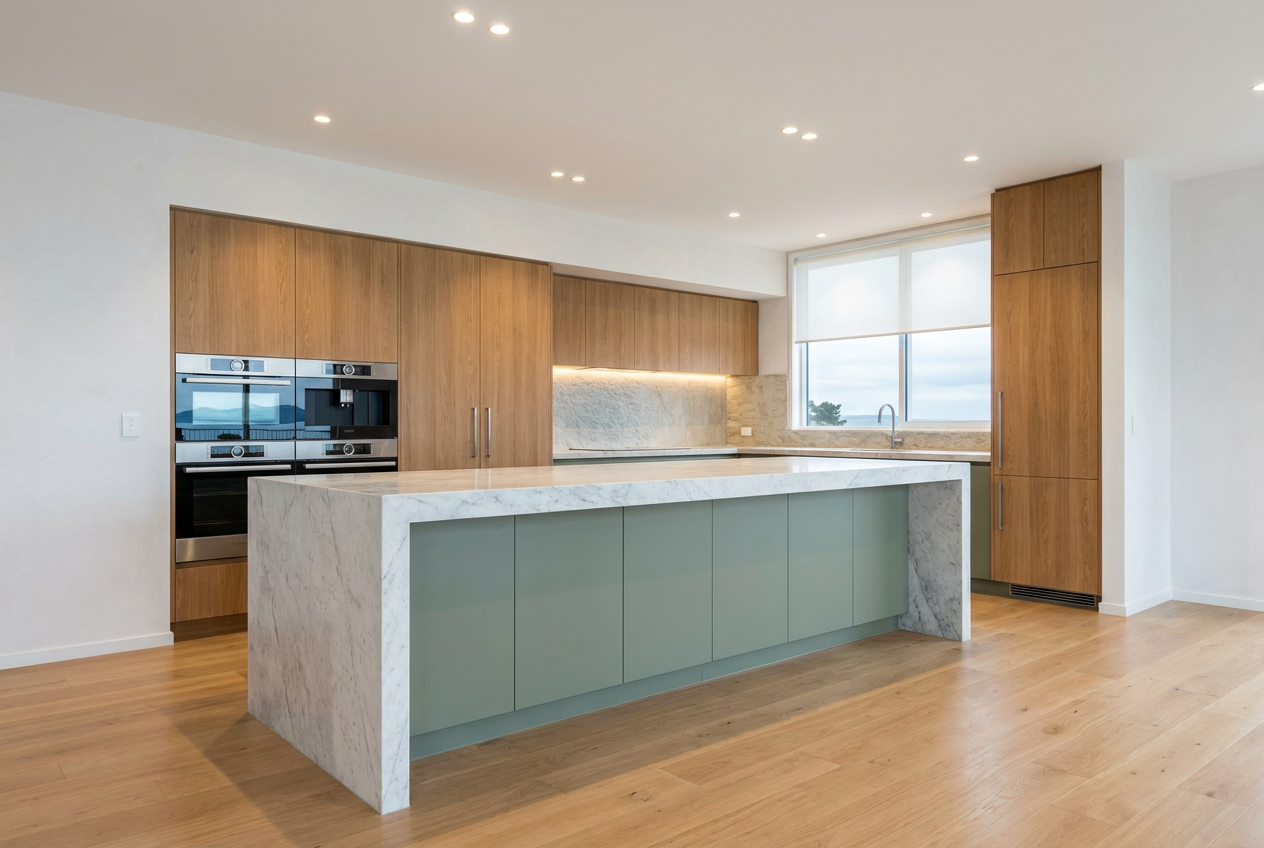
Choosing cabinetry materials can feel confusing when you’re comparing melamine, MDF and plywood at a kitchen showroom or with a cabinet maker. Each option can suit Australian homes, but they behave differently when it comes to moisture, durability, finish and price.
If you’re planning a kitchen, laundry, bathroom vanity or built-in storage, understanding the difference between melamine MDF and plywood cabinetry will help you make a smarter choice for your budget and your home’s conditions.
What Each Material Actually Is
Melamine is a hard decorative surface bonded to a board, usually MDF or particleboard. In cabinetry, people often say “melamine” when they really mean a melamine-faced board. It gives a neat, ready-finished look without needing painting.
MDF, or medium density fibreboard, is an engineered board made from fine timber fibres and resin. It has a smooth, consistent surface that’s popular for painted doors, panels and some cabinet components.
Plywood is made from thin layers of timber veneer glued together with the grain running in alternating directions. This cross-layered structure gives it strength and good stability, which is why it’s often used in premium cabinetry and areas where toughness matters.
How They Compare In Real Homes
| Material | Best For | Strengths | Watch Outs |
|---|---|---|---|
| Melamine-faced board | Budget-friendly cabinets, laundries, wardrobes | Easy to clean, many colours and finishes, low maintenance | Edges can chip, water can damage exposed joins if not sealed well |
| MDF | Painted doors, decorative profiles, smooth finished joinery | Very smooth surface, ideal for painted cabinetry, stable in dry areas | Can swell if moisture gets in, heavy compared with some other boards |
| Plywood | Kitchen carcasses, premium joinery, humid or high-use spaces | Strong, stable, good screw-holding, often handles moisture better when properly sealed | Usually more expensive, visible edges may need edging or finishing |
Melamine Cabinetry
Melamine cabinetry is popular because it looks tidy straight away and is easy to wipe down with a damp cloth. It’s common in flat-pack cabinetry from retailers like Bunnings and Mitre 10, as well as custom-built wardrobes and pantry systems.
For many households, melamine is a practical choice for internal cabinet parts and shelves. The main limitation is that if the surface or edging gets damaged, moisture can get into the board beneath. That’s why good edge sealing and careful installation matter, especially in Australian kitchens and laundries where steam and splashes are common.
MDF Cabinetry
MDF is often chosen for painted cabinet doors, shaker-style fronts and profile details because it has a very even surface. Painters also like it because it takes primer and topcoats well, including finishes from brands such as Dulux, Taubmans and British Paints.
The trade-off is moisture sensitivity. MDF is generally not the best choice where water exposure is frequent unless it is properly sealed, painted and installed with care. In bathrooms and laundries, ask your cabinet maker whether moisture-resistant MDF is appropriate for the job and how the edges and cut-outs will be protected.
Plywood Cabinetry
Plywood is usually the stronger and more robust option. It’s often used for cabinet carcasses, shelving and joinery that needs to handle more wear and tear. Many homeowners like the natural timber-edge look as well, especially in modern kitchens and built-ins.
Because plywood is layered, it tends to stay more stable than some other boards when the humidity shifts, which is helpful in coastal homes and warm, steamy spaces. It still needs proper sealing, especially around cut edges, sink cupboards and dishwasher areas. Good workmanship is just as important as the material itself.
Which One Should You Choose?
The best option depends on where the cabinetry will be used, how much wear it will get and the look you want.
- Choose melamine if you want a neat, low-maintenance finish and a practical option for everyday storage.
- Choose MDF if you want painted cabinetry with smooth surfaces and detailed profiles.
- Choose plywood if you want stronger, more durable cabinetry, especially for high-use kitchens or moisture-prone areas.
For many Australian homes, a mixed approach works well. For example, plywood carcasses with melamine shelving or MDF doors can balance durability, appearance and budget.
Australian Climate And Installation Matter
Australia’s climate can be hard on cabinetry. Coastal salt air, summer humidity and sudden temperature changes can all affect how boards perform over time. In wet areas, the key is not just the material but also the quality of sealing, edging, ventilation and installation.
If cabinets are being fixed to walls, built around services or altered on site, a qualified tradesperson should handle the work. Electrical, gas and certain plumbing tasks must be done by licensed professionals under Australian state and territory rules. For general building and joinery work, check the relevant licensing and Fair Trading requirements in your state before hiring anyone.
It’s also wise to make sure cabinetry complies with the National Construction Code where relevant, especially in kitchens, laundries and bathrooms where moisture management and safety matter.
Final Thoughts
Melamine, MDF and plywood each have a place in Australian cabinetry. Melamine is a convenient, easy-care surface; MDF is ideal for smooth painted finishes; and plywood is the stronger, more durable option for demanding spaces. The right choice depends on your room, your budget and the finish you want.
For more trade information and homeowner advice, you can also visit Building or renovating across the Tasman? Our sister site Trade Directory NZ covers the same topics for New Zealand homeowners.