
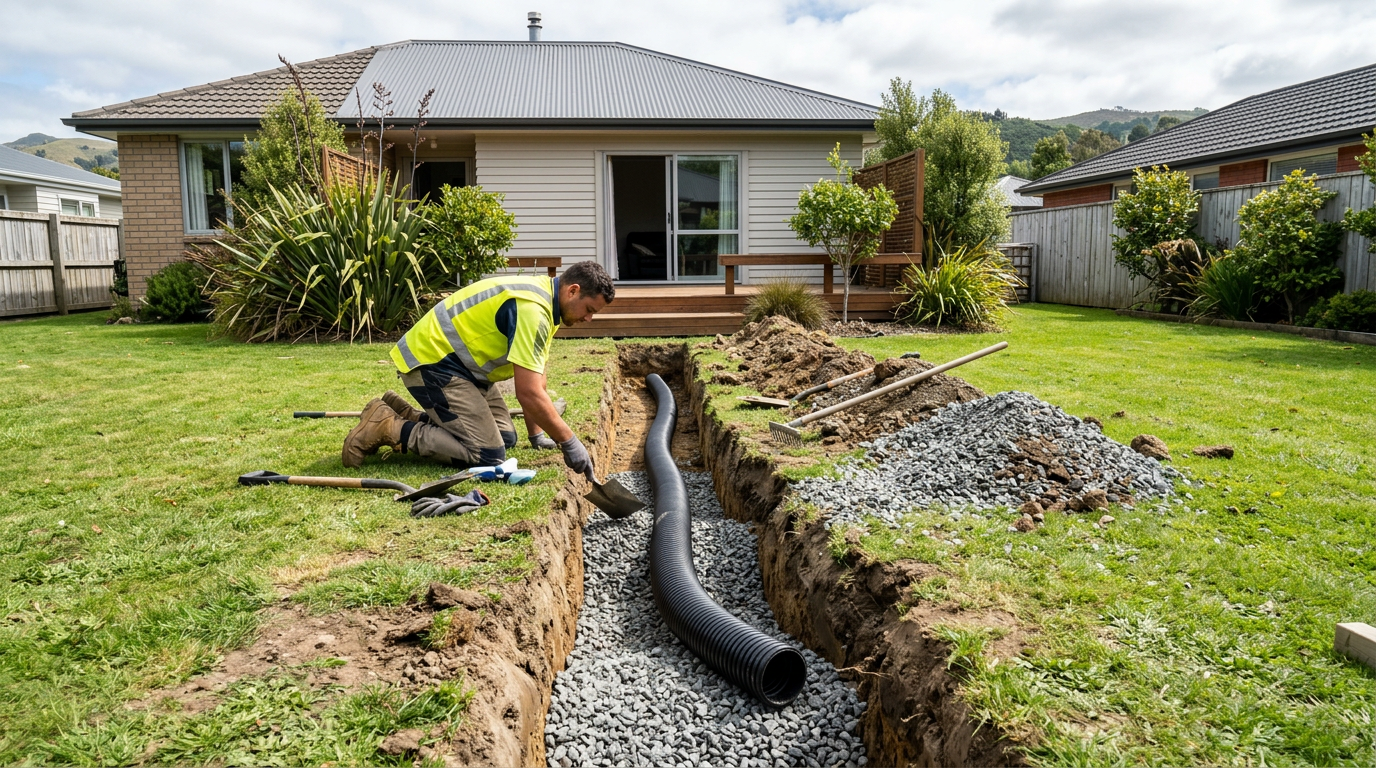
If you own a home in Australia, it helps to know the difference between a stormwater drain and a wastewater drain. They both carry water away from your property, but they serve very different jobs and must never be connected incorrectly.
Getting it wrong can lead to blockages, overflows, sewer smells, soggy yards, property damage and even issues with your local drainage network. In Australia, plumbing and drainage work is also regulated, so any work on these systems should be handled by a licensed plumber where required.
What Is A Stormwater Drain?
Stormwater drains carry rainwater away from roofs, driveways, patios, paths and other outdoor surfaces. Their job is to move clean or lightly contaminated rain runoff into approved drainage systems so water does not pool around your home.
On a typical Australian property, stormwater may come from:
- roof gutters and downpipes
- grated surface drains in paved areas
- soakage systems or legal points of discharge, where permitted
- rainwater tanks with overflow pipes
Stormwater should not contain sewage, kitchen wastewater, toilet waste or chemical-heavy discharge. It is generally a rainwater system, not a waste disposal system.
What Is A Wastewater Drain?
Wastewater drains, also called sanitary drains or sewer drains, carry used water from inside the house to the sewer system or an approved treatment setup. This includes water from toilets, showers, baths, basins, laundry tubs and often the kitchen sink.
Because wastewater can contain germs, soap residue, grease and other contaminants, it needs to be sealed, vented and connected correctly. This is why sewer plumbing is treated differently from stormwater drainage under Australian plumbing standards and the National Construction Code.
Any work that changes sewer connections, pipe routing, fixtures or venting must be done by a licensed plumber. If gas appliances or hot water systems are involved, gasfitting work also needs the correct licence.
Key Differences At A Glance
| Feature | Stormwater Drain | Wastewater Drain |
|---|---|---|
| Main purpose | Moves rainwater away from the property | Removes used water from fixtures and appliances |
| Typical source | Roof, yard, driveway, paved areas | Toilets, showers, sinks, laundry |
| What it should carry | Rainwater and runoff | Sewage and household wastewater |
| Smell | Should not smell like sewer | May smell if a trap, vent or line is damaged |
| Connection rules | Must not connect to sewer | Must go to approved sewer or treatment system |
Why The Two Systems Must Stay Separate
Stormwater and wastewater systems are designed for different flow rates, different contaminants and different end points. When they are mixed up, the results can be messy and expensive.
For example, if a downpipe is connected to a sewer line, heavy rain can overload the wastewater system and cause backups. If a wastewater line is mistakenly tied into stormwater, sewage can end up where it absolutely should not be, creating health and environmental risks.
Separating the systems also helps protect your home from flooding. During heavy rain, stormwater pipes can fill quickly, especially in areas with intense downpours. Australian homes need drainage that suits local conditions, whether that means coastal storms, tropical wet seasons or sudden summer thunderbuckets.
Signs Something May Be Wrong
Some drainage problems are easy to spot, while others hide underground. Watch for these common warning signs:
- gurgling sounds from drains or toilets
- bad smells near grates, gutters or indoor fixtures
- water backing up after rain
- slow draining sinks, showers or laundry tubs
- wet patches in the yard with no obvious cause
- overflowing gutters or repeated blockages
If you notice sewer smells after rainfall, there may be an illegal connection, a broken trap, a blocked vent or damage in the drainage line. Stormwater issues often show up during or after heavy rain, while wastewater faults can happen anytime a fixture is used.
What Homeowners Can Check Safely
There are a few simple checks you can do without touching the plumbing itself. Make sure gutters are clear, downpipes are intact and stormwater grates are free of leaves and garden debris. Check that outdoor drains are not blocked by soil, mulch or paving movement.
Inside the home, look for signs of slow drainage or recurring odours. A blocked sink trap or floor waste may be a maintenance issue, but repeated problems can point to a larger plumbing fault.
For general maintenance, products from Bunnings or Mitre 10 can help with clearing leaves, cleaning grates and keeping gutters tidy. For anything involving pipe alterations, underground drainage or sewer connections, call a licensed plumber.
When To Call A Professional
Call a licensed plumber if you suspect pipes are crossed, a drain keeps blocking, wastewater is surfacing outside, or stormwater is flooding into the house. This is especially important if you are renovating a bathroom, laundry or kitchen, or if you are adding paving, a shed or a rainwater tank.
Plumbing and drainage work is regulated by state and territory licensing and Fair Trading bodies, and the requirements can vary depending on the task. A qualified plumber can inspect the system, identify the right drain type and make sure the work meets Australian standards.
If you are improving the outside of your home at the same time, good drainage planning matters just as much as paint or cladding choices. Whether you are using Dulux, Taubmans or British Paints on exterior surfaces, or choosing James Hardie, Gyprock/CSR or Colorbond/BlueScope materials for renovations, drainage should be considered early so water moves away from the building properly.
Stormwater and wastewater do very different jobs, but both are essential to a safe, dry and healthy home. If you are unsure which drain is which, or you think something is connected incorrectly, get it checked by a licensed plumber before the problem gets worse.
For more local guidance and to compare trusted tradies, you can also visit Trade Directory NZ.
Need help with a drainage issue or renovation plumbing? Find a qualified local plumber on Aussie Trade Directory and connect with local plumbers today.