
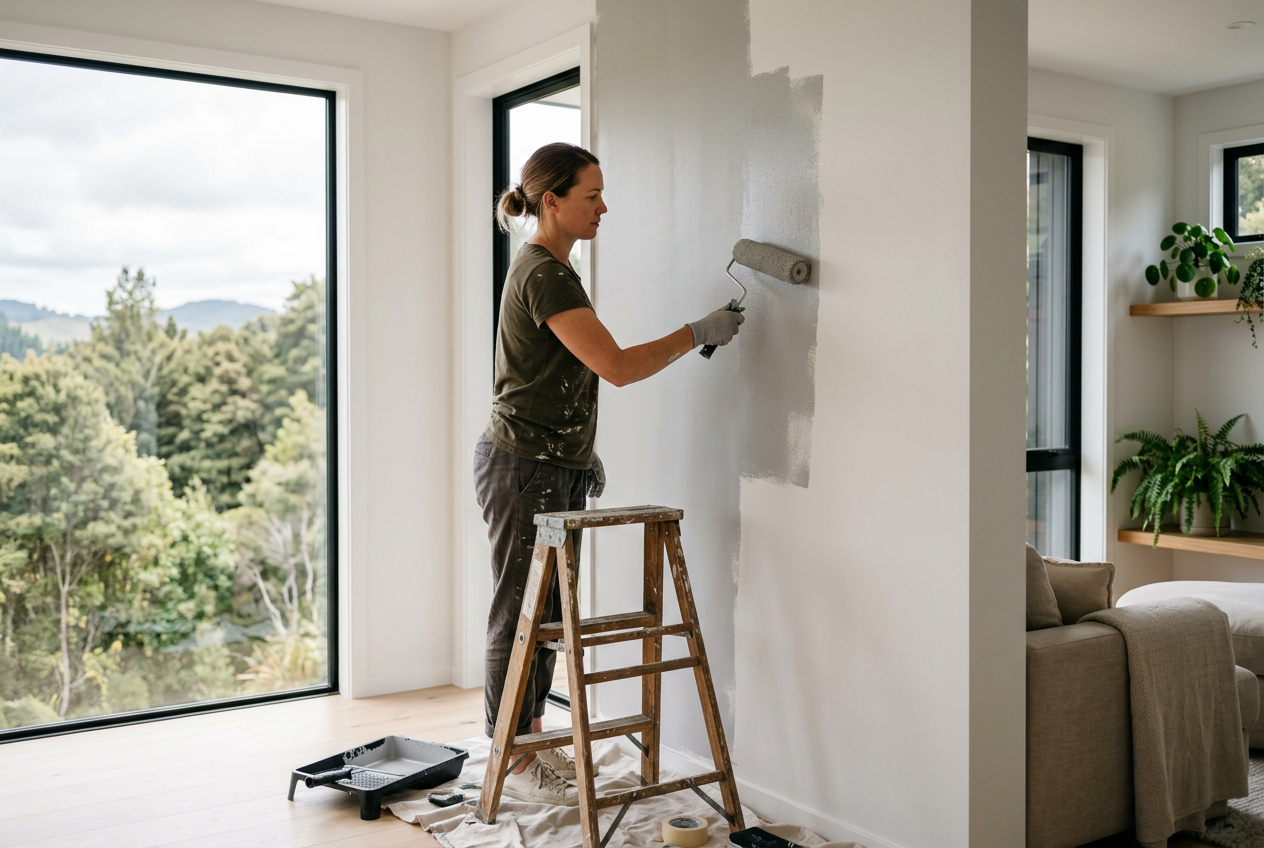
If you want a clean, professional-looking result, the order you paint a room matters almost as much as the paint you choose. For most Australian homes, the best approach is to start with the ceiling, then move to the walls, and finish with the trim. That sequence helps you work faster, reduce touch-ups, and keep each surface looking crisp.
This guide walks through the practical painting order for an average room, plus the prep, tools, and drying tips that make the job easier in Australia’s sometimes hot, dry, or humid conditions.
What’s The Best Order To Paint A Room?
The usual order is:
- Ceiling
- Walls
- Trim, doors, skirting boards, and window frames
Why this order? Paint drips and splatter move downward. If you paint the ceiling first, any splashes onto the walls can be covered later. After the walls are done, you can cut in the trim neatly without worrying about ceiling paint or wall roller marks messing up the finish.
For most DIY jobs, this sequence is the easiest way to get a tidy result with less rework. Professional painters across Australia commonly follow the same method, whether they are using Dulux, Taubmans, or British Paints products from Bunnings or Mitre 10.
How To Paint A Room In The Right Order
1. Prep The Room Properly
Good prep is what separates a decent paint job from a great one. Start by removing as much furniture as possible, or move it to the centre and cover it with drop sheets. Take down wall art, curtain rods, and detachable fittings where appropriate. Mask off light switches, architraves, and any surfaces you do not want painted.
Check the walls and ceiling for nail holes, dents, gaps, peeling paint, or water stains. Fill holes with an appropriate filler, sand smooth, and dust off thoroughly. In older homes, if you suspect mould, leaks, asbestos-containing materials, or widespread cracking, get the issue assessed before painting. Some repairs, especially electrical, plumbing, and gas-related work, must be carried out by a licensed professional in Australia.
2. Paint The Ceiling First
Use a ceiling paint that suits the room, especially if it is a bathroom, kitchen, or laundry where moisture is more of an issue. Cut in around the edges first with a brush, then roll the main areas in manageable sections. Work while the cut-in edges are still wet so the joins blend better.
Ceilings can be tiring to paint, so use an extension pole and a roller cover suited to the surface texture. If the room has old plaster, repaired Gyprock/CSR ceilings, or visible patching, a quality primer may help create a more even finish.
3. Move On To The Walls
Once the ceiling is dry enough to avoid accidental smudging, paint the walls. Cut in around corners, ceiling lines, doors, and built-in cabinetry first, then roll the main field of the wall. Use smooth, even passes and keep a wet edge to avoid lap marks.
If you are changing from a dark colour to a light colour, or painting over stains, patched areas, or bare plasterboard, a primer or sealer is often worth it. Australian homes often deal with strong sun exposure and heat, so choose a paint system that is suitable for your room and the surface condition.
4. Finish With Trim, Doors, And Detail Work
Save trim for last so you can paint crisp lines after the bigger surfaces are complete. This includes skirting boards, architraves, window frames, door frames, and doors. Use a smaller brush and work carefully along edges where the wall meets the trim.
Trim paint is usually a different sheen level from walls, which helps define the room and makes the finish look more polished. If your trims are timber, fibre cement, or previously painted surfaces, check that the product you choose is compatible with the material. For external-style trim materials such as James Hardie fibre cement products or Colorbond/BlueScope elements near indoor-outdoor spaces, the surface preparation and coating requirements can differ.
Ceiling, Walls, Trim: Which Order Works Best In Different Situations?
| Situation | Best Order | Why It Helps |
|---|---|---|
| Standard bedroom or living room | Ceiling, walls, trim | Keeps drips off finished surfaces and makes cutting in easier |
| Room with heavy patching | Repairs, primer, ceiling, walls, trim | Improves adhesion and hides repairs more evenly |
| Dark colour to light colour change | Prime, ceiling, walls, trim | Reduces bleed-through and improves coverage |
| Bathroom or kitchen | Ceiling, walls, trim with moisture-suitable products | Helps the finish handle humidity and regular cleaning |
In very detailed rooms, some painters prefer to do a full first coat on the trim before walls, then do a final trim coat at the end. If you are a beginner, though, sticking to the simple ceiling-walls-trim order is usually the safest bet.
Useful Tips For A Better Finish In Australian Homes
- Paint in mild conditions where possible. Extreme heat, high humidity, or strong coastal breezes can affect drying and finish quality.
- Open windows for ventilation, but avoid dusty gusts blowing into fresh paint.
- Use quality brushes, rollers, and painter’s tape rather than trying to save time with poor tools.
- Stir paint well and keep lids closed between coats to prevent skinning and contamination.
- Allow enough drying time between coats, especially in cooler or wetter weather.
- Read the manufacturer instructions for the specific primer and topcoat you are using.
If you are working at height, use a stable ladder or platform, and follow Safe Work Australia guidance for safe manual handling and ladder use. Do not overreach while cutting in ceilings or high walls.
When To Call A Professional Painter
DIY painting suits many rooms, but a qualified painter can be a smart choice if the room has damaged surfaces, tricky stair voids, high ceilings, ornate trim, or a tight timeframe. A professional can also help with preparation, colour consistency, and a cleaner finish around doors, architraves, and windows.
If your project involves electrical fixtures, smoke alarms, power points, or any other licensed trade work, that part must be handled by a licensed professional under the relevant state or territory rules. For building work that may affect compliance, the National Construction Code and state-based Fair Trading or licensing bodies may also come into play.
If you want more trade tips across the Tasman, you can also visit Trade Directory NZ.
For a neat result without the guesswork, find experienced local painters on Aussie Trade Directory and get help from a qualified professional near you.